
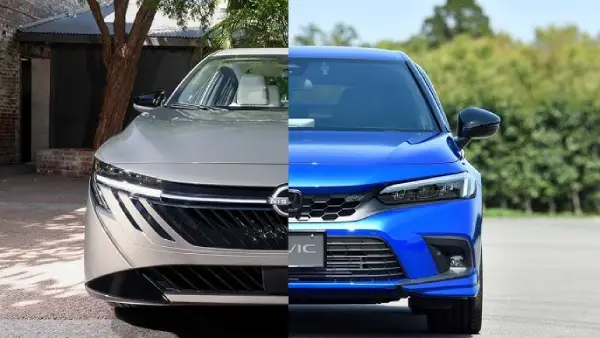
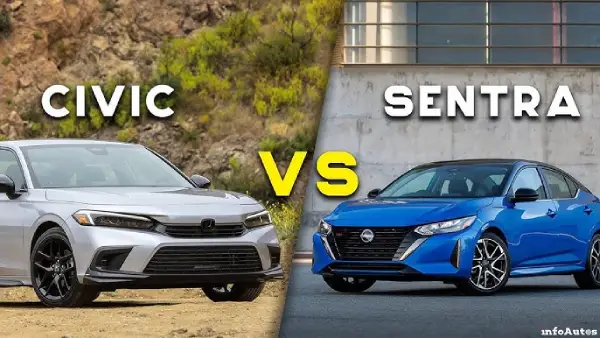
2026 Nissan Sentra vs Honda Civic: Compact sedan are returning and in 2026, the venerably successful Honda Civic and the brand new Nissan Sentra will compete against each other. A bold redesign has been given to the Sentra, while the Civic is still refining its formula. However, which one should you buy? Let’s look at the five most important differences you need to know.
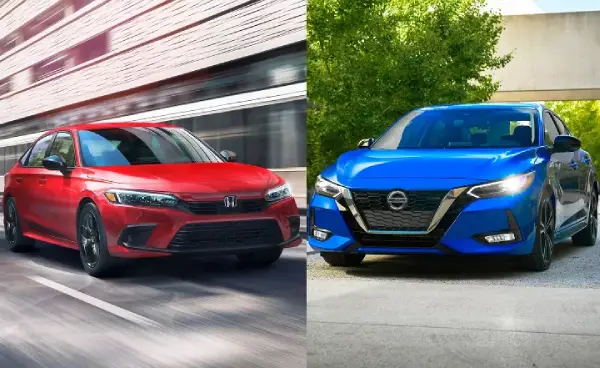
1. Bold Style vs Safe Design
The 2026 Sentra is a total glow-up. With sharp lines a redesigned V-motion grille, and trims like the SR featuring a blacked-out face with a two-tone roof, Nissan has taken a daring approach.
While You Care for Your Car, Care for Your Child’s Future Too 💖
A fun and educational book every parent should gift their kid.
 Get Kiddy Store Fortune Now
Meanwhile, the Civic plays it safe. It’s clean, mature, and simple—especially in base LX trim with steel wheels. While the Civic Si spices things up a little, it doesn’t quite match the Sentra’s visual drama.
If you want flashy curb appeal, go Sentra. If you prefer understated sophistication, the Civic’s your pick.
2. Honda Offers a Hybrid, Nissan Doesn’t
Under the hood, Nissan keeps it simple with a 2.0L engine (149 hp, 146 lb-ft) paired with a CVT. It’s efficient but not thrilling.
Honda, however, gives buyers options. Alongside its standard 2.0L (150 hp) the Civic offers a 200 hp hybrid that hits up to 49 mpg combined a huge win for fuel efficiency and fun.
If fuel economy and eco friendly performance matter the Civic is the clear winner.
3. Civic Si = Fun Factor
Love driving stick? Honda’s got you. The Civic Si delivers 200 hp, 192 lb-ft of torque, a turbocharged engine, and a slick six-speed manual transmission. It’s one of the few affordable performance sedans left.
The Sentra? No performance model. No manual. No Nismo.
If you want thrills, it’s Civic all the way.
4. Nissan Wins on Tech
Inside, Nissan goes all-out with tech. Every Sentra gets a 12.3-inch touchscreen (standard!), plus optional 12.3-inch digital gauges on higher trims. Wireless Apple CarPlay and Android Auto are widely available too.
The Civic? Most trims stick with smaller screens, and wireless smartphone integration is limited. Honda does score points with its Bose 12-speaker audio system on top trims, which edges out Nissan’s eight-speaker Bose.
If you’re all about big screens and connectivity, Nissan takes the lead.
5. Honda Has More Space
When it comes to passenger comfort, the Civic has the edge. The Sentra’s tighter back seat is outperformed by the headroom (37.1 in) and rear legroom (37.4 in). Additionally, the Civic has somewhat more cargo room (14.8 versus 14.3 ft).
For families or frequent passengers the Civic is roomier.
Pricing Showdown
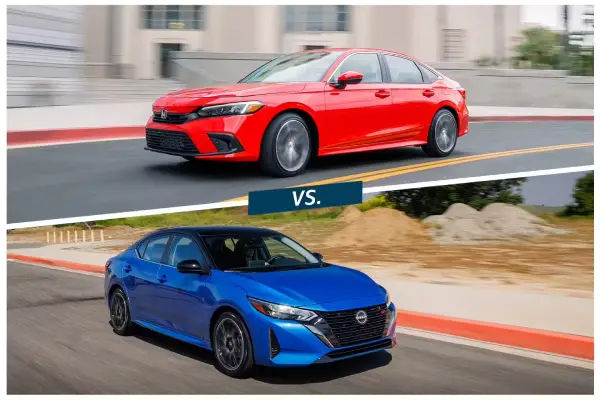
- Honda Civic starts at $24,595
- Nissan Sentra is expected to undercut that price likely around $21,590
So yes the Sentra will be more affordable making it one of the best budget-friendly new cars in America.
Final Thought
Both sedans have a lot to offer:
Nissan Sentra: Stylish, cutting-edge and reasonably priced.
Honda Civic: The entertaining Civic Si, more space, better fuel economy and more powertrain options.
Get the Sentra if you want technology and style at a lower cost.
The Civic is still the best if you like room, efficiency, and enjoyment.
In any case, 2026 is showing that small sedans are everything but dull.
FAQ’s
Q1. Does the Nissan Sentra go hybrid?
A: No Only the Civic is a hybrid with up to 49 mpg.
Q2. Which sedan does a technology aficionado prefer?
A: The Sentra because of its standard 12.3-inch touchscreen and digital driver display.
Q3. Which vehicle offers more interior space?
A: The Civic offer more rear seat legroom and headroom as well as slightly more trunk space.
Q4. Is there a performance version of the Sentra?
A: No Only the Civic offer a performance model the Civic Si—with a turbo engine and manual transmission.
Also Read: 5 Family Cars That Are Faster Than Supercars From 25 Years Ago