
Best Car Engines of the 21st Century: If you’ve ever goosebumped at redline, argued online about horsepower, or saved engine swap videos at 2 a.m., this list is for you.
The best car engines of the 21st century didn’t earn their reputations through spec sheets alone. They rewired car culture. They powered legends, launched tuning empires, and made drivers fall in love with machines all over again. Some scream past 9,000 RPM, some drown tires in torque and others simply refuse to die—no matter how hard you push them.
While You Care for Your Car, Care for Your Child’s Future Too 💖
A fun and educational book every parent should gift their kid.
 Get Kiddy Store Fortune Now
These engines didn’t just move cars.
They moved entire generations of enthusiasts.
Let’s dive into the powerplants that truly defined modern performance.
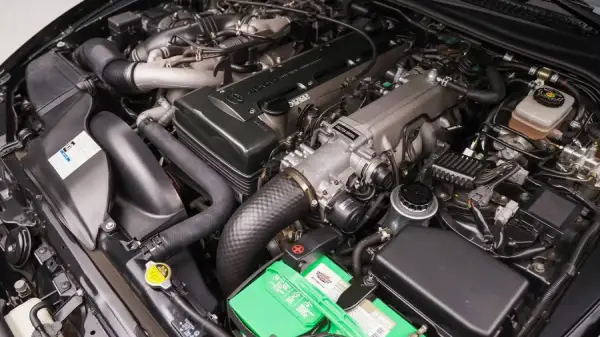
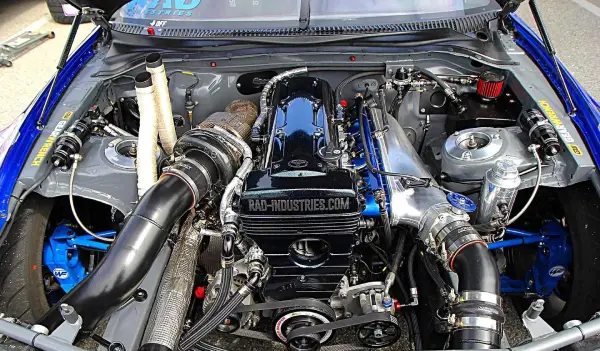
Toyota 2JZ-GTE – The Engine That Refuses to Break
If engines had hall-of-fame status the 2JZ-GTE would be first ballot.
This iron-block, twin-turbo inline-six didn’t just power the Mk4 Supra—it powered an entire era of street racing, drag builds, and tuner culture. What made it special wasn’t just speed, but how much abuse it could take. Stock internals surviving 800+ horsepower became legend, not exception.
From midnight highway pulls to seven-second drag cars, the 2JZ earned its crown the hard way.
Why it matters:
It proved reliability and insane power could coexist.
GM LS3 – The Engine That Fits Everywhere
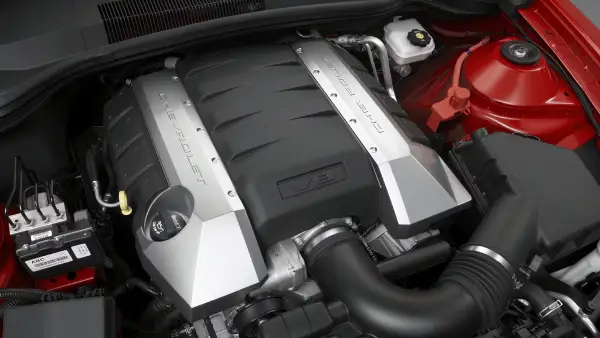
Few engines have reshaped the aftermarket like the LS3.
Compact, lightweight, cheap, and brutally effective, this 6.2-liter V8 became the default answer to one question: “What engine should I swap?” Miata? LS. Drift car? LS. Old BMW? Definitely LS.
With basic bolt-ons, 500 horsepower is easy—and the parts support is unmatched. It didn’t just make power accessible; it made it affordable.
Why it matters:
The LS3 turned dream builds into weekend projects.
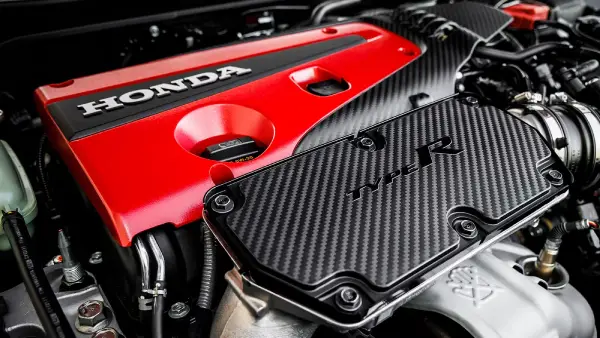
Honda K-Series – High Revving Happiness
The Honda K-series proved you don’t need big displacement to have big fun.
These engine thrive on RPM, reward precision driving and stay reliable even when pushed hard. VTEC engagement still puts a smile on faces, and K-swaps remain one of the most popular engine conversions on the planet.
Naturally aspirated or turbocharged, the K-series delivers thrills without draining your bank account.
Why it matters:
It kept high-rev, driver-focused engines alive in a turbo world.
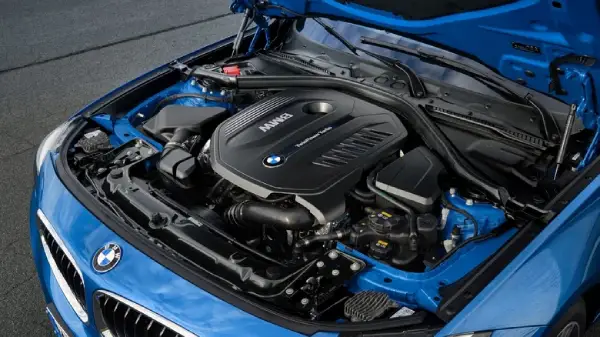
BMW B58 – The Modern Inline-Six Done Right
BMW’s B58 is proof that manufacturers still know how to build engines enthusiasts love.
Smooth, responsive, and ridiculously tunable this turbocharged inline-six offers factory refinement with massive upgrade potential. A simple tune wakes it up, and suddenly you’re chasing numbers once reserved for supercars.
It’s no surprise Toyota trusted it for the GR Supra.
Why it matters:
It restored faith in modern turbo engines.
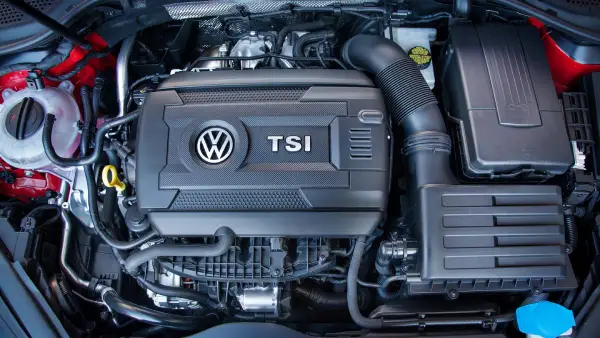
Volkswagen EA888 – The Hot Hatch Hero
The EA888 didn’t just power cars—it powered daily fun.
Found in everything from GTIs to Audi S3s, this turbo four-cylinder balanced efficiency with real punch. Easy tuning, strong midrange torque, and everyday reliability made it the heart of modern hot-hatch culture.
It’s the reason so many people fell in love with performance cars without owning a garage full of tools.
Why it matters:
It made performance practical.
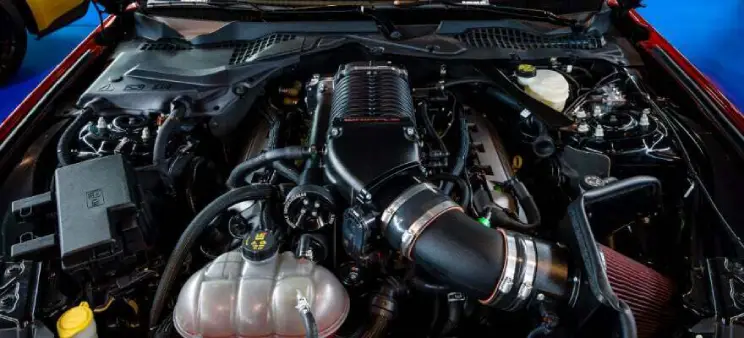
Ford Coyote 5.0 – America’s Modern Muscle Heart
The Coyote V8 brought the Mustang back swinging.
High-revving, naturally aspirated, and endlessly moddable, it showed the world that modern muscle could handle corners and rev hard. From street builds to supercharged monsters pushing 700 horsepower the Coyote became a benchmark.
Why it matters:
It redefined what an American V8 could be.
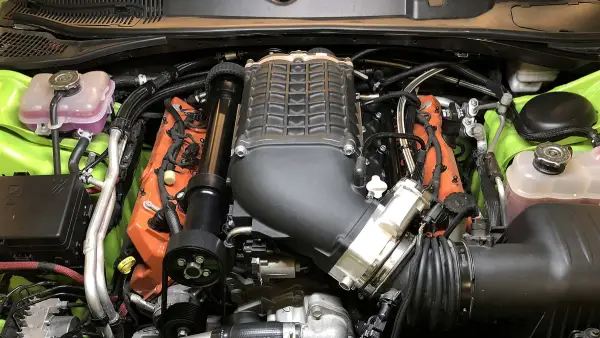
Dodge Hellcat 6.2 – Power Without Apology
The Hellcat engine didn’t ask permission.
707 horsepower straight from the factory was outrageous—and that was just the beginning. Dodge embraced excess, noise, and tire smoke, and buyers loved it.
More than speed, the Hellcat delivered attitude.
Why it matters:
It brought raw, unfiltered muscle back to showrooms.
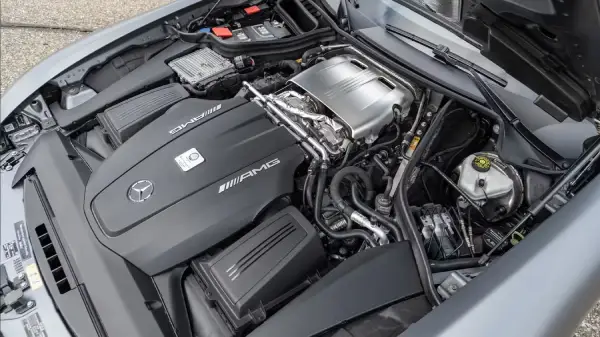
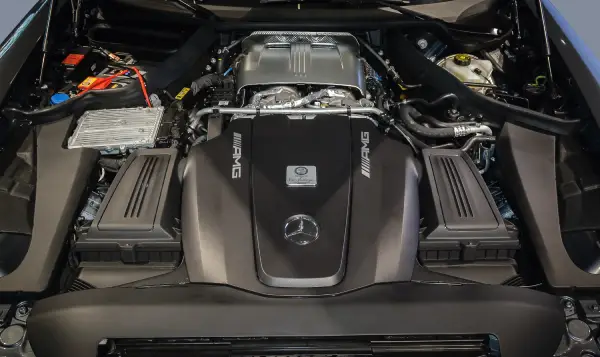
Mercedes-AMG M177/M178 – Street Based Race Tech
The AMG 4.0 liter twin turbo V8 blurred the distinction between a luxury sedan and a race car.
The power delivery was unrelenting and the throttle response remain quick with the turbo tucked between the cylinder bank. From brutal sedans to record-setting supercars, this engine proved performance didn’t need to sacrifice comfort.
Why it matters:
It merged luxury with serious track credibility.
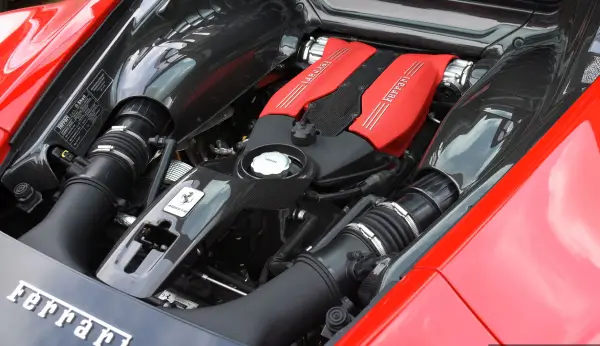
Ferrari F154 – Turbocharging Done the Ferrari Way
When Ferrari returned to turbocharging, expectation were sky-high—and the F154 delivered.
Sharp response, massive power and championship-winning reliability made it one of the most celebrated engines of the modern era. It didn’t just win awards—it won races.
Why it matters:
It proved turbo engines can still feel emotional.
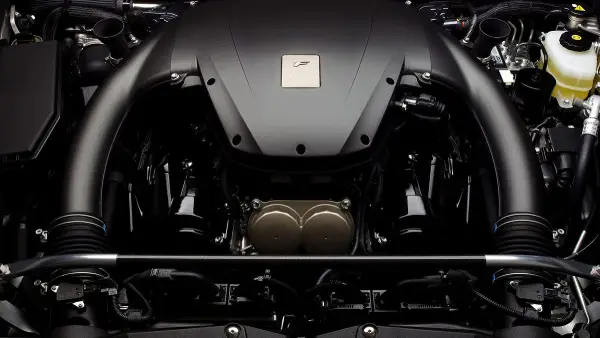
Lexus LFA V10 – The Sound That Time Can’t Replace
No engine on this list is as emotional as the LFA’s V10.
Revving past 9,000 RPM with a soundtrack tuned by Yamaha, it delivered an experience no spec sheet can explain. Built without compromise, it exists purely because Lexus wanted to create perfection.
And they did.
Why it matters:
It reminded us engines can be art.
Why These Engines Will Always Matter
Technology will evolve. EVs will dominate headlines. But these engines represent something timeless—the connection between driver and machine.
They weren’t just powerful.
They were memorable.
FAQs
Q: Are naturally aspirated engine better than turbo engine?
A: Naturally aspirated engine often deliver better throttle response and sound while turbo engines provide more power and efficiency. It depend on driving style.
Q: Will these engines become collectibles?
A: Many already are. Engine like the LFA V10, Ferrari F154 and Hellcat V8 are increasing in value as production ends.
Q: Do modern engine last as long as older ones?
A: Yes—when properly maintained. Engine like the B58 and Coyote have proven strong long term reliability.
Also Read: BMW SUVs Are More Reliable Than Ever — But Do They Really Beat Lexus & Acura in 2025?