
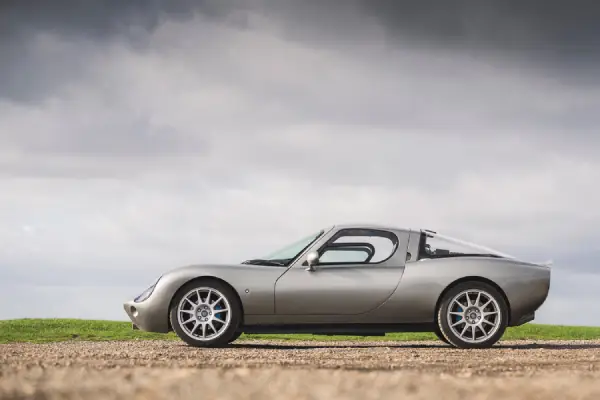
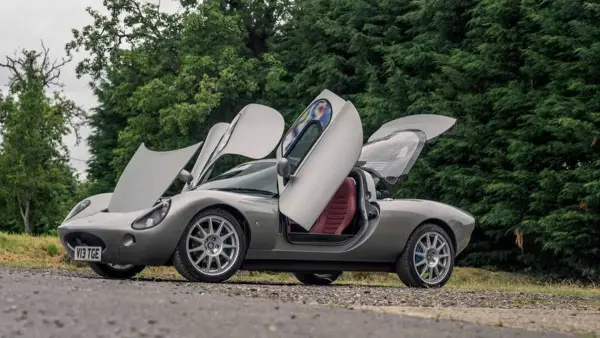
Wells Vertige Sports Car: While global car giants quietly scale back ambitious EV targets, one small British automaker is doing the opposite — and betting on something radically old-school. No batteries. No over-the-air updates. No digital overload.
Wells Motor Cars, a boutique manufacturer based in Warwickshire, is doubling down on a lightweight, analog sports car at a time when most of the industry is obsessed with weight, screens, and software.
While You Care for Your Car, Care for Your Child’s Future Too 💖
A fun and educational book every parent should gift their kid.
 Get Kiddy Store Fortune Now
And surprisingly, it’s working.
EV Fatigue Is Real — and Wells Is Paying Attention
Cooling demand for electric coupes has forced several major brands to hit pause on EV expansion plans. Rising costs, charging concerns, and growing consumer fatigue with heavy, tech-heavy vehicle have reshaped buying behavior.
Wells sees that shift as an opportunity.
The company has confirmed plan to increase production of its Vertige sports car to 12 unit in 2026 before doubling output to 24 cars in 2027. Those numbers may sound tiny but for a hand-built, niche performance machine it’s a meaningful vote of confidence.
This isn’t about chasing volume. It’s about meeting demand without losing the soul of the car.
The Vertige: A Modern Sports Car That Feels Old in the Best Way
The Wells Vertige first turned heads at the 2021 Goodwood Festival of Speed, where founder Robin Wells unveiled his vision of a true driver’s car — one that prioritizes feel over features.
Built almost entirely with a British supply chain, each Vertige is assembled by hand in England, and it shows.
At under 1,870 pound dry the mid-engine coupe is featherlight by modern standard. Power come from a naturally aspirated 2.5-liter Ford Duratec four cylinder, producing up to 250 horsepower, pair with a six speed manual transmission.
No turbos. No hybrids. No electric assistance.
Just throttle response, revs, and mechanical connection.
Pure Driving, No Filters
Wells didn’t just chase low weight — it engineered the Vertige to feel alive.
- Unassisted rack-and-pinion steering
- Individual throttle bodies
- Double wishbone suspension on all four corners
- 11-inch ventilated brakes with four-piston calipers
- 34,700 lb-ft/degree torsional stiffness
The result is a car that communicates every texture of the road without software smoothing things out. In a world where even small sports cars are getting heavier and more complex, the Vertige feels refreshingly honest.
Small Outside, Surprisingly Practical Inside
Despite its compact footprint just under 13 feet long and 5.7 feet wide — the Vertige isn’t a toy.
It offers:
- 7 cubic feet of rear cargo space
- Optional 2.3 cubic-foot front trunk
- 13.2-gallon fuel tank, making real road trips possible
Even the dramatic dihedral doors are thoughtfully designed, extending only about 1.6 inches beyond the body when opened — perfect for tight parking spaces.
Old-School Craft Meets Just Enough Modern Tech
Inside, Wells strikes a rare balance.
Analog gauges move with the adjustable steering column, keeping everything perfectly aligned. A subtle 7-inch touchscreen adds Apple CarPlay and Android Auto — and nothing more than necessary.
The cabin feels special thanks to:
- Hand-stitched Scottish leather
- Alcantara trim
- A wooden gear knob carved from a single block of sustainably sourced wood
It’s not retro for the sake of nostalgia — it’s intentional minimalism.
Why the Vertige Matters Right Now
Modern performance cars including EVs, routinely tip the scales well past 2,000 pound. Even icons like the Miata have grown heavier with each generation.
The Vertige fills a gap many enthusiasts didn’t realize was missing.
It delivers the kind of lightweight, naturally aspirated experience once defined by classic Lotus models — but with modern build quality and usability. For drivers tired of screens, fake engine sounds, and digital interference, Wells offers something refreshingly human.
Internal Combustion Isn’t Done Yet
Wells’ production increase may seem modest but its message is loud.
While big manufacturers hedge bets and rethink electrification timelines, this small British brand is confidently backing mechanical purity. The Vertige proves there’s still demand for cars that prioritize feel, balance, and simplicity over specs and software.
In 2026 internal combustion isn’t just surviving — in places like Warwickshire, it’s quietly thriving.
FAQs
Q: What is the Wells Vertige?
A: The Wells Vertige is a lightweight, mid-engine British sports car focused on analog driving feel, manual transmission, and minimal technology.
Q: Is the Wells Vertige electric or hybrid?
A: No The Vertige uses a naturally aspirated 2.5-liter gasoline engine with no hybrid or electric assistance.
Q: Why is Wells increasing production while others cut EV plan?
A: Wells is responding to growing demand for lightweight, driver focused cars as enthusiasm for heavy, tech-laden EV softens.
Also Read: The Phantom Pontiac Muscle Car Gen-Z Probably Has Never Heard Of (But Should)