
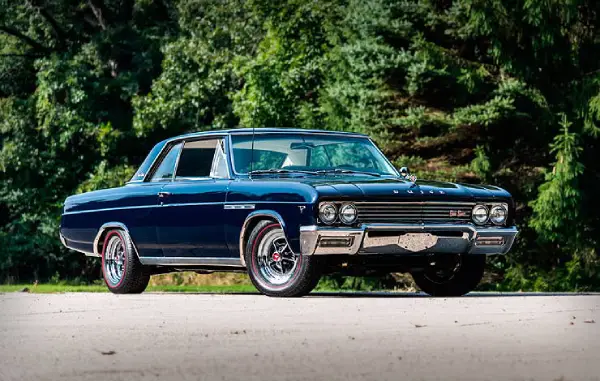
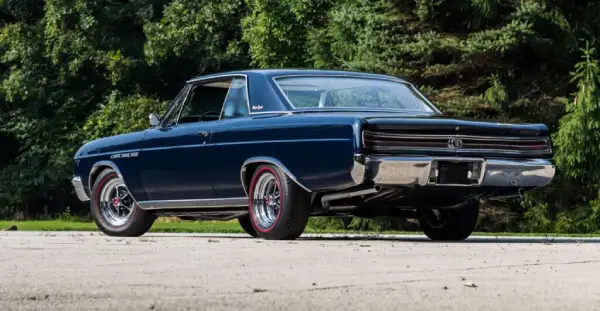
Buick Skylark GS Luxury Muscle Car: It didn’t shout. It didn’t posture. And that’s exactly why it mattered.
Long before “sport-luxury” became a marketing checkbox, Buick quietly built a car that confused almost everyone—and impressed the few who truly understood it. In the mid-1960s, while muscle cars were busy screaming their intentions through stripes, scoops, and snarling names, Buick slipped something unexpected into its lineup: a refined midsize that looked perfectly at home outside a country club… yet packed the kind of torque that could humble louder, brasher rivals.
While You Care for Your Car, Care for Your Child’s Future Too 💖
A fun and educational book every parent should gift their kid.
 Get Kiddy Store Fortune Now
That car was the Skylark Gran Sport—and it may be one of the most important “early experiments” in performance luxury ever built.
A Muscle Car That Didn’t Look Like One
By January 1965, Buick finally said what many buyers were already thinking: Why can’t one car do both? Comfort and speed. Luxury and power.
Buick provided the Gran Sport (GS) as an option package for the Skylark coupe, hardtop and convertible rather than developing a stand alone muscle car. The strategy was ingenious—and a bit devious. Oversized scoops and crazy graphics were not added to the automobile. Rather, it maintained elegant lines, understated badging, and a mature interior.
The outcome? Before you buried the throttle, the automobile appeared composed, mature, and peaceful.
The First Buick to Mix Luxury and Muscle
The Skylark GS wasn’t Buick’s first powerful car, but it was the first to blend real performance with genuine refinement in a midsize package.
Under the hood sat Buick’s legendary 401-cubic-inch “Nailhead” V8, officially labeled a “400” to politely sidestep GM’s internal displacement rules. On paper it produced 325 horsepower—but the real headline was torque.
Nailhead 401 V8 Highlights
- Torque: 445 lb-ft
- Personality: Low-end shove over high-rev drama
- Nickname: Wildcat 445 (Buick bragged about torque before it was cool)
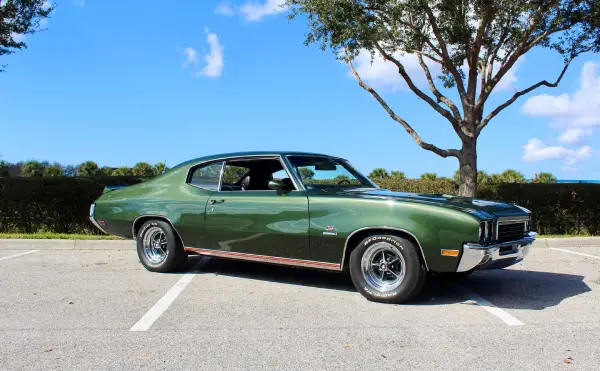
Peak torque arrived early, meaning the GS didn’t need to scream to feel fast. It surged forward with effortless authority—the kind of power that made passing three cars on the highway feel… casual.
More Torque Than a Pontiac GTO—Seriously
Here’s where the story gets fun.
In 1965 the standard GTO 389 made 431 lb ft of torque. Legendary no question. But Buick quietly beat it with 445 lb-ft—and did so in a car that felt calmer, quieter and more composed.
The difference wasn’t just numbers; it was character.
- GTO: Loved revs, noise, and attention
- Skylark GS: Loved effortless speed and civilized manners
Buick even gave buyers options a standard 3-speed manual, optional 4-speed manual, or an automatic for those who preferred smooth cruising with hidden muscle.
Luxury Muscle Without the Muscle-Car Price Tag
Here’s the part modern collectors often overlook.
Because the Skylark GS never wore a headline-grabbing name, it avoided the hype tax. Even today, values tend to stay well below the era’s biggest icons.
Compared to:
- 1965 Pontiac GTO
- 1966 Chevrolet Chevelle SS
- 1965 Ford Mustang GT
…the Buick still plays the “why is this cheaper?” card—despite delivering similar real-world performance with more comfort.
That makes the GS one of the smartest buys for enthusiasts who value driving experience over badge bragging.
Rare Then, Rare Now
Buick didn’t flood the market with Gran Sports.
Production Numbers Snapshot
- 1965 GS Total: ~15,780 units
- Convertibles: ~2,147
- 1966 GS Total: ~13,816 units
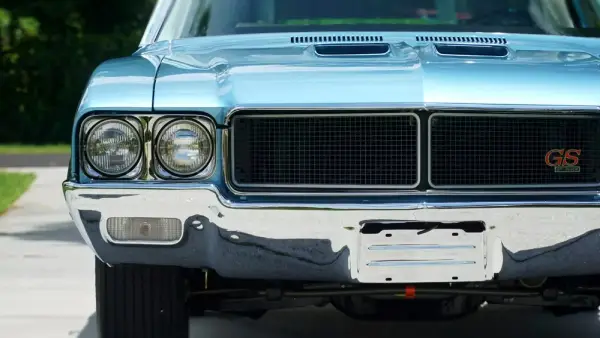
Hardtops dominated sales while convertibles and post coupes remained scarce—making clean examples today genuinely special finds.
If you spot a well-preserved Buick Skylark GS convertible, luck may officially be on your side.
The Blueprint for Modern Performance Luxury
What Buick accidentally created in the 1960s became a formula the industry would spend decades perfecting.
The GS proved that:
- Power doesn’t need to shout
- Luxury doesn’t have to be slow
- A car can be fast and livable
That DNA shows up everywhere now—from stealthy sedans of the 1990s to modern monsters like the Cadillac CT5-V Blackwing and BMW M5.
Buick didn’t just build a fast car. It built a concept—one that made sense only years later.
Why the Skylark GS Still Matters in 2026
Today’s buyers expect dual personalities from their cars. But in the mid-1960s, that idea felt risky—almost contradictory.
The Skylark Gran Sport wasn’t flashy enough for the muscle crowd and wasn’t conservative enough for traditional luxury buyers. Yet history has been kind to it. What once confused people now feels visionary.
It was luxury with a wild side—before anyone knew how valuable that balance would become.
Final Thought
Before the world understood “sport-luxury,” Buick built it—quietly, confidently, and without asking for applause. The Skylark Gran Sport didn’t need to make sense back then.
It just needed to work. And it did.
FAQs
Q: What made the Buick Skylark GS different from other muscle car?
A: Its focus on torque, comfort and subtle styling. It delivered serious performance without aggressive look or a harsh ride.
Q: Was the Skylark GS faster than the Pontiac GTO?
A: In straight line torque delivery yes it had more torque. Overall performance depended on setup but the Buick felt stronger at low speed.
Q: Why is the Skylark GS more affordable today?
A: It lacks the pop-culture fame of cars like the GTO or Chevelle keeping demand—and prices lower.
Q: Is the 401 Nailhead engine reliable?
A: Yes when properly maintained. It’s known for durability and strong low end performance.
Q: Is the Skylark GS a good collector car in 2026?
A: Absolutely—especially convertibles and original spec cars. Many see it as an undervalued future classic.
Also Read: The Sports Car With Toyota Reliability And Porsche Performance