
For riders who crave luxury, comfort and commanding performance on two wheels, the Honda Gold Wing has long been the undisputed king of touring motorcycles. For decade it has set the standard for what a long distance machine should be smooth, powerful, reliable, and engineered with a level of refinement that few manufacturer have ever matched. Whether it’s a weekend escape or a coast-to-coast adventure, the Gold Wing delivers a riding experience that stand in a league of its own.
This article takes you through the iconic journey of the Honda Gold Wing—from its engineering DNA to its evolution, upgrades, and buying considerations while offering insights for rider looking to customize or purchase one through trusted affiliate recommendations.
Honda tested those advanced concepts like fuel injection, automatic transmission, and even an auto-deploying centerstand as far out in the future as possible back in the 1970s. So for the debut of the GL1000 at the 1975 Cologne Motor Show, a lot of the people there did not quite know what to make of it.
While You Care for Your Car, Care for Your Child’s Future Too 💖
A fun and educational book every parent should gift their kid.
 Get Kiddy Store Fortune Now
Certainly, by 1976, the Gold Wing had found its niche in the American marketplace. Its smooth undersurface sure attracted riders who stood by its reliability and ability to conquer long distances, becoming the progenitor of motorcycle touring in the U.S. Owners have been busy equipping their motorcycles with saddlebags, windshields, backrests, and other items to make their rides travel-ready.
However, the engineering of this bike was not deftly aligned with touring needs. Peak torque was achieved most of the time at 5,500 revs, making it undesirable to the usual 3,000 for most touring riders who prefer their rpm range while passing or climbing without downshifting- the same suspension is firm, unlike a long-distance cruiser, giving it a feel more comparable to sportbikes.
It did have a few peculiarities, but the GL1000 was, for many, touring-oriented steering geometry having rake at 28 degrees and 4.7 inches of trail- far more relaxed in comparison to the sportier CB750’s 27 degrees and 3.7 inches of trail.
Honda generally did not do a lot of updating to the machines until 1978, and then adjustments were made for improving the torque output at low rpm levels. These included smaller 31mm carburetors and reduced valve timing. Honda’s product team had initially noticed how their clients modified their Gold Wings, and by the end of the first production run of the GL1000, factory options such as saddlebags and a top trunk would be offered. Luxury and convenience were going to add to the weight of the future models.
2nd Generation: GL1100
The GL1100 addressed many early criticisms. Honda increased low-rpm torque by reworking the carburetor and altering valve timing. The wheelbase stretched for better passenger comfort and rake/trail figures were adjust for improved stability. The addition of an air suspension system made long distance riding smoother and less fatiguing.
By 1982 the luxurious Aspencade variant arrived fully equipped for touring straight from the showroom.
3rd Gen: GL1200- An amalgam of finesse and might
With the GL1200 Honda refine the Gold Wing further. Peak torque dropped to a lower and more usable 5,000 rpm while horsepower and torque increase significantly. The engine ran relax even at highway speed dropping rpm at 60 mph from 3,700 to 2,977.
Honda embraced chassis rigidity to reduce flex improving steering and giving the big touring machine a sportier feel. Standard luggage capacity increase, cementing its position as a top tier touring bike.
4th Generation: The Six-Cylinder Revolution
In 1984 Honda made a bold leap a new flat six engine. Deliver 100 hp and an impressive 110 lb ft of torque at just 4,000 rpm the GL1500 became a powerhouse of smoothness and refinement. Its low end grunt and refined manner transform long distance motorcycling.
The added weight led Honda to engineer a now-iconic feature: an electric reverse gear. Despite technological advancements, carburetors stayed due to cost concerns around fuel injection during that era.
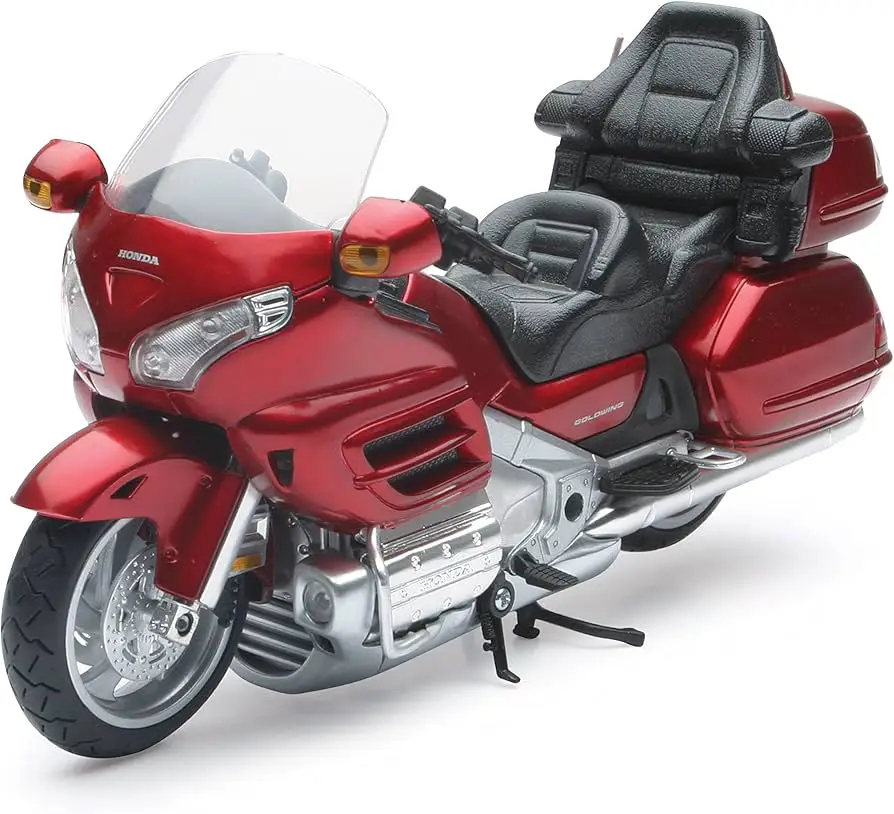
Fifth Generation – Entering the Era of 1800cc (GL1800)
When Honda surveyed rider for the next evolution the verdict was clear keep the six-cylinder but give it more power. The answer was the 1,832cc GL1800.
Major highlights included:
- Aluminum twin-spar frame
- Engine used as a structural member
- Sharper steering geometry
- Honda PGM-FI fuel injection
- 117 hp and 123 lb-ft of torque
The GL1800 stayed in production for 17 year a testament to its near-perfect balance of power, comfort, and technology.
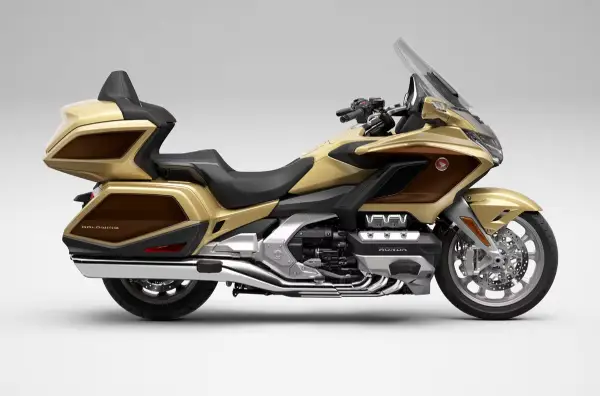
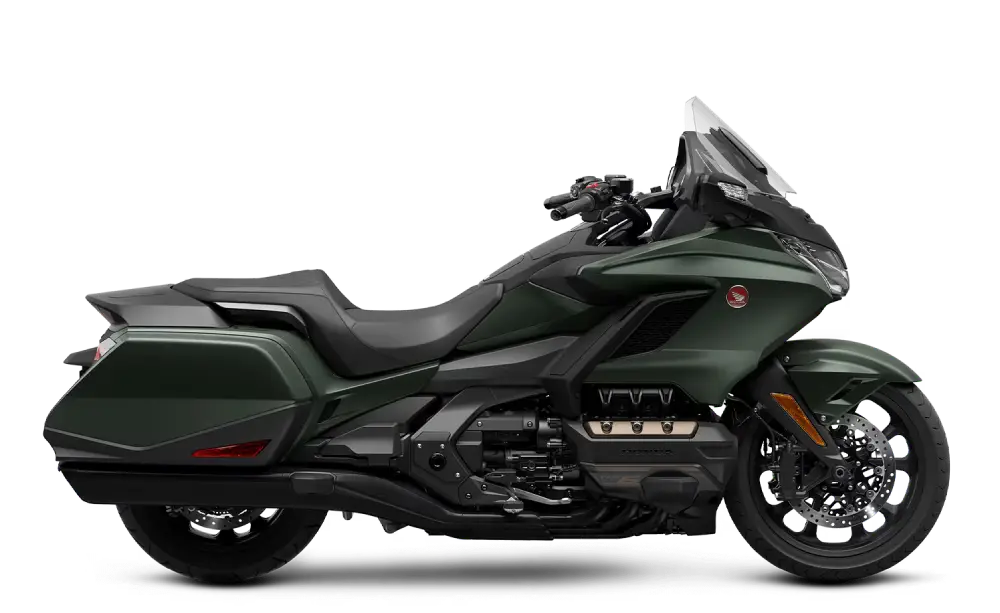
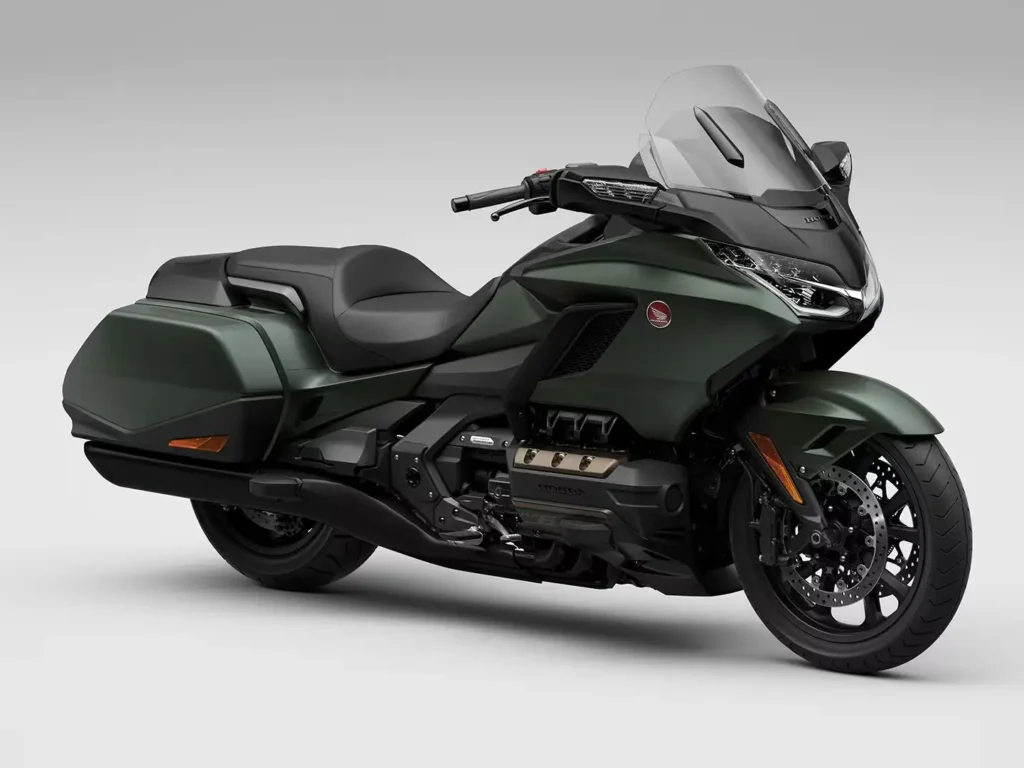
The ultimate touring motorcycle of the sixth generation: 2018 to present Gold Wing version.
The latest Gold Wing is nothing short of a technological masterpiece. Honda reengineered the iconic flat-six with four valves per cylinder dramatically improving airflow and efficiency. The engine delivers:
- 125 hp at 5,500 rpm
- 125 lb ft of torque at 4,500 rpm
- Over 100 lb-ft of torque from just 850 rpm
Despite all the power, Honda reduced the overall weight by nearly 90 pounds using advanced FEA engineering methods. Modern version feature state-of-the-art electronics, DCT automatic transmission, rider modes, adjustable suspension and advanced infotainment.
Conclusion: The Tale of a Touring Legend Evolution
From its origins to the latest marvels of high tech wonder the Honda Gold Wing has always been the yardstick for touring motorcycles. Each generation introduced dissimilar creative innovation- whether from four to six cylinders, acceptance of fuel injection, or seamlessly incorporated advanced electronics and suspension technology.
It is all about pure power and mega features. It’s all about a better experience for the rider. With the Gold Wing, Honda has come pretty close to perfection in a touring area that needs safety, comfort, performance and creativity.
It’s a gold jubilee for Gold Wing, which is a testimony to Honda’s unrelenting drive for engineering excellence and rider comfort. For road-trippers reminiscent of the North American stereotype- both ardent tour riders and green, impressionable newcomers- the Gold Wing is still the touchstone.
FAQs
Q1. Is the Honda Gold Wing good for beginner?
A: While it’s extremely stable and easy to ride its size and weight make it better suited for experienced rider. Beginner may find it too large unless they are already confident handling heavy motorcycle.
Q2. Does the latest Gold Wing come with a manual transmission?
A: Yes Honda offer both a 6 speed manual and a 7 speed Dual Clutch Transmission. The DCT version is extremely popular among touring enthusiast.
Q3. How many mile can a Honda Gold Wing last?
A: With proper maintenance, Gold Wing are known to last 200,000 mile or more. Some owners have reported crossing 300k+ miles.
Also Read: Honda Motorcycles: Where Cutting-Edge Tech Meets Unmatched Performance