
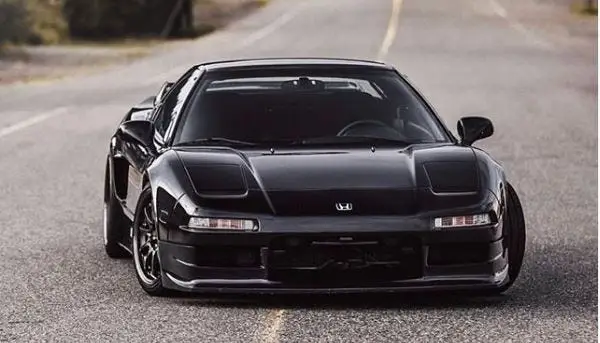
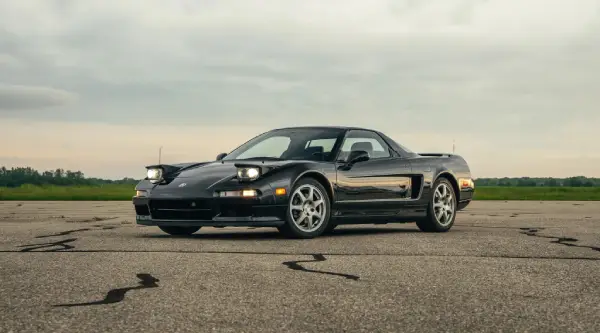
Honda NSX Debut: Some car launches are carefully choreographed. Others go down in history because everything almost went wrong.
The Honda NSX belongs firmly in the second category.
While You Care for Your Car, Care for Your Child’s Future Too 💖
A fun and educational book every parent should gift their kid.
 Get Kiddy Store Fortune Now
Back in 1989, Honda didn’t just introduce a new sports car—it accidentally hijacked a Ford press event, rattled an entire hotel ballroom, and announced to the world that Japan was ready to take on Europe’s supercar elite. What followed became one of the most legendary debuts in automotive history.
Let’s rewind to the moment when a screaming V6 changed everything.
The NSX Before It Had a Name
Long before it became a poster car for an entire generation, the NSX started life as an experiment.
Honda began exploring the idea of a mid-engine sports car in the mid-1980s—something completely outside its sensible, reliability-first image. Early tests involved a chopped-up Honda City, purely to understand balance and packaging. That crude experiment lit a spark.
Honda and the Italian design firm Pininfarina will soon work together to create a concept called the HP X. The idea was simple but ambitious a lightweight, mid engine performance car that could rival Ferrari without the drama or unpredictability.
That philosophy would become the NSX’s secret weapon.
Chicago, 1989: The Launch That Wasn’t Supposed to Happen Like This
The stage was set at the 1989 Chicago Auto Show but not in a flashy convention hall. Instead, Honda shared a hotel ballroom with other automakers—including Ford which was hosting its own press conference next door.
Moments before Honda’s official unveiling, then-CEO Tadashi Kume decided to inspect the car personally.
He removed the cover.
He climbed inside.
And then—unexpectedly—he fired up the engine.
Not just a polite blip of the throttle.
He revved it hard.
The sound of Honda’s mid-engine V6 echoed through the ballroom, bleeding straight into Ford’s press event next door. Panic set in among Honda’s PR team as they desperately tried to get him to shut it down.
Too late.
Journalists flooded in. Whispers spread instantly. Honda had something big—and loud.
By the time the official press conference began the room was packed wall-to-wall. Without planning it Honda had created the ultimate teaser.
The NSX had arrived.
Why the First NSX Changed the Supercar World
When the covers finally came off, the shock wasn’t just how good the NSX looked—it was how normal it felt.
Under the rear glass sat a 3.0-liter naturally aspirated V6 with VTEC, producing around 270 horsepower. On paper, that didn’t sound outrageous. But the way the car delivered performance was revolutionary.
What Made the NSX Different:
- Mid-engine balance, inspired by Formula 1
- All aluminum construction, unheard of at the time
- Supercar performance, without supercar headaches
- Reliability you could trust every day
This wasn’t a fragile weekend toy. It was a supercar you could drive to work, sit comfortably in traffic and still attack corner like a race car.
That’s why many enthusiasts still call it the world’s first “daily supercar.”
Even Ferrari engineers reportedly bought NSXs to benchmark their own cars.
The Invisible Fingerprints of Ayrton Senna
The NSX relationship to Ayrton Senna is among its most intriguing aspects.
Senna gave important input during the last stages of development, especially on handling balance and chassis rigidity even though he was not formally recognized as a designer. With his aid, the NSX evolved from a quick sports vehicle to something genuinely unique when driving.
As a result, decades later, steering feel, feedback, and balance continue to be praised.
A myth that got older like fine wine
The first-generation NSX was made for nearly 15 years and sold about 18,000 cars around the world. It has become a collector’s dream because of its legendary fame and low production number.
Now:
- Examples with high mileage begin at about $50,000.
- Well-maintained, spotless vehicle can cost more than $150,000.
- Over $200,000 has been sold for ultra-low mileage models.
For a car that previously stunned a hotel ballroom, it’s not bad.
The Second-Gen NSX: Great, but not understood
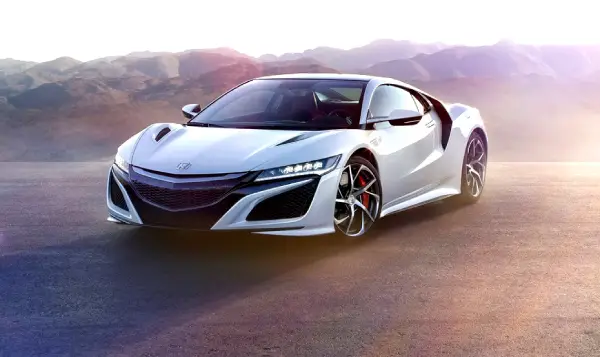
Honda brought back the NSX brand in 2015. This time it was a hybrid supercar with all wheel drive and almost 600 horsepower.
From a technological point of view, it was wonderful.
How do you feel? It didn’t exactly hit the same way.
Sales stayed low even though the product worked well and had the latest technology. In 2022, the second-generation NSX quietly left the market, finishing its existence with a strong Type S farewell edition.
Still, the fact that it existed showed that the NSX name still meant something.
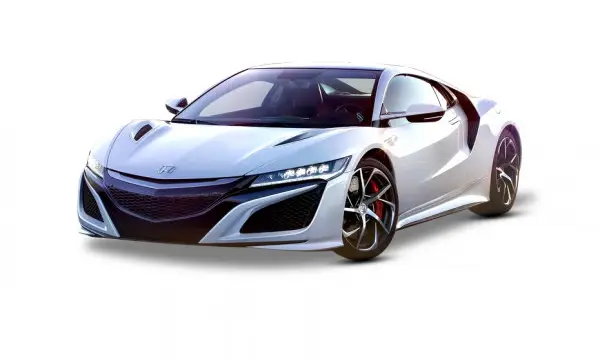
Could the NSX Return Again—This Time Electric?
Honda has been outspoken about making high-performance electric cars, which has led to talks about an electric NSX replacement. If it happens the same old problem will be there how to combine new ideas with old ones.
Because the NSX was never just about speed.
It was about balance.
Final Thoughts
The Honda NSX didn’t just debut loudly—it rewrote the rules.
Honda made a big splash in the supercar industry in 1989 by accidently snatching Ford’s attention. That event is still remembered in the history of cars decades later.
Some legends are carefully planned.
Others are born by revving the engine at exactly the wrong time.
FAQs
Q1: What make the NSX launch so controversial?
A: Just a few moment before the formal unveiling the Honda CEO intentionally cause a disturbance by revving the engine loudly which simultaneously interrupted a Ford news conference take place next door and shift the focus away from it.
Q2: What does it imply that the NSX is the first ‘daily supercar’?
A: Because it merged a supercar performance with a regular car’s comfort, reliability and ease of use which was a very novel concept back then.
Q3: Is Honda planning a new NSX?
A: While nothing is confirm Honda has hinted at a future electric performance flagship, and many believe the NSX name could return.
Also Read: 4 Apple CarPlay Problems Every Driver Faces (And How to Fix Them Fast!)