
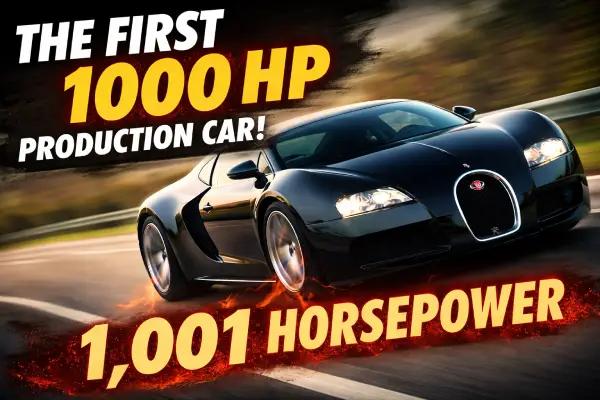
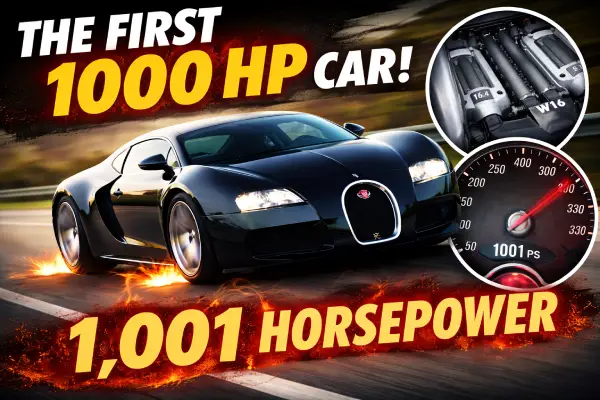
First 1000 Horsepower Car: For ten year automakers kept pushing the boundaries; 200 horsepower, 500 horsepower, and even 600 horsepower seemed unattainable but a production vehicle with 1,000 horsepower? That didn’t seem possible.
The Bugatti Veyron 16.4 followed.
While You Care for Your Car, Care for Your Child’s Future Too 💖
A fun and educational book every parent should gift their kid.
 Get Kiddy Store Fortune Now
With a peak speed of 407 km/h (253 mph) and an astounding 1,001 PS (almost 1,000 hp) this engineering marvel not only broke the barrier but also completely destroy it in 2005.
And with that performance automobile regulations were permanently altered.
The Insane Concept That Initiated It All
Ferdinand Karl Piëch the visionary behind Volkswagen Group, is where the narrative starts.
According to legend he drew an idea on an envelope while riding a train in Japan
an 18 cylinder engine with more than 1,000 horsepower.
It sound crazy doesn’t it? It was.
But Piëch wasn’t interested in “normal.” His goal was clear:
- Build the fastest car in the world
- Make it luxurious and comfortable
- Ensure it could be driven every day
Basically, a hypercar that could go from a racetrack… to the opera.
From Concept to Reality
Before the final Veyron was born Bugatti experimented with multiple concepts:
- EB 118 (luxury coupe)
- EB 218 (sedan)
- EB 18/3 Chiron
- EB 18/4 Veyron
Each version got closer to perfection.
Eventually engineer ditched the complicate W18 engine and replaced it with something even more iconic:
The quad turbocharged W16 engine
And that decision changed everything.
Inside the Beast: Insane Engineering
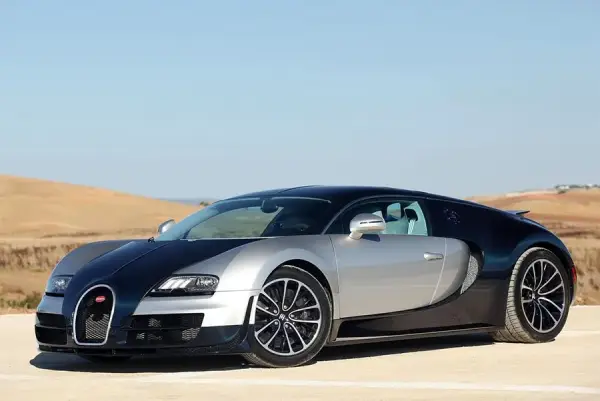
The Bugatti Veyron wasn’t just powerful—it was engineering madness on wheels.
Here’s what made it special:
- 8.0-liter W16 engine
- 4 turbochargers
- 1,001 PS & 1,250 Nm torque
- 0–100 km/h in just 2.5 seconds
But raw power was only half the story…
Fun Fact:
To keep the engine cool, the Veyron uses 10 radiators. Yes, ten.
Built to Handle the Impossible
Creating a 1,000 HP car wasn’t just about the engine. Everything had to be reinvent:
- Special Michelin tires (regular ones would literally explode)
- 7-speed dual-clutch gearbox built from scratch
- Active aerodynamics for stability at 400+ km/h
- Air brake system using the rear wing
This wasn’t just a car—it was a complete engineering ecosystem.
The Price of Perfection
Here’s the shocking part…
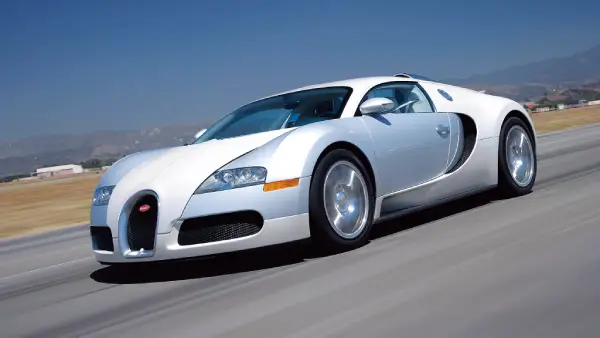
Bugatti reportedly spent over $1.6 billion developing the Veyron.
Even with a price tag of around $2.6 million per car, the company lost money on every unit sold.
Let that sink in.
This wasn’t about profit—it was about making history.
Why the Veyron Still Matters Today
Today, 1,000 horsepower cars are more common—thanks to electric vehicles like:
- Tesla Model S Plaid
- Modern hybrid hypercar
But back in 2005?
The Veyron was lightyear ahead of its time.
It proved that a car could be:
Extremely fast
Ultra luxurious
Surprisingly usable
And that’s why every modern hypercar from Bugatti Chiron to Koenigsegg—owes something to the Veyron.
Last Thoughts
In addition to shattering records, the Bugatti Veyron revolutionized the concept of a performance vehicle.
It paved the way for a new era of hypercar and made the seemingly impossible achievable.
Almost twenty years later its legacy is still unaltered.
Because it means everything to be the first.
FAQs
Q1. How much does a Bugatti cost?
A: The original selling price was approximate $2.6 million however current resale value can be very different.
Q2. How is the Bugatti innovative?
A: It is innovative in that it is the first car to combine outstanding performance luxury and all around practical.
Q3. How many Bugatti did they manufacture?
A: Bugatti manufacture 450 unit of the Veyron over 10 year.
Also Read: Mercedes-Benz EV Models You Can Buy in 2026 – The Future of Luxury Is Here!