
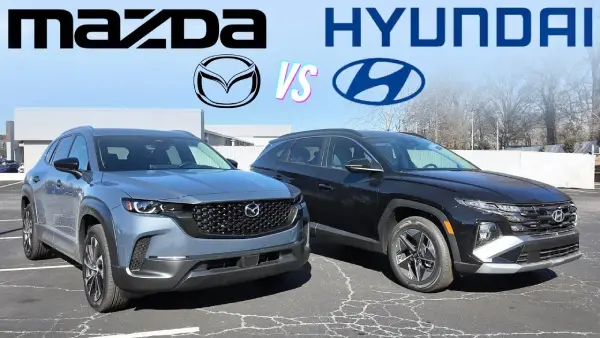
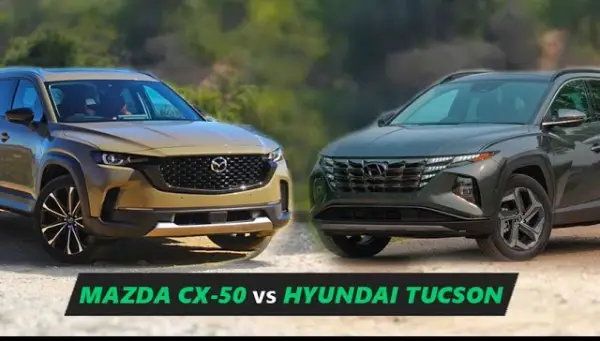
Hyundai Tucson Vs Mazda CX-50: When buying a new SUV, concern regarding cost, fuel efficiency and cargo capacity are typically the first thing to come up. However safety is the most important concern for many families.
For this reason the Hyundai Tucson and Mazda CX-50 are among the most sought after small SUV on consumers’ short list. Both have contemporary design, cutting-edge technology and cozy interior. More significantly both have received some of the best safety ratings out there.
While You Care for Your Car, Care for Your Child’s Future Too 💖
A fun and educational book every parent should gift their kid.
 Get Kiddy Store Fortune Now
Normally, comparing two SUVs on safety produces a clear winner. One scores better in crash tests, has stronger headlights, or includes better driver assistance systems.
This time it’s different.
The Tucson and CX-50 both walked away with the 2026 IIHS Top Safety Pick+ award the Insurance Institute for Highway Safety’s highest recognition. They also perform exceptionally well in federal crash testing, making this one of the closest safety comparisons you’ll find in today’s SUV market.
So if both are among the safest vehicles on sale, is there anything that separates them?
Let’s break down every important safety category to find out.
Safety Ratings at a Glance
| Safety Category | Hyundai Tucson | Mazda CX-50 |
| IIHS Award | Top Safety Pick+ | Top Safety Pick+ |
| Small Overlap Front Test | Good | Good |
| Updated Moderate Overlap Test | Good | Good |
| Side Impact Test | Good | Good |
| Pedestrian Crash Prevention | Good | Good |
| Vehicle-to-Vehicle Crash Prevention | Good | Good |
| Headlights | Acceptable/Good | Acceptable/Good |
| NHTSA Overall Rating | 5 Stars | 5 Stars |
At first glance there’s virtually no difference between them.
That isn’t common.
Many SUV miss the highest IIHS award because of updated crash tests, poor headlight performance or weaker rear-seat protection. These two managed to satisfy every major requirement.
Why is the IIHS Top Safety Pick+ Award so Significant?
It’s not as simple as it formerly was to get a Top Safety Pick+.
Every year the IIHS continues to tighten its testing protocol in an effort to more closely mimic real-world crashes.
To receive the highest award in 2026 a vehicle must excel in several categories including:
- Small overlap front crash
- Updated moderate overlap front crash
- Side-impact protection
- Rear-seat passenger safety
- Pedestrian crash prevention
- Vehicle-to-vehicle crash avoidance
- High performing headlight
Missing just one requirement can prevent a vehicle from earning the prestigious “+” rating.
The Tucson and CX-50 passed every major hurdle.
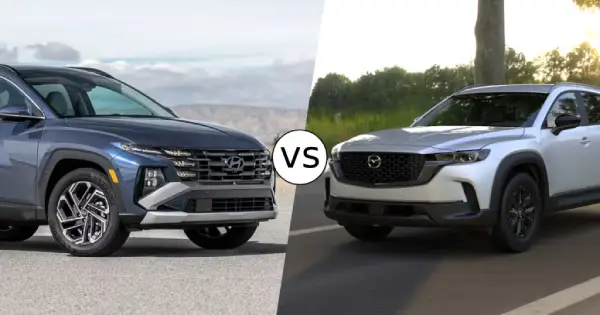
Hyundai Tucson Safety Breakdown
Over the past few years Hyundai has worked to make the Tucson one of the safest small SUV on the market.
High-strength steel is used in its body structure to absorb impact energy and protect passengers in severe collision.
Hyundai offers a wide range of standard safety features in even lower trim levels, in addition to crash protection.
Typical Hyundai SmartSense Features:
- Collision-Avoidance Assistance for Forward
- Emergency Braking Automation
- Assistance with Lane Keeping
- Assistance with Lane Following
- Blind Spot Collision Alert
- Avoidance of Rear Cross-Traffic Collisions
- Warning: Driver Attention
- Adaptive Cruise Control (available on several trim level)
- Alert for Safe Exit
These technologies can stop an accident before it happen by continuously monitoring the traffic surrounding the car.
Mazda CX-50 Safety Breakdown
In terms of car safety, Mazda has quietly established one of the best reputations.
Mazda prioritizes structural strength and predictable vehicle handling in addition to electronic driver aids.
That idea is carried over into the CX-50.
Its stiff chassis enhances stability during emergency movements and aids in the distribution of crash forces.
The i-Activsense safety suite from Mazda consists of:
- Smart Brake Support
- Blind Spot Monitoring
- Rear Cross Traffic Alert
- Lane Departure Warning
- Lane Keep Assist
- Adaptive Cruise Control
- Driver Attention Alert
- Traffic Sign Recognition (on select trims)
Like Hyundai, Mazda includes many of these features as standard equipment.
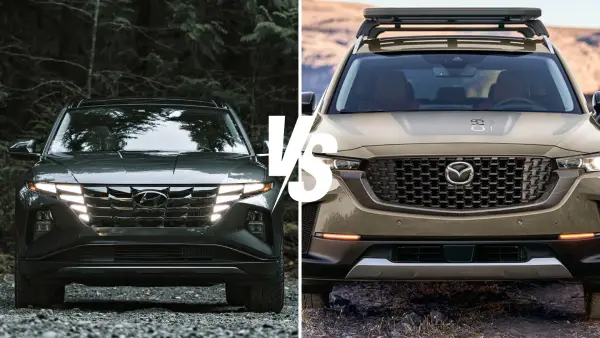
Crash Test Results: A Dead Heat
The IIHS evaluates vehicles using multiple crash scenarios that simulate real-world accident.
Small Overlap Front Crash
This test recreates a collision where only a small portion of the front of the vehicle strikes another object.
Both SUVs received the highest possible Good rating.
Updated Moderate Overlap Test
This newer test focuses heavily on rear-seat passenger protection.
Several competitors struggled with this evaluation.
The Tucson and CX-50 passed comfortably.
Side Impact Protection
Modern SUVs must protect occupants against larger, heavier vehicles than in previous decades.
Again, both vehicles earned the highest rating.
Roof Strength
Strong roofs help protect occupants during rollover accidents.
Although roof strength isn’t always discussed separately, both vehicles meet the structural requirements necessary for Top Safety Pick+.
Advanced Driver Assistance: Nearly Identical
Today’s safest vehicle don’t simply protect you after a crash.
They work hard to prevent crashes from happening in the first place.
Both SUV include:
- Automatic emergency braking
- Pedestrian detection
- Lane centering
- Blind spot monitoring
- Rear cross traffic alert
- Adaptive cruise control
- Driver monitoring systems
Both also performed extremely well during IIHS crash prevention evaluations.
Neither gains a meaningful advantage.
Which SUV Protects Rear Passengers Better?
Rear seat safety has become a major focus in recent IIHS testing.
Many vehicles that performed well in previous years failed updated evaluations because rear passengers experienced higher injury risks.
Fortunately, both SUVs passed the updated tests.
That means parents carrying children or adults in the back seats can feel confident in either vehicle.
Headlight Performance Is More Important Than Most Purchasers Know
Inadequate headlight make it harder to see at night and raise the possibility of an accident.
Headlight quality is now included in the IIHS’s highest safety award.
Depending on the trim level the headlights on the Tucson and CX-50 are rated either Acceptable or Good.
Therefore, before making a purchase customer should still confirm which lighting system is included with the trim they have selected.
Hyundai Tucson: Where It Stands Out
Although safety scores are nearly identical, Hyundai offers a few practical advantages.
Advantages
- More standard safety features on lower trims
- Excellent warranty coverage
- User-friendly driver assistance systems
- Strong family-focused interior layout
Many first-time SUV buyer appreciate Hyundai’s easy-to-use technology.
Mazda CX-50: Where It Stands Out
Mazda approaches safety differently.
Rather than relying heavily on electronics, it also prioritizes driving dynamics.
Advantages include:
- Sportier steering
- Excellent emergency handling
- Strong structural rigidity
- Premium interior feel
Drivers who enjoy being actively engaged behind the wheel may prefer Mazda’s approach.
Real-World Safety Isn’t Just About Crash Tests
Crash ratings are important.
But they’re only part of the equation.
Several everyday factors influence overall safety, including:
- Tire quality
- Proper maintenance
- Driver attention
- Weather conditions
- Vehicle speed
The safest SUV can still be involved in a serious accident if these factors are ignored.
Likewise, advanced driver assistance systems work best when drivers remain alert.
Which SUV Is Better for Families?
If you’re shopping primarily for family transportation, both SUVs deliver outstanding peace of mind.
The Tucson offers:
- Spacious rear seating
- Large cargo area
- Easy child-seat installation
- Excellent standard safety equipment
The CX-50 offers:
- Confident handling
- High-quality cabin materials
- Strong crash protection
- Excellent visibility
Neither vehicle forces parents to compromise on occupant protection.
Ownership Costs and Safety Value
Preventing injuries is only one aspect of safety.
Insurance and repair expenses are also important.
Both SUVs receive high safety rating which makes them more appealing to insurance companies than their lower-rated rivals.
Both cars often offer good long-term value yet repair prices will still differ based on trim, technology, and replacement parts.
So, Which One Is Actually Safer?
Here’s the honest answer
Neither.
Not in any significant way anyway.
The IIHS Top Safety Pick+ title goes to the Mazda CX-50 and Tucson.
Both achieved five-star federal safety rating.
Both include comprehensive driver assistance technology.
Both performed exceptionally well in crash testing.
The differences become so small that they simply won’t affect most real-world buyers.
Instead, your decision should come down to:
- Driving experience
- Interior design
- Fuel economy
- Technology
- Warranty
- Pricing
Safety no longer separates these two excellent compact SUVs.
Final Verdict
Sometimes comparisons produce a clear winner.
That isn’t the case right now.
The best examples of contemporary compact SUV safety are the Hyundai Tucson and Mazda CX-50. Each combine robust structural engineering, cutting edge accident avoidance technologies and superior crash protection.
You can choose either model with confidence if keeping yourself and your passengers safe is your top priority.
The good news for purchaser is that you don’t have to give up safety in order to receive the amenities, style, or driving experience you want.
Everyone wins this matchup.
FAQs
Q1. What is IIHS Top Safety Pick+?
A: IIHS Top Safety Pick+ is the most recognize safety award provided by Insured Institute for Highway Safety. The vehicle needs to do exceptionally well in crash test, pedestrian protection; crash prevention system the performance of headlight etc.
Q2. Does the Hyundai Tucson feature any standard safety systems?
A: Yes The Tucson features automatic emergency braking; lane departure warning; blind spot monitoring; rear cross traffic warning; driver monitor system and many more safety features.
Q3. Is the Mazda CX-50 good for family?
A: No The Mazda CX-50 features excellent crash protection; high structural strength; advanced driver assistance systems; and spacious interior which makes it an excellent family car.
Q4. Which car has better driver assistance technologies?
A: Both SUV offer comprehensive safety technology package. Hyundai focuses on user friendly assistance system while Mazda emphasize both driver engagement and electronic safety aids. Overall performance is extremely similar.
Also Read: 300-HP Nissan 350Z Is the Used Sports Car Bargain That Makes the Civic Si Look Overpriced