
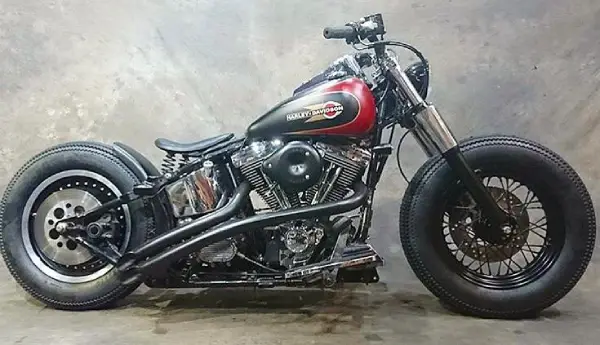
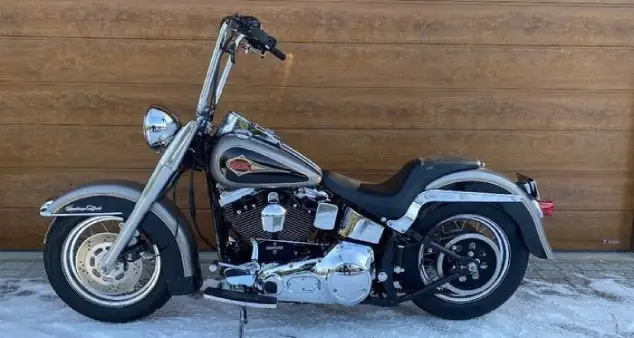
Harley-Davidson Evolution 1340: Some motorcycle engine are remember because they make huge power. Others become famous because they sound incredible, changed the brand or powered a motorcycle that rider still dream about decades later.
Then there are engines that earn a different kind of respect.
While You Care for Your Car, Care for Your Child’s Future Too 💖
A fun and educational book every parent should gift their kid.
 Get Kiddy Store Fortune Now
They simply keep going.
For Harley-Davidson the Evolution 1340 Big Twin belongs in that conversation. It arrived at a crucial point in the company’s history, powered a huge range of motorcycles, and eventually built a reputation for surviving the kind of mileage that makes many older engines nervous.
That doesn’t mean every Evolution 1340 is capable of running forever without repairs. No engine works that way. Parts wear, seals age, bearings eventually need attention and maintenance history can make a massive difference.
But there is something important about an engine that can be repair, rebuilt and return to the road rather than being treated as disposable once the miles start piling up.
And that’s where the Evolution’s story gets interesting.
Why Mileage Alone Doesn’t Tell The Whole Story
Seeing a Davidson with 100,000 mile on the odometer can certainly grab attention.
But mileage by itself doesn’t tell you whether an engine has had an easy life or spent decades fighting through neglect.
A motorcycle could reach six figures after multiple major repairs. Another could have accumulated the same mileage while receiving regular maintenance and only the normal replacement of worn components.
Neither situation automatically makes the motorcycle a bad machine.
For an older Harley, the better question is what happened along the way.
Was the engine maintained properly?
Were known wear points addressed?
Were quality replacement parts used?
Was the motorcycle ridden regularly?
And perhap most importantly, can the engine still be economically repaired when something eventually needs attention?
That’s a much more useful way to think about longevity.
A genuinely durable engine isn’t necessarily one that never need work. It’s one that can absorb years of use, receive the maintenance it needs and continue providing useful service afterward.
The Evolution 1340 has built much of its reputation around exactly that idea.
The Evolution 1340 Arrived At A Critical Time For Harley-Davidson
For the 1984 model year Harley Davidson unveil the Evolution Big Twin.
At 1,340cc it represented a significant change from the company earlier Big Twin design. The engine retained the traditional Harley-Davidson formula including the familiar 45-degree V-twin layout and pushrod-operated overhead valves, but incorporated important changes to its construction and design.
Aluminum cylinder and heads helped modernize the engine while changes to the combustion chamber, ignition system and overall manufacturing helped improve reliability and efficiency.
The timing couldn’t have been more important.
The Evolution arrived during a major period of change for Harley-Davidson. The company needed an engine capable of moving its traditional Big Twin motorcycles forward while improving durability and everyday usability.
The result became one of Harley-Davidson’s most recognizable engines.
And unlike some short-lived designs, the Evolution had plenty of time to establish its reputation.
Production of the Big Twin Evolution continued through 1999.
That’s roughly 16 years of motorcycles using the same basic engine family.
That gives enthusiasts something extremely valuable: decades of real-world evidence.
What Makes The Evolution Different From A Modern Engine?
Part of the Evolution’s appeal comes from its relatively straightforward mechanical design.
There’s no question that modern Harley-Davidson engines have advantages. Newer powerplants offer more sophisticated engineering, stronger performance, improved emissions control and technology that simply wasn’t available in the 1980s.
But older engines can have one advantage when they reach old age:
They’re often easier to understand.
The Evolution’s traditional architecture means experienced Harley mechanics have had decades to learn the engine inside and out.
That matters.
When a motorcycle is 30 or 40 years old, serviceability becomes part of its long term value.
A complicated engine with scarce parts and little technical knowledge behind it can become difficult to keep alive.
An engine with a massive installed base, extensive aftermarket support and generations of mechanics familiar with its common problems is a different story.
The Evolution benefited enormously from that ecosystem.
There are parts available.
There is technical knowledge available.
There are owners who have already encountered many of the problems a new owner might face.
And there are countless examples of these engines being rebuilt rather than abandoned.
That’s a major reason the Evolution remains interesting today.
The 100,000-Mile Mark Doesn’t Scare An Evolution
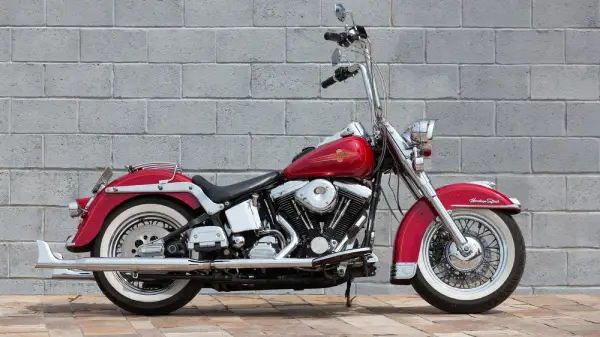
One of the biggest reasons the Evolution 1340 developed its reputation is the number of high-mileage examples associated with it.
Owners have reported Evolutions reaching and passing 100,000 miles.
That’s impressive for any motorcycle engine, particularly when many of those machines have spent decades being ridden rather than sitting in collections.
But the mileage stories get even more interesting.
There are owner-reported examples of Evolution-powered Harleys accumulating several hundred thousand miles.
One frequently discussed example involves a 1987 Tour Glide reportedly reaching more than 400,000 miles. The motorcycle wasn’t completely untouched during that journey and a high-mileage machine shouldn’t be confused with an engine that never required mechanical work.
That’s an important distinction.
The achievement isn’t necessarily that every internal component survived hundred of thousand of mile without being replaced.
The more meaningful point is that the motorcycle could continue accumulating mileage because its engine was capable of being maintained and repair.
That’s what makes long-term durability different from simple resistance to wear.
Repairs Don’t Erase An Engine’s Longevity
This is where high-mileage motorcycle discussions sometimes become misleading.
Someone sees an engine with 150,000 miles and discover that it received a cam bearing, valve job, gasket replacement or other major service somewhere along the way.
Does that mean the engine wasn’t durable?
Not necessarily.
Wear is part of mechanical life.
A motorcycle engine operating for decades is going to need components replaced. Bearings don’t last forever. Seals become brittle. Gaskets age. Valve-train components wear.
The important question is whether those repairs represent normal long-term ownership or a pattern of catastrophic failures.
The Evolution’s reputation isn’t based on the idea that it was indestructible.
It’s based on the fact that owners could continue maintaining it for a very long time.
That’s a much more realistic definition of durability.
The Twin Cam Came Along With More Power And More Complexity
The Evolution wasn’t the only Harley engine capable of serious mileage.
The Twin Cam introduced for the 1999 model year, also developed a strong following.
Harley-Davidson produced several Twin Cam version including the 88, 96, 103 and 110 cubic-inch variant. The engine remain in production until the arrival of the Milwaukee-Eight for the 2017 model year.
There are plenty of Twin Cam motorcycles with six-figure mileage.
Some have accumulated more than 100,000 miles on largely original engines, while others have continued running after various upgrades and repairs.
That makes the Twin Cam a legitimate high-mileage Harley engine.
However, its longevity story has an important footnote.
Early Twin Cam engines became known for issues involving their cam-chain tensioner system. Harley-Davidson eventually moved toward a more durable hydraulic arrangement, along with other changes to the oiling and cam-support systems.
For someone shopping for an older Twin Cam today, the exact year, engine version and maintenance history therefore matter considerably.
The Twin Cam can certainly run for a very long time.
But the Evolution has another advantage that the Twin Cam simply doesn’t have.
It has had more time to prove itself.
Four Decades Is A Long-Term Durability Test
The oldest Evolution Big Twins are now roughly four decades old.
That’s a serious test.
A manufacturer can conduct laboratory testing. Engineers can simulate operating conditions. A new engine can be evaluated for thousands of hours.
But there is no substitute for decades of real-world ownership.
An engine that survives 10 years has demonstrated something.
An engine that survives 20 years demonstrates more.
An engine that remains rebuildable, serviceable and usable after 40 years tells an entirely different story.
The Evolution has had that time.
Some motorcycles powered by the engine have disappeared, of course. Others have been modified, neglected or retired.
But many remain on the road.
That’s important because the engine isn’t simply surviving as a historical artifact.
There are still riders who use these motorcycles.
The Parts And Knowledge Matter As Much As The Engine
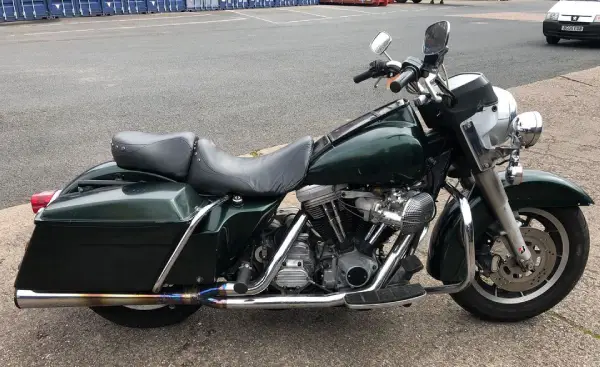
There’s another reason the Evolution has remained relevant: its support network.
When an engine becomes popular for a long period, an entire industry grows around it.
Specialists learn the platform.
Aftermarket manufacturers produce replacement components.
Independent mechanics gain experience.
Owners document problems and solutions.
Workshops learn which upgrades make sense and which modifications aren’t worth the trouble.
That accumulated knowledge can dramatically extend the useful life of an older motorcycle.
In other words, the Evolution’s longevity isn’t only about metallurgy and engineering.
It’s also about the community surrounding the engine.
A 40-year-old motorcycle with widespread parts availability and experienced mechanics is much easier to keep alive than an obscure engine for which replacement components are almost impossible to find.
That’s one of the Evolution’s biggest strengths today.
But Not Every Evolution Is A High-Mileage Hero
It’s easy to romanticize a famous engine.
The reality is more complicated.
A neglected Evolution can still become an expensive project.
Age brings problems that have little to do with the original engine design. Rubber components deteriorate. Electrical systems age. Fuel systems can develop issues. Gaskets and seals don’t become younger simply because the motorcycle wasn’t ridden.
And a low-mileage motorcycle isn’t automatically the better purchase.
A 30-year-old Harley with extremely low mileage but poor storage and little maintenance could require significantly more work than a higher mileage example that has been serviced consistently.
That’s why buyers should look beyond the odometer.
Maintenance records can tell you far more.
Look for evidence of regular oil changes, cooling and lubrication maintenance where applicable, previous engine work and replacement of known wear items.
Also pay attention to how the motorcycle starts idles and responds under load.
A good inspection from someone familiar with older Harley-Davidson motorcycles can be worth far more than simply finding the lowest mileage example.
Evolution 1340 vs. Twin Cam: Why The Older Engine Still Gets Attention
Both engines have strong high-mileage stories.
The Twin Cam has the benefit of being newer, with later versions incorporating years of development and improvements.
The Evolution, meanwhile, has the benefit of time.
Here’s the basic difference:
| Feature | Evolution 1340 | Twin Cam |
| Production era | 1984–1999 | 1999–2016 |
| Configuration | 45-degree V-twin | 45-degree V-twin |
| High-mileage examples | Numerous owner reports | Numerous owner reports |
| Long-term history | About four decades | More than two decades |
| Serviceability | Extensive knowledge and aftermarket | Extensive knowledge and aftermarket |
| Key consideration today | Age and condition | Version and maintenance history |
This isn’t about declaring one engine universally better.
They’re products of different eras and were designed with different priorities.
But when the specific question is which Harley engine has had the longest opportunity to demonstrate long-term serviceability, the Evolution has a very strong case.
The Milwaukee-Eight Is Still Writing Its Story
Harley-Davidson’s Milwaukee-Eight arrive for the 2017 model year.
It’s already showing that serious mileage is possible.
There are owners who have pushed Milwaukee-Eight-powered motorcycles beyond 100,000 mile sometimes at remarkable rates of use.
That’s impressive.
But there’s a major difference between accumulating 100,000 mile quickly and proving how an engine behaves after several decades.
The oldest Milwaukee-Eight motorcycles are still relatively young compared with an Evolution from the 1980s.
We don’t yet know what the platform’s complete 30- or 40-year story will look like.
Maybe future generations will point to the Milwaukee-Eight as another legendary long-life Harley engine.
But that story needs time to unfold.
The Evolution already has the benefit of looking backward at decades of evidence.
Why The Evolution 1340 Still Matters
The Evolution 1340 isn’t famous because it was perfect.
It isn’t famous because every engine reached 200,000 miles without opening the cases.
And it certainly isn’t immune to the problems that eventually affect any aging motorcycle.
Its reputation comes from something more practical.
It was an engine that could be maintained.
It could be repaired.
It had parts support.
Mechanics understood it.
Owners knew how to work with it.
And motorcycles powered by it continued accumulating miles long after they stopped being new.
That’s a powerful combination.
When an engine is old longevity is not about avoiding every repair. It’s about having a realistic path forward when repair become necessary.
The Evolution 1340 has demonstrated that path for decades.
The Real Secret Behind A High-Mileage Harley
There’s one final point worth remembering.
The engine itself is only part of the equation.
How an owner treat a motorcycle can have an enormous impact on how long it survives.
Regular oil changes, proper warm-up habits, sensible riding, timely repair and good quality replacement part all matter.
So does avoiding the temptation to ignore a small problem until it becomes a major one.
A well-maintained Evolution with substantial mileage can be a more interesting machine than a neglected motorcycle with half the miles.
That’s true of almost every mechanical vehicle.
And it’s why the Evolution’s reputation should be viewed as evidence of potential durability rather than a guarantee.
Final Thoughts
Harley-Davidson has produced plenty of memorable engines over the decade.
The Twin Cam has its loyal following. The Milwaukee-Eight represents the modern era. And the Sportster Evolution developed a reputation of its own.
But when the conversation turn specifically to long-term mileage and decades of service the Evolution 1340 Big Twin remains difficult to ignore.
Introduced in 1984 it helped move Harley-Davidson’s traditional V-twin into a new era while establish a platform that would eventually become known for durability and serviceability.
Four decades later, its legacy isn’t based solely on factory claims.
It’s visible in the old Harleys that are still being ridden, repaired and enjoyed.
That’s perhaps the most convincing kind of longevity an engine can have.
Not a perfect record.
Not an untouched engine.
Just a remarkable ability to keep coming back for another ride.
FAQs
Q: Is the Harley-Davidson Evolution 1340 a reliable engine?
A: The Evolution 1340 develop a strong reputation for durability and long term service. Its relatively straightforward design, widespread part availability and large knowledge base have helped many example remain in service for decade. Condition and maintenance history still matter greatly.
Q: How many miles can a Harley Evolution 1340 last?
A: There isn’t a guaranteed mileage limit. Well-maintained examples have been reported at 100,000 miles and beyond with some owner-reported motorcycles reaching several hundred thousand mile. Those examples may have required repair or rebuilt component along the way.
Q: Is the Evolution 1340 better than the Twin Cam?
A: They are different generation of Harley-Davidson engines, and the answer depends on what a rider values. The Twin Cam is newer and went through multiple update while the Evolution has a longer history of documented long-term service and a particularly strong reputation for simplicity and rebuildability.
Q: Is the Evolution 1340 easy to maintain?
A: Compared with many newer motorcycle engine the Evolution’s traditional mechanical design can make it approachable for experienced Harley-Davidson technicians and owner. However a decades-old motorcycle still requires proper servicing and inspection.
Also Read: The Old-School Toyota 4Runner Just Got Another Reliability Win — And That’s Bad News For New SUVs