
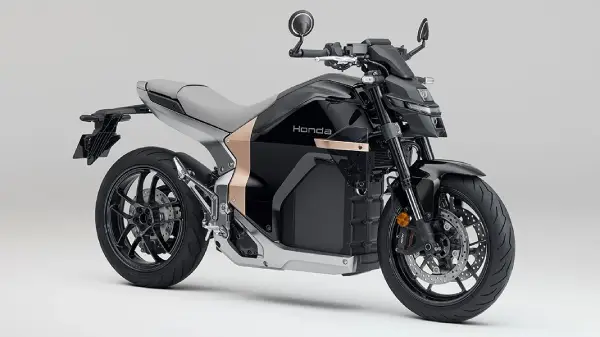
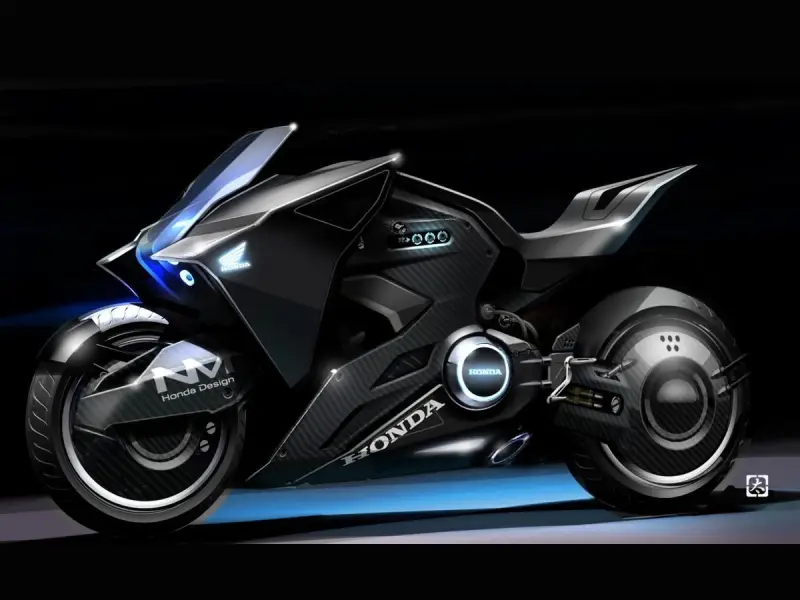
Honda Electric Superbike: Move over Ducati—step aside BMW.
Honda just filed a new patent in Japan, and if you’re into superbikes, this might be the biggest EV news of the year.
While You Care for Your Car, Care for Your Child’s Future Too 💖
A fun and educational book every parent should gift their kid.
 Get Kiddy Store Fortune Now
This isn’t another “futuristic concept” that ends up in a tech museum. The drawings and engineering layout look like Honda is building a real, ride-ready electric superbike a machine that’s designed to race, not just to exist.
Honda’s EV Game Is About to Get Real
The patent describes a “saddle riding type electric vehicle” (yes, that’s the extremely boring technical term). But once you dig into the layout, the picture becomes clear:
- The motor is mounted behind the swingarm pivot.
- It sits inside a rigid unit case, not just hanging off the battery box.
- For frame geometry adjustment, Honda is using modular pivot blocks.
That last part is huge. It means Honda can tweak geometry without designing a whole new frame—like changing rake and swingarm angle depending on whether the bike is for the street, track, or something even wilder.
This is engineering with purpose, not experimentation.
Modular Geometry = Track-Ready Tuning
Those pivot blocks are the secret weapon.
Instead of one locked-in geometry, Honda can adjust:
- Wheelbase
- Swingarm angle
- Chassis rigidity
This is exactly the kind of flexibility used in championship racing. It’s the difference between a bike that merely works and one that dominates.
Honda is positioning this bike to be tunable—like a pro machine.
Street version?
Track version?
MotoE challenger? Very possible.

Long-Travel Rear Shock, Clever Battery Space
Most electric superbikes struggle with suspension layout because batteries are bulky and motors take up rear space.
Honda’s answer?
Long-travel rear shock mounted lengthwise over the motor.
Benefits:
- Saves space
- Allows more battery capacity without stretching wheelbase
- Improves traction and comfort
This screams: “We tested this in competition.”
Wait, Is Mugen Involved?
Honda loves experimenting quietly under the name Mugen. The Mugen Shinden electric racer crushed the Isle of Man TT Zero event for years.
This patent shows similarities to that setup:
- Rear-mounted motor
- Centrally mounted battery
- Tight chassis for mass balance
Coincidence? Yeah… no.
If you know Honda history, this looks like the next chapter.
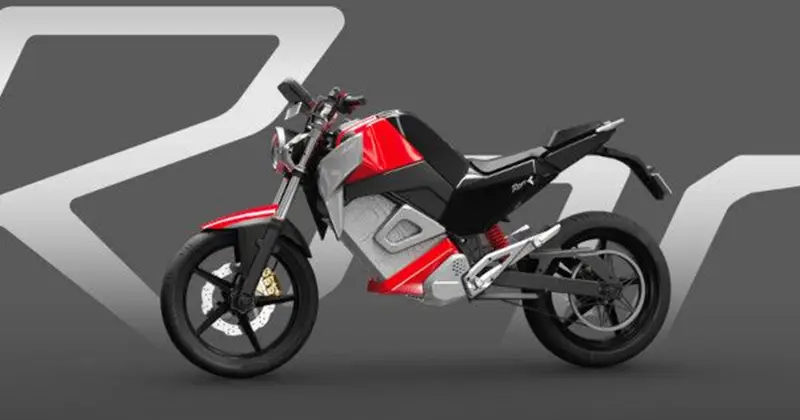
Could This Be the Future Fireblade?
Here’s where it gets really interesting:
What if Honda is developing an electric Fireblade to replace the CBR1000RR-R?
It fits. The Fireblade redefined superbikes in the ’90s—not by brute force, but by smart engineering. Now, with this patent, Honda looks ready to do it again… just with electric power this time.
Think:
- Fireblade DNA
- Mass centralization
- Modular performance geometry
- Battery tech that’s ready for the next leap
Will We See It Soon?
Let’s be real—this is still a patent. There’s no prototype on a dyno (yet), no teaser video with dramatic lighting and synth music.
But this is Honda. When they start filing patents like this, it’s never just for show. They’ve got a plan—and it could lead straight to showrooms or MotoE grids.
Final Thoughts: Why You Should Care
If you’re a sportbike fan in the U.S., this is big news.
While other brands are releasing city scooters and low-spec EVs, Honda is swinging for the fences. If this superbike hits production, it won’t just be a compliance bike—it’ll be a genuine alternative to gas-powered legends.
And who wouldn’t want a zero-emissions machine that still kicks serious asphalt?
FAQ’s
Q1. Is Honda officially building an electric superbike?
Not confirmed yet, but the patent strongly suggests Honda is developing a high-performance electric sportbike, not just a prototype for show.
Q2. Could this be the electric Fireblade?
Many indicators point that way. The modular geometry and performance-focused layout match the Fireblade’s engineering philosophy.
Q3. What makes this different from other electric bikes?
Most electric bikes use the motor casing to support the swingarm. Honda’s setup uses a rigid unit case with modular pivot blocks—more like a MotoGP chassis than an EV commuter.
Q4. Will Mugen be involved?
Very likely. Honda often tests radical racing tech using the Mugen badge, especially for electric race projects like the Mugen Shinden at the Isle of Man TT Zero.
Also Read: Inside the 2026 Lamborghini Temerario: Wild Tech, More Space & 10,250 RPM Madness