
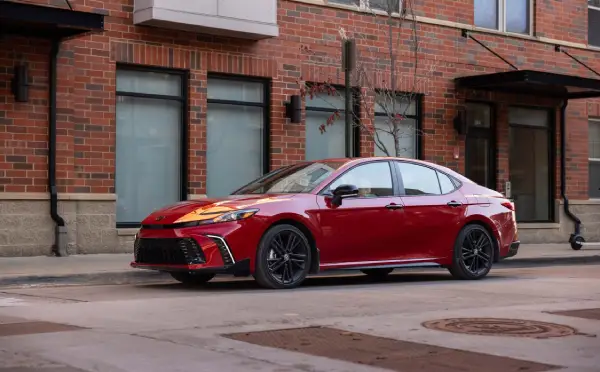
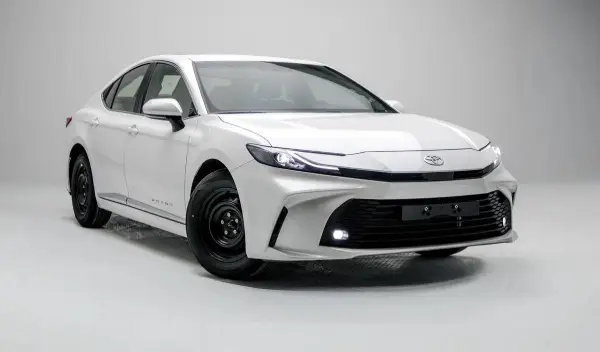
2026 Toyota Camry LE: If you thought getting excellent fuel economy meant spending big money on a hybrid, the 2026 Toyota Camry has a pretty convincing counterargument.
The Camry has quietly become one of the most interesting mainstream sedans for drivers who want to spend less time at the gas station without giving up the practicality of a traditional four-door car. And the most impressive part isn’t found at the top of the lineup.
While You Care for Your Car, Care for Your Child’s Future Too 💖
A fun and educational book every parent should gift their kid.
 Get Kiddy Store Fortune Now
It is the entry-level 2026 Toyota Camry LE FWD.
With an EPA-estimated 51 mpg combined and a starting MSRP of $29,100, the Camry LE FWD manages to stay below the $30,000 mark while delivering fuel economy figures that would have sounded remarkable for a midsize sedan not too long ago.
There is, however, a catch: you have to be willing to skip some of the flashier equipment available on higher trims.
The 2026 Toyota Camry Is Hybrid-Only
When Toyota switched the Camry sedan to a hybrid-only drivetrain it significantly altered the Camry lineup. Customer won’t have to decide between a hybrid Camry and a traditional gas engine in 2026.
Toyota’s hybrid system which is based on a 2.5-liter four-cylinder engine and electric motors, is used in all versions.
There are a number of different ways that would be different ways in which would be different ways in which would be different ways in which would be different ways in which would be different ways in which would be able to mix.
That makes the Camry particularly appealing for commuters.
Instead of chasing maximum horsepower, the LE focuses on doing everyday driving efficiently. It’s the kind of car that makes the most sense when your priorities are fuel costs, comfort, practicality and long-term usability.
51 MPG Is the Magic Number
The headline figure belongs to the 2026 Toyota Camry LE FWD which is rated at:
- 52 mpg city
- 49 mpg highway
- 51 mpg combined
- 225 horsepower
- $29,100 starting MSRP
Those numbers make the LE FWD the fuel-economy standout in the 2026 Camry range.
It also has an estimated driving range of roughly 663 miles, according to the figures cited in the source material.
That combination is what makes the LE interesting.
You’re not buying a tiny economy car just to get into the 50-mpg club. The Camry remains a midsize sedan with usable passenger space, a conventional four-door layout and the kind of everyday practicality that has made the model a long-running favorite.
Why the Cheapest Camry Gets the Best MPG
It might seem strange that the least expensive Camry is also the most fuel-efficient.
But the reason actually makes a lot of sense.
The LE FWD uses 16-inch wheels, which are designed more with efficiency in mind than the larger wheel packages found on sportier trims. The car also avoids some of the aggressive exterior styling and sport-oriented equipment used higher in the range.
Then there is the drivetrain.
The front-wheel-drive Camry doesn’t have the additional hardware associated with the available all-wheel-drive system. Less mechanical complexity and less weight can help the hybrid system use its energy more efficiently.
The result is a Camry that doesn’t try to look like a sports sedan.
Instead, it is optimized for the job many buyers actually need it to do: get from A to B while using as little fuel as possible.
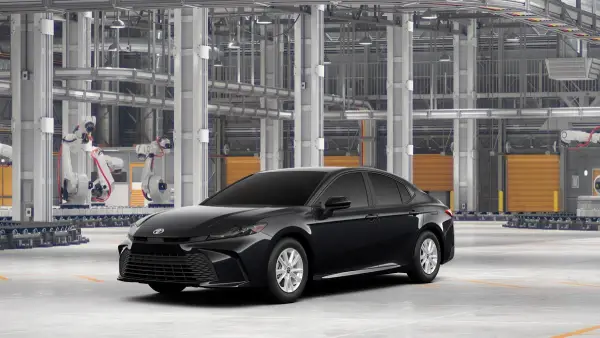
What Do You Give Up With the LE?
This is where the decision gets more interesting.
Moving up the Camry lineup brings additional equipment, larger wheels, upgraded interiors and more styling-focused features. The XLE and XSE, for example, can feel considerably more upscale than the entry-level LE.
The LE takes a simpler approach.
Its standard equipment includes an 8-inch multimedia touchscreen, six speakers, Bi-LED headlights, automatic high beams and a wireless charging system. Blind-spot monitoring with rear cross-traffic alert is also standard according to the source material.
So this isn’t an old-school bargain-basement sedan with a steering wheel and four seats.
You still get a useful collection of modern safety and convenience technology.
What you don’t get is the same level of luxury and visual drama found higher in the range.
For someone who primarily cares about fuel economy, that could be a perfectly reasonable trade-off.
The Camry LE AWD Is Still Very Efficient
If you live somewhere with frequent snow, ice or poor road conditions, front-wheel drive might not be your preferred choice.
Toyota offers an AWD version of the Camry LE and it remains remarkably efficient.
The 2026 Camry LE AWD is rated at approximately:
- 50 mpg combined
- 50 mpg city
- 49 mpg highway
- 232 horsepower
- $30,625 starting MSRP
That’s only a small fuel-economy penalty compared with the FWD model.
It does, however, push the starting price beyond the $30,000 mark.
For buyers who specifically want all-wheel drive, that extra cost may be easier to justify than stepping into a more expensive luxury-oriented trim.
How the Other Camry Trims Compare
The efficiency story changes as you climb the lineup.
The 2026 Camry SE, Nightshade and XLE AWD versions are listed at around 46 mpg combined, while the XSE AWD falls to approximately 43 mpg combined.
The FWD versions of the SE, Nightshade, XLE and XSE are rated around 46 mpg combined.
That gives buyers a fairly straightforward trade-off.
Want the best possible fuel economy? The LE FWD is the obvious configuration to examine.
Want AWD? The LE AWD keeps the efficiency figure remarkably high.
Want a sportier appearance, larger wheels or more upscale equipment? The higher trims provide those extras, but you’ll give up some fuel economy in the process.
Bigger Wheels Look Great, But They Have a Cost
One of the easiest ways to see the difference between Camry trim is the wheel design.
Higher-end models use larger wheels that contribute to their more aggressive appearance. That’s good news if you care about styling, but those wheels and tires aren’t necessarily ideal for maximizing efficiency.
The LE’s smaller 16-inch wheels are less flashy, but they fit the mission of the car much better.
It’s a familiar automotive trade-off: appearance and equipment versus efficiency and simplicity.
The Camry LE doesn’t try to hide what it is.
It’s the sensible one.
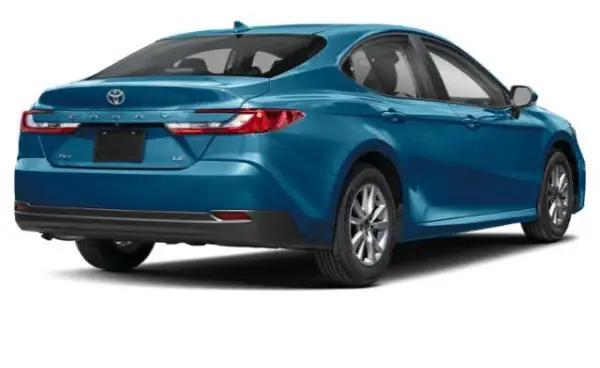
225 Horsepower Is Plenty for Daily Driving
Fuel economy is the star of the LE, but the Camry isn’t painfully slow.
The FWD model produces 225 horsepower, while the AWD versions are listed at 232 horsepower.
Those numbers are more than enough for normal commuting, highway cruising and merging into traffic.
The hybrid powertrain also benefits from electric motor assistance, which can make the car feel responsive around town without requiring a large displacement gasoline engine.
This isn’t intended to be the enthusiast’s Camry.
That’s what the sportier trims are there for.
The LE’s appeal is that it delivers enough performance for ordinary driving while keeping fuel consumption unusually low.
Is the 2026 Camry LE Actually a Good Value?
The answer depends on what you want from a car.
If your shopping list starts with heated seats, premium materials, large displays and aggressive styling, the LE probably won’t be the trim that grabs your attention.
But if your priorities look more like this:
Low fuel costs + reasonable price + modern safety tech + midsize practicality
then the LE becomes much more interesting.
Its $29,100 starting price puts it below the $30,000 psychological threshold before destination charges and other cost while its EPA-estimated 51 mpg combined rating puts it among the most fuel-efficient configurations in the Camry family.
That’s a compelling combination for someone who drives a lot.
The Real Appeal of the 2026 Camry LE
The biggest story here isn’t simply that a Toyota gets more than 50 mpg.
It’s that the fuel-efficient version isn’t an expensive special edition.
The 2026 Toyota Camry LE FWD is the entry-level model yet it is also the most economical configuration in the lineup.
That changes the usual hybrid equation.
You aren’t necessarily paying a premium for maximum efficiency. Instead, Toyota has combined its hybrid powertrain with the lightest and simplest Camry configuration to produce the strongest EPA fuel-economy numbers.
And that’s probably why the LE makes so much sense for high-mileage drivers.
If you’re spending hours commuting every week, the difference between a car that averages around 30 mpg and one rated at 51 mpg can become meaningful over thousands of miles.
Should You Buy the LE or Move Up the Range?
There’s no single right Camry trim for every driver.
The LE FWD is built around efficiency and affordability.
The LE AWD adds all-wheel-drive capability while retaining impressive fuel economy.
The SE brings a sportier personality.
The Nightshade adds distinctive blacked-out styling.
The XLE moves the car toward a more comfortable and upscale experience.
The XSE goes even further with sportier styling and additional premium equipment.
So the question isn’t simply which Camry has the best features.
It’s what you value most.
If your goal is to minimize fuel consumption and keep the purchase price under $30,000, the LE FWD is the configuration that deserves the closest look.
Final Thoughts
The 2026 Toyota Camry proves that a fuel-efficient sedan doesn’t have to be tiny, expensive or stripped of useful technology.
The Camry LE FWD’s 51 mpg combined rating and $29,100 starting MSRP make it one of the more interesting choices for drivers who want a practical hybrid without moving into a higher-priced segment.
Higher trims certainly offer more equipment and style, but they also come with compromises in price and fuel economy.
For the buyer who sees the car as transportation first and a fashion statement second the basic Camry may actually be the smartest place to start.
Sometimes the least expensive version is the one that make the most sense.
FAQs
Q: How many mpg does the Camry LE get?
A: The Camry LE FWD is EPA rate at 52 mpg city, 49 mpg highway and 51 mpg combine.
Q: Does the Camry LE have AWD?
A: Yes. Toyota offer the Camry LE with all wheel drive. The LE AWD is rate at approximate 50 mpg combine and has a starting MSRP of $30,625 base on the figure provide.
Q: Which Camry gets the best fuel economy?
A: The Toyota Camry LE FWD has the highest fuel economy rating in the lineup at 51 mpg combine based on the EPA figure cited in the source material.
Also Read: The CFMoto Ibex 450 Makes a Strong Case for Smaller Adventure Bikes