
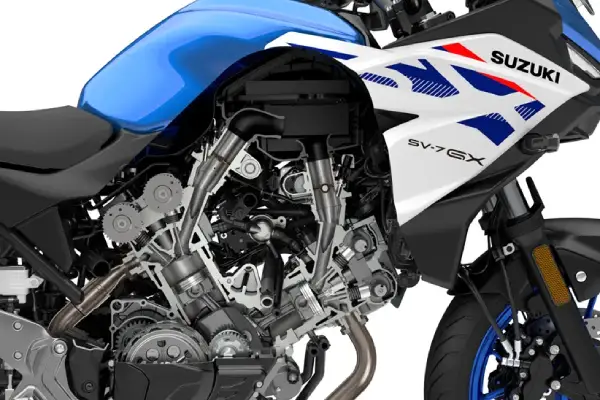
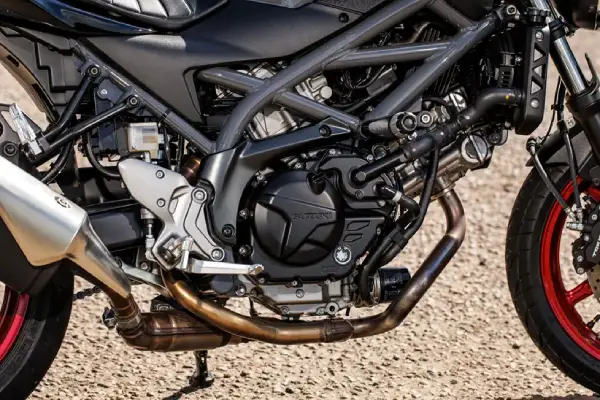
Suzuki 645cc V-Twin Engine: The typical lifespan of a motorbike engine is brief.
Manufacturers create something new, improve its performance, update its electronics, comply with the next set of emissions regulations, and ultimately switch to a whole new design. This is particularly true in the middleweight class, where consumers anticipate motorcycles to be reasonably priced, thrilling, effective, and loaded with contemporary amenities.
While You Care for Your Car, Care for Your Child’s Future Too 💖
A fun and educational book every parent should gift their kid.
 Get Kiddy Store Fortune Now
Suzuki, meanwhile has adopted a completely different strategy.
Its 645cc 90-degree V-twin has been around for more than 25 years, yet it hasn’t simply survived in the background. It has continued finding its way into new motorcycles, new riding categories, and now a new generation of technology.
The most recent example is the 2027 Suzuki SV-7GX, a crossover motorcycle based on a significantly modified version of the same fundamental V-twin concept that contributed to the SV650’s notoriety. According to Suzuki, the engine has been improved over the course of more than 25 years, and the most recent iteration incorporates contemporary technology without losing its unique personality.
In the world of motorcycles, that is a really peculiar tale.
Why This Suzuki Engine Refuses To Disappear
There is nothing particularly flashy about saying an engine has been around for decades.
The interesting part is why it is still here.
The original SV650 arrive in 1999 with a 645cc liquid cooled V-twin. Instead of trying to compete with larger superbike engine Suzuki built something that focused on usable performance and a broad range of riding situation.
That formula worked.
The engine could provide enough character for enthusiastic riding while remaining approachable for everyday use. It also had the flexibility to work in motorcycles with completely different personalities.
One of its greatest advantage was its adaptability.
The V-Strom 650 later adopted the same fundamental engine architecture providing Suzuki with a powerplant capable of transform from a lightweight street motorcycle into an adventure focused vehicle.
That is a crucial distinction.
A motorcycle engine that works well in one bike can be successful. An engine that can work across multiple categories has something more valuable: flexibility.
The SV650 Was Never Just About Horsepower
Modern motorcycle conversation can get dominated by horsepower number.
That’s understandable. A big power figure looks great on a specification sheet and makes for an easy headline.
But horsepower isn’t the only thing that determines whether an engine works.
Throttle response, torque distribution, weight, fuel economy, dependability, serviceability and how the engine feels at typical road speeds can all be equally important to regular riders.
The formula for the Suzuki V-twin makes sense in this situation.
It has a unique character thanks to its 90-degree arrangement, and its relatively small displacement maintains it in the middleweight range. According to Suzuki the engine’s irregular firing intervals add to the V-twin sensation and produce a wide, linear torque curve.
This combination allows the rider to enjoy the motorcycle without having to continuously chase the redline.
The majority of riders don’t spend every mile on a racetrack, therefore that is important.
More Than Two Decades Of Small Changes
One of the biggest misconception about an old engine is that it must be technologically outdate.
That is not necessarily true.
An engine can retain its fundamental architecture while receiving major updates underneath.
That’s essentially what has happened with Suzuki’s 645cc V-twin.
Over its lifetime, the engine has moved away from older fueling technology and received updates to combustion, engine management, internal components, emissions performance, and friction reduction.
The newest version takes that process much further.
Suzuki’s current SV-7GX specification list a 645cc liquid-cooled DOHC V-twin with fuel injection and a ride-by-wire throttle. It also uses coated pistons, SCEM cylinder plating and L shaped piston rings.
In other words, the engine hasn’t survived by refusing to change.
It survived by changing selectively.
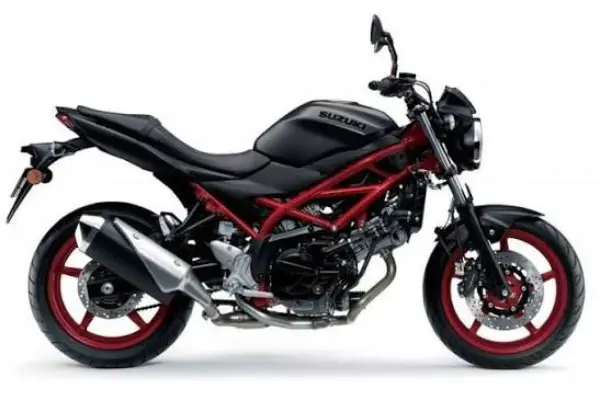
The 2027 SV-7GX Shows Just How Far It Has Come
The plot become quite intriguing at this point.
The new Suzuki SV-7GX from 2027 doesn’t feel like a late 1990s motorcycle.
It’s a contemporary crossover with technologies that wasn’t include in the SV650’s original design.
The updated V-twin now works with:
- Ride-by-wire throttle
- Three selectable riding modes
- Traction control
- Bi-directional quickshifter
- Dual-spark technology
- Updated fuel-injection hardware
- Modern emissions equipment
- A 4.2 inch TFT display
- Smartphone connectivity
According to Suzuki the engine was updated to satisfy modern pollution regulations without sacrificing its essential features.
That’s the main idea.
For no other reason than that technology had advanced, the corporation did not discard the old engine and start over.
Instead, it brought the architecture forward.
The Numbers Tell Part Of The Story
A 645cc engine with an 81.0mm bore and a 62.6mm stroke power the contemporary SV-7GX.
The U.S.-specified motorbike features a six speed transmission a wet multi-plate clutch, ride-by-wire electronic throttle bodies and a 12.2:1 compression ratio.
According to Suzuki’s European statement the engine can produce 73 PS and 64 Nm of torque.
The motorbike business is not meant to be shocked by those numbers.
And that is exactly the point.
This engine isn’t attempting to prevail in a battle for horsepower.
It’s designed to provide a usable combination of performance, response, efficiency, and everyday flexibility.
Why The 90-Degree V-Twin Still Makes Sense
There is also a mechanical reason this engine has such a distinctive identity.
The 90-degree V-twin configuration gives the motorcycle a character that an equivalent parallel-twin doesn’t necessarily replicate.
You get the uneven firing character associated with the V-twin layout, but Suzuki has also engineered the engine for smoothness and controllable power delivery.
Suzuki specifically highlights the engine’s primary balance and uneven firing intervals as contributors to its combination of refinement and V-twin character.
For riders, that translates into something that’s difficult to measure on a dyno chart:
feel.
And feel is one of the reasons riders become attached to particular engines.
The V-Strom Connection Made The Engine Even More Important
Although the engine was first used in the SV650 the V-Strom showed how versatile it might be.
A lightweight street bike require a different type of engine than an adventure style motorcycle.
It must have adequate flexibility for longer trips, controlled responsiveness, usable low- and mid-range torque, and appropriate fuel consumption.
The 645cc V-twin proved capable of doing that job.
That’s one reason Suzuki could continue investing in the platform.
The company wasn’t maintaining an engine for one motorcycle.
It had a proven powerplant that could support different kinds of motorcycles.
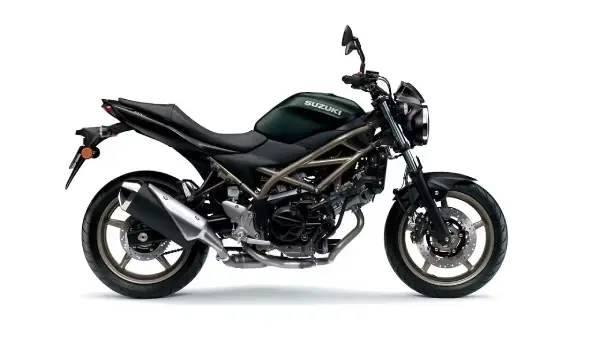
Reliability Is Only Part Of The Equation
It’s tempting to describe an engine that has survive for more than 25 years simply as “reliable.”
But longevity in motorcycle manufacturing is more complicated than that.
An engine has to make financial sense for the manufacturer.
It needs to meet increasingly strict regulations.
It needs to remain competitive against newer designs.
It needs to provide an acceptable ownership experience.
And, perhaps most importantly, riders still need to want it.
The 645cc V-twin has managed to stay relevant because Suzuki has continued to update it instead of treating longevity as an excuse to stop developing it.
The latest version’s new electronics are a perfect example.
Old Engine, New Electronics
The biggest difference between the original SV650 and the latest generation isn’t necessarily the basic engine architecture.
It’s everything surrounding it.
Suzuki can electronically adjust throttle response and link the engine to various riding modes and traction-control settings thanks to the new SV-7GX’s ride-by-wire technology.
Additionally, it has a bi-directional quickshifter that enables clutchless downshifts and upshifts.
Compared to the motorcycle that first introduced the engine, that represents a significant technological advancement.
But the rider still gets the same fundamental attraction: a compact middleweight V-twin with accessible performance.
That’s clever engineering rather than nostalgia.
The Engine Is Now Powering A Completely Different Kind Of Motorcycle
The SV-7GX is also evidence of how much the motorcycle market has changed.
The bike is more than just an SV650 with a distinctive body style.
Suzuki markets it as a crossover fusing element of adventure and street motorcycles.
It features a rear carrier, wind protection, an upright riding position, a 795mm seat height and a 17.4-liter fuel tank.
Because of this the classic V-twin is still relevant in a class of motorcycles that hardly existed at all when the original SV650 was introduced.
That’s perhaps the strongest argument for this engine’s longevity.
It hasn’t been stuck in the past.
It has moved with the market.
Suzuki Hasn’t Tried To Make It Something It Isn’t
There is another interesting aspect to this strategy.
Suzuki could have dramatically increased the engine’s output and turned the platform into something completely different.
Instead the company has continued emphasizing the characteristics that made the engine useful in the first place.
The latest SV-7GX version still has a 645cc displacement and 90-degree V-twin layout. Suzuki describe it as delivering smooth accessible power through a broad torque curve.
That’s evolution rather than reinvention.
And in this case, that distinction matters.
The 2027 SV650 Could Bring The Story Full Circle
The story becomes even more interesting with the reported return of the updated engine to the SV650.
A California Air Resources Board certification reported by Autocar India indicates that a 2027 SV650 is set to receive an updated version of the 645cc V-twin. The report say the engine will be shared with the SV-7GX and could bring features such as ride-by-wire, traction control and a quickshifter.
If that happens as reported, the engine will essentially return to the motorcycle that made it famous.
That’s a neat full-circle moment.
The SV650 introduced the world to the platform in 1999.
More than 25 years later, the same fundamental engine family is being modernized and prepared for another generation.
Why This Engine’s Story Is Different From Simple Nostalgia
There are plenty of old motorcycle engines that riders remember fondly.
That doesn’t automatically make them relevant today.
Nostalgia can keep an old motorcycle popular among enthusiast but it doesn’t necessarily justify continued development by a major manufacturer.
Suzuki’s 645cc V-twin is different because it has repeatedly been adapted to changing requirement.
It has powered a naked street bike.
It has powered an adventure-tourer.
Now it powers a modern crossover equipped with electronic rider aids and smartphone-connected technology.
That is more than an old engine being kept alive.
It’s an engine platform being continually reworked.
What Makes The 645cc V-Twin So Special?
Ultimately the answer isn’t one spectacular feature.
It’s the combination.
The engine isn’t enormous.
It doesn’t produce superbike-level horsepower.
It doesn’t rely on exotic technology to create its identity.
Instead it offers a balance that has proved difficult to replace.
There’s enough performance to keep experienced rider interested enough usability for everyday riding, and enough character to make the engine feel special.
And because Suzuki has continued refining the platform, riders don’t have to choose between old-school mechanical character and modern technology.
The latest version attempts to offer both.
The Real Lesson Behind Suzuki’s 25-Year-Old Engine
Motorcycle technology is moving quickly.
Rider-assistance system are becoming more sophisticated. Displays are getting larger. Ride-by-wire is spreading across more categories. Emissions regulations continue to shape engine development.
Yet the story of Suzuki’s 645cc V-twin shows that an engine doesn’t necessarily need to be replaced every few years to remain competitive.
Sometime the better strategy is to start with a solid mechanical foundation and keep improving it.
That’s what makes this engine so interesting.
It isn’t still relevant because Suzuki refused to change it.
It’s still relevant because Suzuki kept changing the parts that needed to change while preserving the qualities riders already liked.
Perhaps the best example of that theory to date is the 2027 SV-7GX.
A motorbike engine that was first introduced almost 25 years ago now features a quickshifter, traction control, ride-by-wire and multiple riding mode.
For an engine that began as a basic middleweight street bike, that is quite the voyage.
Additionally, the original motorcycle may soon get the most recent iteration of the engine that initially gave it its reputation if the 2027 SV650 modification is carried out.
Some engines become classics because people remember them. This one has lasted because Suzuki keeps finding reasons to move it forward.
FAQs
Q: When was Suzuki’s 645cc V-twin engine invented?
A: Suzuki 645cc V-twin engine first came into being 25 years ago in 1999 with the launch of the company’s SV650 motorcycle. The brand claim that the latest version of the engine has been develop over a span of 25 year.
Q: Does Suzuki still produce the 645cc V twin engine?
A: The company SV-7GX motorcycle now has a modernize 645cc V twin engine.
Q: Which motorcycle currently use the 645cc V twin engine?
A: The latest model of the Suzuki SV-7GX motorcycle has the modernize version of the 645cc V twin engine. The latest model has many new features like ride by wire, selectable riding modes for traction control and bi directional quick shifter.
Also Read: This Lexus Has Porsche-Level Grip, a Screaming V8, and Toyota Reliability