
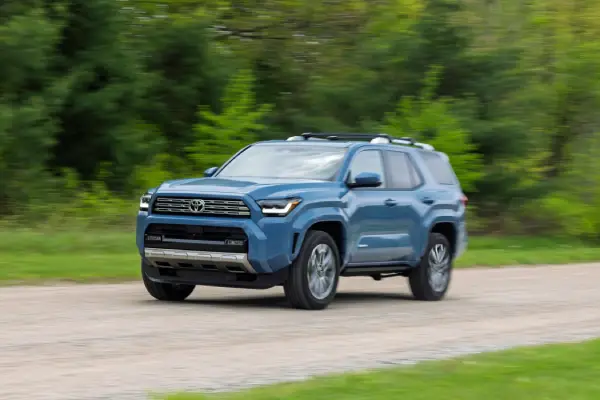
Toyota 4Runner Reliability: A brand-new SUV can have more horsepower, more gears, more screens and better fuel economy. But when the goal is simply to keep a vehicle running for years without turning every repair into a financial headache, there’s still something to be said for an older, proven formula.
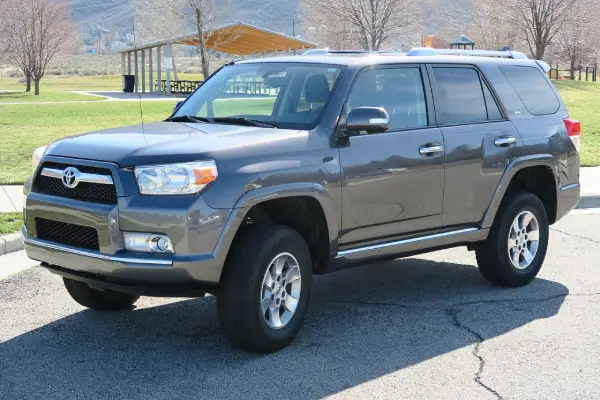
In this sense the fifth generation Toyota 4Runner remains distinctive.
While You Care for Your Car, Care for Your Child’s Future Too 💖
A fun and educational book every parent should gift their kid.
 Get Kiddy Store Fortune Now
From 2010 to 2024 the Toyota became a kind of automotive time capsule. While competitor moved toward turbocharged engine, smaller displacement and more sophisticate electronic Toyota stuck to a relatively stable core recipe for the 4Runner. Its final model years featured a 4.0-liter V6 naturally aspirated engine a five speed automatic transmission and a body-on-frame chassis.
And now there’s another intriguing endorsement for that traditional strategy.
The 4Runner tied for first place in the Upper Midsize SUV category according to the J.D. Power U.S. Vehicle Dependability Study. According to the survey, three-year-old car owner had the greatest overall level since the study’s creation with an industry average of 204 issues per 100 vehicles.
That doesn’t automatically make every fifth-generation 4Runner trouble-free. It does, however, help explain why these SUVs continue to attract buyers in the used market.
And there’s an important twist: the 4Runner that earned this long-term reputation is no longer the 4Runner Toyota sells today.
The Fifth-Gen 4Runner Was Built Around Simplicity
The fifth-generation 4Runner’s formula was never particularly revolutionary.
That was the point.
Toyota’s 4.0-liter naturally aspirated V6 engine produced 270 horsepower and 278 lb-ft of torque in the 2024 model which was the last year of the fifth generation. A five-speed automatic transmission was attached to it.
When compared to the turbocharged SUVs of today, those figures don’t seem all that great on paper.
However the 4Runner wasn’t built to compete in a horsepower race.
It was intended to continue.
The V6 generated its power without the use of a turbocharger. At a time when eight-, nine-, and even ten-speed automatics were widespread, the transmission only featured five forward gears. Beneath all of this was a classic body-on-frame design.
That combination gave the 4Runner a personality that’s becoming increasingly rare.
There is something reassuring about an SUV whose mechanical formula has been around long enough for mechanic, owners and aftermarket companies to know it inside and out.
J.D. Power’s Study Matters Because It Looks Beyond the New-Car Honeymoon
The fact that the Vehicle Dependability Study does not measure how a car feels in its first few weeks is one of its most crucial feature.
The study focuses on issues that three-year-old car owners have reported. Because of this, it is especially crucial to anyone considering long-term ownership as opposed to just purchasing the newest model available.
After three years of ownership, J.D. Power reported 204 issues per 100 automobiles in the sector in 2026. It also noted that problems with infotainment systems, over-the-air software updates and vehicle exteriors contributed to the industry’s elevated dependability issues.
The 4Runner tied for the top position in the Upper Midsize SUV category.
That distinction is important because a dependability study isn’t the same thing as a mechanical stress test.
A vehicle can rank highly while still having individual issues. Likewise, a vehicle with a lower ranking isn’t necessarily destined to fail.
What the result does show is that the 4Runner has continued to perform well when owners are asked about problems experienced over a longer period.
And that makes the final V6-powered generation particularly interesting.
The 4.0-Liter V6 Wasn’t Fast, But It Was Proven
The 4.0 liter V6 engine included in the 4Runner has never been known for its rapid acceleration.
It is not need to be.
The 2024 model had a 5000-pound towing capability and 270 horsepower and 278 lb-ft of torque according to Toyota.
The engine didn’t require a turbocharger to reach its output because of its natural aspirated design.
It is not inherently superior to a turbocharged engine. Modern turbo engines can produce considerably more torque from smaller engines while improving performance and efficiency.
But there is a trade-off.
A turbocharged engine adds additional components and systems to the equation. A hybrid powertrain adds even more hardware. Modern vehicle also depend heavily on electronic systems and software.
The fifth gen 4Runner largely sidestepped that trend.
It was old-fashioned by 2024 standard.
And that may be part of why its reputation has lasted.
Toyota Didn’t Chase Every New Trend
The difference is clear when you look at the 4Runner’s development.
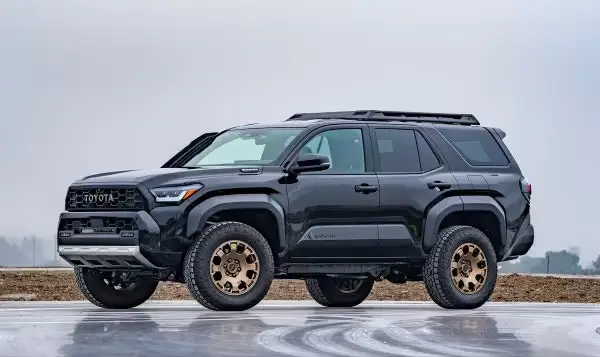
Instead of fully reimagining the SUV every few years, Toyota continued to refine virtually the same fundamental platform for almost ten years. According to J.D. Power’s model history, the 4Runner had a complete makeover for 2025 following years of relatively minor modifications for the fifth generation.
Toyota has plenty of time to fix issues and improve the platform throughout that lengthy production cycle.
Additionally, it provided owners with familiarity.
Since there are thousands upon thousands of these cars on the road it is simple to discover information about upkeep, repairs, modifications, and typical issues.
For an older vehicle, that matters.
If something eventual goes wrong there is a good chance that someone has already dealt with the same issue.
The Sixth-Generation 4Runner Changed Almost Everything Underneath
Then came 2025.
Toyota abandoned the normally aspirated V6 engine and fully revamped the 4Runner. The new SUV has a 2.4-liter turbocharged four-cylinder engine while some models have an i-FORCE MAX hybrid drivetrain. These engines are mated to an eight-speed automatic gearbox by Toyota.
There is a noticeable change in output.
278 horsepower and 317 lb-ft of torque are produced by the basic turbocharged engine. In suitable combinations, the i-FORCE MAX hybrid may generate up to 326 horsepower and 465 lb-ft of torque.
Those are much stronger numbers than the old V6.
But there’s an obvious limitation when discussing reliability: the sixth-generation 4Runner simply hasn’t had as much time on the road.
That’s not a criticism.
It’s just how vehicle history works.
You can’t have 10 or 15 years of ownership data for a vehicle that has only recently been redesigned.
Does That Make the Old 4Runner Better?
Not necessarily.
It makes the two generations different.
A redesigned platform, significantly higher torque from its turbocharged drivetrains, and hybrid technology are all features of the sixth-generation 4Runner. With years of practical experience, the fifth-generation model features a well-established mechanical package.
That distinction can be crucial for someone who only considers long-term dependability while making purchases.
However it would be incorrect to infer that just because the newer 4Runner is more complex, it will eventually become unreliable.
To draw that conclusion, there is currently insufficient long-term data.
The fair comparison is between a proven older design and a newer design whose long-term record is still being established.
Why Used Fifth-Gen 4Runners Remain So Interesting
The reliability story is only part of the equation.
The fifth-gen 4Runner also has several characteristics that have helped it maintain strong interest in the used market.
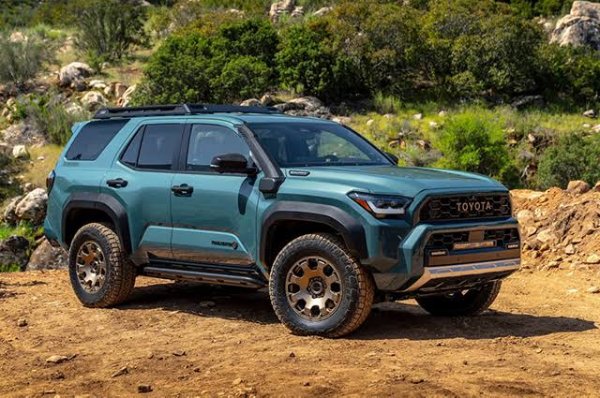
First, it’s a genuine body-on-frame SUV. Toyota describes the platform as having a tough body-on-frame construction, with a four-link rear suspension and a chassis designed for off-road use.
Second, four-wheel-drive versions were built around traditional off-road hardware, including a two-speed transfer case with selectable low range on applicable models.
Third, the 4Runner has an enormous aftermarket.
Want suspension upgrades?
There are countless options.
Need recovery equipment?
There’s no shortage of choices.
Looking for information about a particular modification or maintenance procedure?
There’s a good chance an owner has already documented it.
That ecosystem makes an older 4Runner easier to live with than many less-common SUVs.
The Trade-Off Is Fuel Economy
Of course, the old 4Runner wasn’t perfect.
Far from it.
The 4.0-liter V6 is thirsty by modern SUV standards. J.D. Power list the 2023 model at 16 mpg city, with the same basic 270-hp V6 and five-speed automatic combination.
That’s one area where the new 4Runner has a clear technological advantage.
Turbocharging and hybridization give the sixth generation substantially more torque and the potential for better efficiency.
So if fuel consumption is a major priority, the old-school V6 formula comes with a noticeable compromise.
The fifth-gen 4Runner essentially asks buyers to accept worse fuel economy in exchange for a proven mechanical setup.
For some owners, that’s a worthwhile trade.
For others, it won’t be.
The Used Market Has Already Figured Out That These SUVs Are Different
There is another reason fifth-generation 4Runners can be frustrating for used-car shoppers: they aren’t always cheap.
Vehicles with strong reputations tend to hold onto their value and the 4Runner is a textbook example.
Buyer aren’t simply paying for an older Toyota SUV. The reputation of Toyota, body-on-frame construction, off-road prowess, V6 power and the fact that the final V6 4Runner is no longer available for purchase are all factors they are paying for.
This does not imply that every fifth generation 4Runner is worth the asking price.
Mileage, upkeep, rust, accident history, modification and general condition are still very important.
The Toyota emblem does not provide magical protection for a neglected 4Runner.
Even so, the most astute used automobile buyer should thoroughly examine the car and confirm its maintenance history.
The Last V6 4Runner Has Become a Different Kind of Used Car
There’s a funny thing happening with the fifth-generation 4Runner.
When it was new, its old platform was sometimes criticized for being outdated.
Today, that same age has become part of its appeal.
The vehicle’s vintage appearance is enhanced by its five-speed automatic transmission. One of the reasons aficionados seek the last models is the normally aspirated V6 which lacked the power of contemporary turbo engines.
Additionally the 4Runner’s body-on-frame design, which makes it feel less like a crossover, is precisely what many consumers are searching for.
There are sometimes unanticipated advantages to arriving late to the technological party.
But Don’t Ignore the Sixth Generation
The notoriety of the fifth-generation 4Runner can easily be overstated.
A fair shot should be given to the sixth-generation model.
In some version Toyota’s new 4Runner is significantly more powerful, and the available hybrid system significantly boosts torque. The 2.4-liter turbocharged four cylinder and optional i-FORCE MAX drivetrain are carried over to the 2026 model.
Additionally it places the 4Runner in a contemporary automobile environment where performance standards, safety technology, emissions laws and fuel economy have evolved.
To be successful, the new model doesn’t need to copy the previous one.
It simply has to build its own reliability record.
And that’s something only time can provide.
What This Means for Someone Shopping for a 4Runner
If you’re considering a used fifth-generation 4Runner, the latest dependability results add another interesting piece of evidence to the conversation.
But don’t buy one simply because it has a reputation for reliability.
Buy based on the individual vehicle.
A 2018 4Runner with excellent maintenance record can be a much smarter purchase than a neglected 2023 model with questionable modification.
Check the service history.
Inspect the frame.
Look for signs of hard off-road use.
Check for rust especially if the SUV spent years in areas where road salt is common.
Make sure the four-wheel-drive system operate correct if equipped.
And don’t overlook the tires, suspension, brake and previous accident history.
The reputation gets you interested.
The condition of the specific vehicle determines whether the purchase makes sense.
The 4Runner’s Old Formula May Have Been Its Biggest Strength
The automotive industry has spent years making vehicles more sophisticated.
That’s generally a good thing.
Modern SUVs can be faster, quieter, safer, more efficient and far more connected than vehicle from a decade ago.
But every additional system introduces another layer of engineering.
The fifth generation Toyota 4Runner went in the opposite direction.
Its recipe stay familiar for years: natural aspirated V6, conventional automatic transmission, body-on-frame construction and proven four-wheel-drive hardware.
Now, years after that formula finally disappeared from new-car showrooms, the 4Runner continues to show up near the top of a major dependability study.
That’s probably the biggest lesson here.
The fifth-gen 4Runner wasn’t necessarily special because it had the newest technology.
It may have been special because Toyota didn’t change what already worked.
And for used SUV shoppers, that distinction is becoming increasingly difficult to ignore.
FAQs
Q: How Reliable Is 4Runner?
A: The fifth generation of the 4Runner has establish a well rounded reputation of reliability, participating in the J.D. Power 2026 Vehicle Dependability Study, ranking highest in the upper midsize SUV category. Individual vehicle status and maintenance history remain the best indicators of performance though.
Q: Does the 2025+ 4Runner Have a V6?
A: No the sixth generation 4Runner has switched to a 2.4 litre turbocharged four cylinder engine and a possibly available i-FORCE MAX hybrid powertrain.
Q: Is the new 4Runner less reliable than the old one?
A: There isn’t enough long term evidence to make that conclusion. The sixth generation is newer, while the fifth generation has had many more years to establish its durability record.
Also Read: You Can Buy This Lexus Hybrid for Less Than a New Corolla