
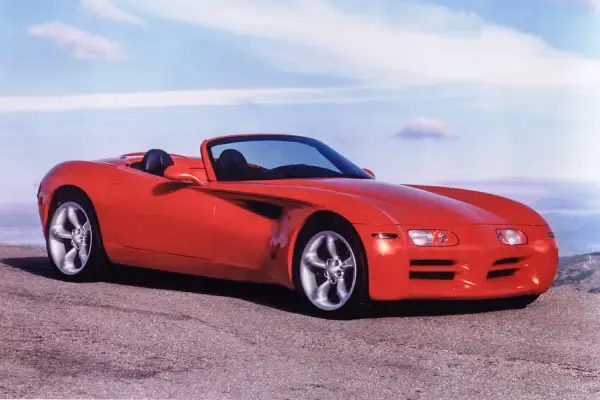
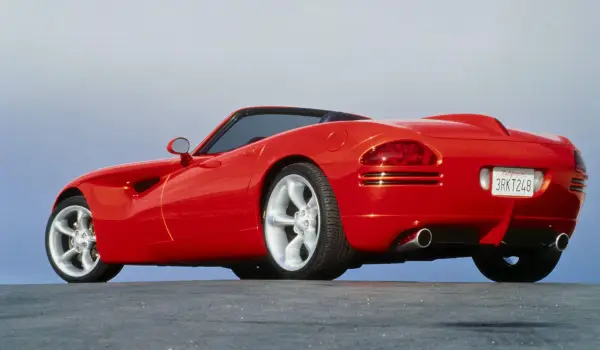
Dodge Copperhead V6 Roadster: What if Dodge had built a Viper you could actually afford? In the late ’90s, that nearly happened.
In the golden era of concept cars — when automakers weren’t afraid to dream big and weird — Dodge quietly cooked up something that could’ve rewritten its sports-car legacy. It wasn’t another fire-breathing V10 monster. Instead, it was a sleek, affordable roadster aimed at people who loved the Viper’s look but not its price tag.
While You Care for Your Car, Care for Your Child’s Future Too 💖
A fun and educational book every parent should gift their kid.
 Get Kiddy Store Fortune Now
That car was the Dodge Copperhead Concept, and it might be one of the biggest “what-ifs” in American performance history.
A Viper for Everyone Else
The Dodge Viper was already a symbol by the middle of the 1990. It was the epitome of unadulterated American performance loud, vicious and unrepentant. What’s wrong? For the majority of customers, it was utterly out of reach at about $66,000.
Loyalists to Dodge were forced by reality to choose competitors like the Ford Mustang and Chevrolet Corvette or foreign models like the Toyota Supra and Nissan 300ZX. Dodge knew it was bleeding potential customers — and it wanted them back.
The solution? A smaller, lighter, cheaper roadster with Viper DNA but a very different personality.
Presenting the Dodge Copperhead Idea
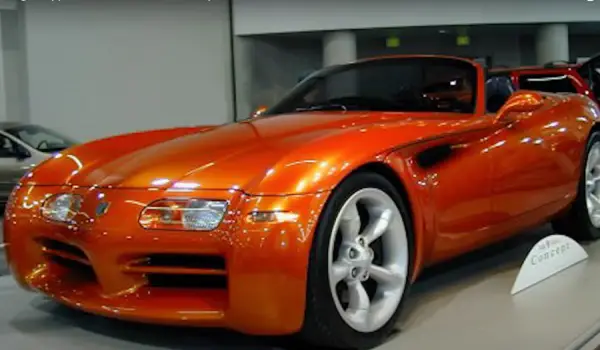
The Copperhead attracted attention right away when it was unveiled at the 1997 Detroit Auto Show. It had an aggressive, contemporary and distinctly Dodge appearance but it wasn’t attempting to imitate a low-cost Viper.
Rather Dodge marketed it as a driver-focused sports vehicle that put accessibility, balance and feedback ahead of raw power.
Highlight of the Dodge Copperhead Concept
- 1997 was the year of introduction.
- 2.7-liter V6 naturally aspirated engine
- 220 horsepower
- Rear-wheel drive as the drivetrain
- 5-speed manual transmission
- Starting price estimate: around $30,000
Just the price made a statement. It promised a real sports-car ride without the intimidation of a Viper and undercut the C5 Corvette by hundreds.

Not a Muscle Car — A Real Sports Car
Here’s what made the Copperhead special: Dodge didn’t build it just to be cheaper — it built it to be different.
The Viper was all about brute force. The Copperhead was about road feel.
- Lighter chassis
- Close-ratio manual gearbox
- Compact V6 instead of a massive V10
- Emphasis on handling and driver engagement
Despite its muscular, snake-inspired styling, the Copperhead wasn’t chasing drag-strip glory. With a 0–60 mph time of about 6.8 second and a top speed near 135 mph it was quick but more importantly it was fun.
A Cabin That Didn’t Take Itself Too Seriously
Inside, Dodge leaned hard into the concept-car vibe.
The interior featured:
- Bright red-orange accents
- A gated manual shifter
- Leather sport seats
- A center console shaped to resemble a coiled copperhead
It was playful, bold and very late-’90s — exactly what young sports-car buyers were craving at the time.
So Why Was It Killed?
Despite strong public interest and early production planning for the year 2000, the Copperhead never made it past the concept stage. And no it wasn’t because people didn’t want it.
The Real Reasons the Copperhead Died
1. The Chrysler–Mercedes Merger
Once Chrysler merged with Mercedes-Benz, the company suddenly had access to the SLK-Class platform, which later became the Chrysler Crossfire. From a business standpoint, it made far more sense to reuse existing Mercedes hardware than fund an all-new Dodge sports car.
2. The SUV Boom
By the late ’90s, SUVs were exploding in popularity. Sports cars — especially niche ones — became harder to justify financially.
3. Tight Budgets, Tough Choices
With money concerns looming, Chrysler leadership opted for safer bets. The Copperhead, while exciting, was a risk they weren’t willing to take.
And just like that, Dodge’s “baby Viper” was shelved indefinitely.
What Replaced the Copperhead?
Technically? Nothing.
Spiritually? The Chrysler Crossfire.
Built on Mercedes-Benz underpinnings and powered by V6 engines (including a supercharged SRT-6 variant), the Crossfire filled the affordable roadster gap — but it never carried Dodge’s raw attitude or design language.
Today, Crossfires are shockingly affordable:
- Base models: ~$5,000–$6,000
- SRT-6 versions: ~$8,000–$10,000 for clean examples
Not bad for a car that indirectly inherited the Copperhead’s mission.
Why the Copperhead Still Matters
The Dodge Copperhead wasn’t just another forgotten concept. It represented a moment when Dodge almost built:
- An affordable sports car
- With real driver focus
- That could’ve competed globally
Had it launched, Dodge’s lineup — and maybe even the modern sports-car market — might look very different today.
Instead, it lives on as a reminder that sometime the most exciting cars never leave the auto show floor.
Final Thought
The Copperhead prove that affordable fun doesn’t need massive horsepower just the right vision. And sometime the cars that never made it are the ones we remember the most.
FAQs
Q: What was the Copperhead Concept?
A: The Copperhead was a 1997 concept roadster design as an affordable, V6 powered alternative to the Dodge Viper.
Q: Was the Copperhead ever sold to the public?
A: No Despite early production plan, Dodge cancel the project before it reach mass production.
Q: Why didn’t Dodge build the Copperhead?
A: The Chrysler Mercedes merger, rising SUV demand and financial constraint led to the project being shelved.
Also Read: The Cheapest Twin-Turbo Sports Car You Can Buy in 2026 Is a Total Bargain Beast