
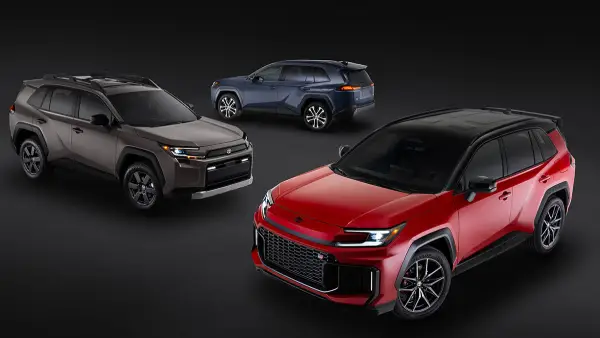
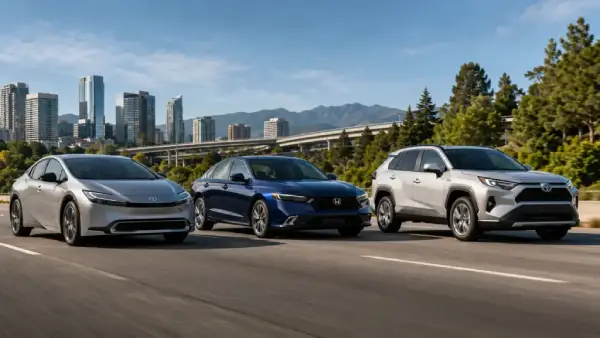
Hybrid Sedans with Better MPG than Toyota RAV4: The Toyota RAV4 has become a go-to choice for drivers who want SUV practicality without the fuel bills of a traditional gas-powered vehicle. But what if you could spend even less at the pump without switching to an electric car?
That is where hybrid sedans come in.
While You Care for Your Car, Care for Your Child’s Future Too 💖
A fun and educational book every parent should gift their kid.
 Get Kiddy Store Fortune Now
The latest Toyota RAV4 Hybrid delivers an EPA estimated 43 mpg combined in its most efficient 2026 configuration. That is impressive for a compact SUV especially one that offers generous cargo space and available all-wheel drive. Still, several hybrid sedans push fuel efficiency even further, with some delivering more than 50 mpg combined.
Those figures should be taken into consideration by commuters, road travelers, and anyone who is sick of stopping frequently at petrol stations. A sedan can make a strong argument for itself with reduced fuel consumption and a comfortable daily driving experience, even though it may not have the tall seating position or load versatility of an SUV.
These five hybrid cars, which range from reasonably priced daily vehicles to a more upscale luxury choice, can outperform the Toyota RAV4 Hybrid in terms of fuel efficiency.
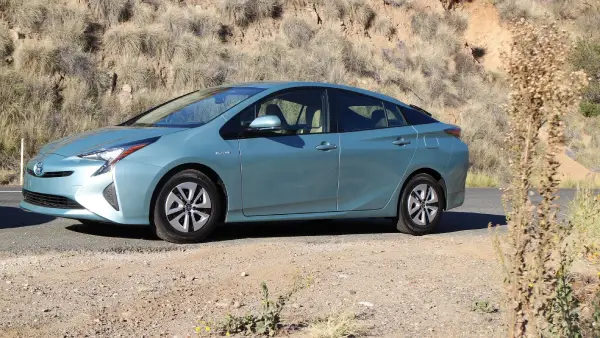
1. Toyota Prius: The Fuel Economy Champion
For decade the Prius has demonstrate that exceptional fuel efficiency does not have to come at the price of practicality. Newer models have a sharper design and a more contemporary cabin although earlier models were more noted for their functionality than their flair.
However, efficiency continues to be its key selling feature.
The 2027 Toyota Prius LE with front-wheel drive is predicted by the EPA to have a combined fuel economy of 55 mpg. Furthermore Toyota has an all wheel drive model with a combined fuel economy of 53 mpg giving buyers the option of increased traction without appreciably sacrificing efficiency.
With a combined fuel economy of 43 mpg, the Prius clearly outperforms the basic 2026 RAV4 Hybrid. Over thousands of kilometers, the 12 mpg difference can mount up.
Toyota’s fifth-generation hybrid powertrain is combined with a 2.0-liter four-cylinder engine in the Prius. The gasoline engine is made more efficient by its electric motor especially when driving at low speeds and on frequent stop-and-go commutes.
Furthermore compared to its predecessor the more modern Prius looks far sportier. Its hatchback design provide useful cargo flexibility for everyday errands, shopping excursion and luggage while its sleek profile and low roofline give it an athletic appearance.
There are a few trade-offs to consider. The RAV4’s larger SUV design may appeal to drivers who routinely haul heavy equipment, but not everyone will find the lower seating position acceptable.
However, the Prius is hard to pass up for those who value fuel economy above all else.
Why choose it? The Prius is the best fit for driver who want exceptional fuel economy a proven hybrid system, and practical everyday transportation.
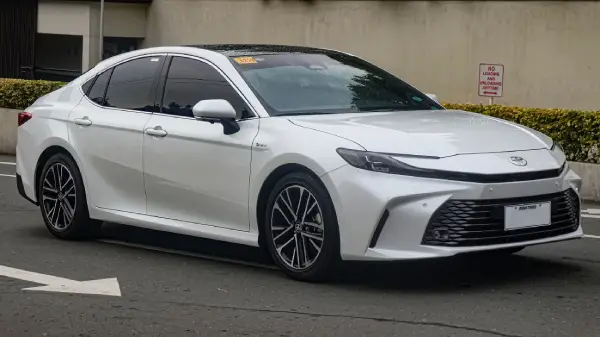
2. Toyota Camry: A Comfortable Sedan That Saves Fuel
The Toyota Camry is evidence that a tiny car is not the only option when it comes to fuel efficiency.
The Camry will still have an all hybrid drivetrain in 2027 combining Toyota’s fifth generation hybrid technology with a 2.5-liter four-cylinder engine. The manufacturer estimate the combined fuel economy of the front-wheel drive LE model to be 51 mpg.
The combined figure of the basic 2026 RAV4 Hybrid is eight mpg lower than that.
For drivers who spend a lot of time behind the wheel, the Camry is especially enticing. Comfortable passenger room, a traditional trunk, and a driving experience more akin to a car than an SUV are all features of its midsize-sedan layout.
It also provides a useful balance between efficiency and performance. For front-wheel drive cars, Toyota estimates 225 net combined horsepower, while all-wheel drive models generate 232 horsepower.
Another benefit for drivers who desire more traction in shifting weather conditions is the availability of all-wheel drive. The most fuel-efficient model might not be the greatest option for every customer, though, as fuel efficiency varies by trim and drivetrain.
The adaptability of the Camry is its greatest asset. Drivers don’t need to upgrade to an SUV to handle a daily commute, a lengthy highway trip, or a family road trip.
It also makes sense for anyone who likes the RAV4’s Toyota hybrid technology but does not necessarily need the extra ground clearance or cargo capacity.
Why choose it? The Camry is an excellent choice for drivers who want a roomy, comfortable sedan with impressive fuel economy and available all-wheel drive.
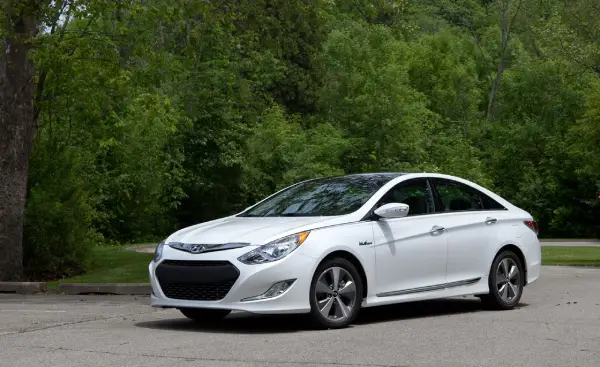
3. Hyundai Sonata Hybrid: Impressive Efficiency on the Highway
When it comes to fuel efficiency the Hyundai Sonata Hybrid adopt a somewhat different strategy.
The Sonata Hybrid Blue is especially remarkable on the highway, even though other hybrid cars perform best in city traffic. Its 2026 EPA fuel economy figure are 51 mpg overall, 56 mpg on the interstate and 47 mpg in cities.
Because of the highway figure it will be especially appealing to people who frequently commute between cities or spend a large amount of their week traveling on key route.
A 2.0 liter gasoline engine, an electric motor and a six-speed automatic transmission are all combine in the Sonata Hybrid. Its traditional automatic transmission may make driving more comfortable for some driver in contrast to hybrid that use an electronically controlled continuously variable transmission.
The Sonata is notable for its style as well. It appears more expensive than a standard commuter sedan thanks to its long body, unique front illumination, and contemporary inside.
A variety of comfort and technological features that are intended to make daily travels more pleasurable are also available to buyers based on the trim.
If fuel economy is your top concern, you should concentrate on the most efficient Blue trim. It is advisable to verify the precise configuration prior to purchase because other Sonata Hybrid trim levels have lower EPA ratings.
The hybrid is more cost-effective than the traditional gasoline Sonata. Although the precise payback period depends on purchase pricing, annual mileage, and local fuel prices, lower fuel use might somewhat offset the hybrid’s higher initial cost.
Why choose it? The Sonata Hybrid is worth considering if you drive long highway distances and want a stylish midsize sedan with excellent fuel economy.
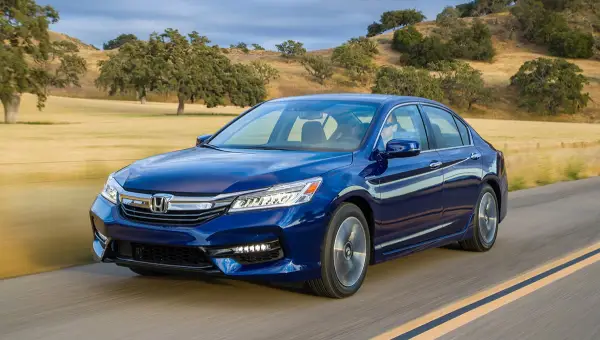
4. Honda Accord Hybrid: A Practical Choice for Everyday Driving
The hybrid version of the Honda Accord which has long been a well liked substitute for the Camry offer consumer who are concerned about fuel another reason to give it some thought.
For the 2026 model year the EPA predict that the Accord Hybrid EX L will achieve 48 mpg overall with 51 mpg in the city and 44 mpg on the highway.
This makes it five mile per gallon more efficient than the basic RAV4 Hybrid combined rating.
The Sport, Sport-L, and Touring are among the several Accord Hybrid trim levels that Honda offers. These model combined rating of 44 mpg is still somewhat better than the RAV4’s 43 mpg in its most effective configuration.
Honda two motor hybrid technology and a 2.0 liter four cylinder engine power the Accord Hybrid. The setup is meant to deliver smooth acceleration and low fuel consumption during regular drive.
The Accord is a great choice for commuters and small families because to its roomy cabin and sufficient passenger capacity. Additionally its spacious trunk offers useful storage for work supplies, meal and luggage.
The EX-L deserves special attention because it has the highest combined fuel economy rating for the Accord Hybrid series in 2026. Because it costs more than the typical Sport Hybrid, buyers should compare the price difference to the expected fuel savings.
The Accord is a well-rounded option for drivers seeking a sedan that is both efficient in city traffic and comfortable and composed on the interstate.
Why pick it? Customer who appreciate interior room, a smooth ride, and a potent blend of city and highway efficiency will find the Accord Hybrid appealing.
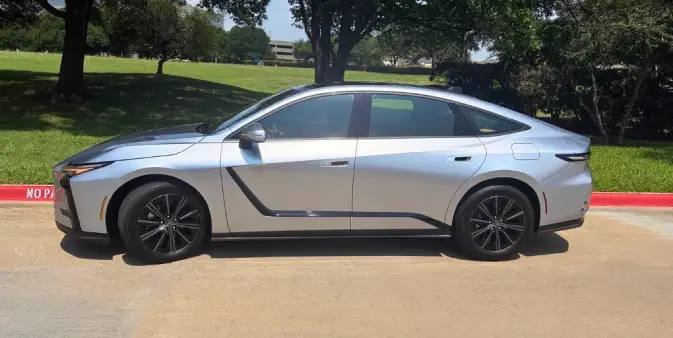
5. Lexus ES 350h: Luxury Without Excessive Fuel Consumption
Who says a fuel-efficient car has to feel basic?
Customer can have a more luxurious driving experience without sacrificing the advantage of hybrid technology as demonstrate by the ES 350h.
According to the EPA the ES 350h with front wheel drive will get an overall fuel economy of 46 mpg with 48 mpg in urban area and 44 mpg on interstate. The all wheel drive model has a combine fuel economy of 44 mpg.
Even the AWD version surpass the regular RAV4 Hybrid 43 mpg combined rating despite the small difference.
The ES 350h combines a 2.5-liter four cylinder engine with an electric motor-based hybrid system to provide 244 net combine horsepower. Lexus has also focused on upgrading the cabin with feature designed to reduce road noise and improve comfort.
Because of this drivers who spend a lot of time commuting or traveling long distances and desire a more tranquil, opulent setting will find the ES very tempting.
The buying price is the trade-off. At $49,700 before applicable levies and options, the 2026 ES 350h is substantially more expensive than well-known hybrid sedans like the Camry and Sonata.
Additionally, it provides a new kind of value. In addition to the fuel savings, buyers are paying for the luxurious interior, comfort focused engineering, technology and Lexus brand experience.
The ES 350h is an appealing choice for consumer looking for a high-end sedan that nonetheless values efficiency.
Why pick it? For driver who choose superior comfort, sophisticated road manner and superior fuel efficiency over a traditional luxury sedan the Lexus ES 350h is the ideal choice.
Which Hybrid Sedan Makes the Most Sense?
The best choice depend on what you value most. Here’s a quick comparison of the headline combined fuel economy figures:
| Hybrid sedan | Best listed combined MPG | Best suited for |
| Toyota Prius LE (2027) | 55 mpg | Maximum fuel savings |
| Toyota Camry LE Hybrid (2026) | 51 mpg | Everyday family driving |
| Hyundai Sonata Blue Hybrid (2026) | 51 mpg | Highway commuting |
| Honda Accord Hybrid EX-L (2026) | 48 mpg | Space and versatility |
| Lexus ES 350h FWD (2026) | 46 mpg | Premium comfort |
These are EPA estimated rating for specific configurations, not guarantees of real-world mileage. The figures also cover different model year so they should be treated as a comparison of the listed version rather than a claim that all five are available with identical specifications.
Is a Hybrid Sedan a Better Buy than the Toyota RAV4?
That depends on how you use your vehicle.
The RAV4 still has some important advantage. Its higher ride height, SUV-style cargo area and available all-wheel drive make it attractive for families, outdoor activities and drivers who regularly carry larger item.
A hybrid sedan, on the other hand, may be the better choice if you spend most of your time on paved road, rarely need extra cargo height and want to cut fuel cost as much as possible.
The difference in fuel economy can add up. As a simple illustration, driving 12,000 mile in a year at 43 mpg requires about 279 gallons of gasoline. That same journey uses roughly 218 gallons at 55 mpg. If both cars meet their aggregate EPA ratings, that’s a save of about 61 gallons per year.
Your actual savings will depend on a number of factor including local gasoline prices, vehicle configuration, driving habit and the weather. Comparing purchase pricing, insurance, maintenance, and resale value is also important when figuring out which car is less expensive to own.
In the end the RAV4 is still a desirable small SUV but not every fuel conscious motorist will find it to be the greatest option. The Prius, Camry, Sonata, Accord, and Lexus ES 350h are all compelling reasons to explore outside the SUV aisle if you can live with a sedan.
FAQs
Q1. Do the Prius and RAV4 Hybrid compare at all?
A: Yes, but the Prius definitely does a better job in fuel efficiency at 55 mpg combined, as opposed to the RAV4’s 43 mpg combined, and the RAV4 hybrid’s rating depends on how it is equipped and how it is driven.
Q2. What is the best highway hybrid sedan?
A: The 2026 Hyundai Sonata Blue Hybrid gets an impressive 56 mpg on the highway, and for this reason, is a good choice for highway driving. Ultimately, it comes down to what trim and features best suit your needs.
Q3. How does the Accord Hybrid fare against the RAV4 in terms of fuel efficiency?
A: Both the Accord Hybrid’s trims surpass the RAV4’s best overall fuel economy rating of 43 mpg, with the EX-L having a 48 mpg combined rating, while the others (Sport, Sport-L, and Touring) are at 44 mpg.
Q4. Is the ES 350h more fuel efficient than the Toyota RAV4?
A: Yes. The ES 350h return 46 mpg combined with front-wheel drive and 44 mpg combined with all-wheel drive. Both figures are higher than the RAV4’s best combined rating although the AWD difference is small.