
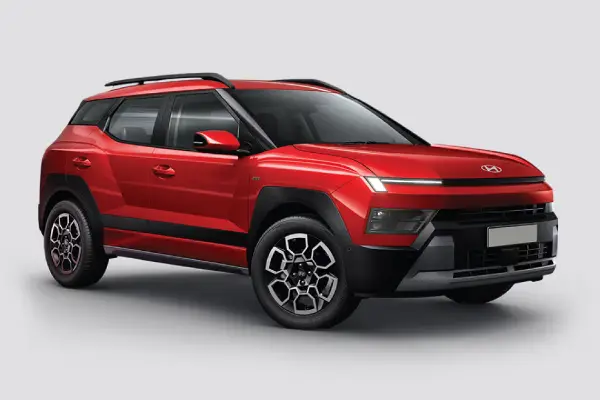
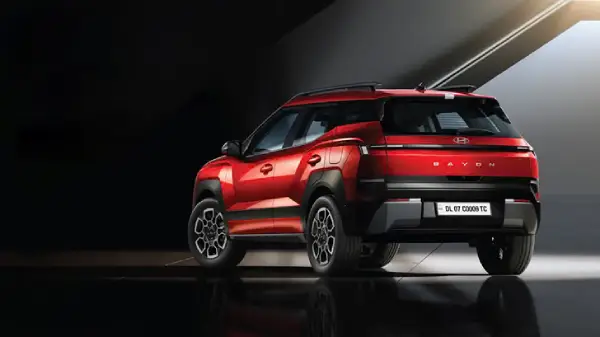
Hyundai Bayon: What if Hyundai gave American buyers a small SUV with the rugged styling of the Tucson, modern technology, and an available hybrid powertrain—all without moving into a bigger, more expensive vehicle? That is exactly why the new Hyundai Bayon has caught our attention.
The next generation Hyundai Bayon which debuted at the Paris Motor Show in October 2026 appears to be a compact SUV with lofty goal. For drivers who want something useful without purchasing a full size family car its boxier design, updated cabin and new hybrid option make it an intriguing alternative.
While You Care for Your Car, Care for Your Child’s Future Too 💖
A fun and educational book every parent should gift their kid.
 Get Kiddy Store Fortune Now
There is just one problem: American buyers probably will not get it.
Instead shopper in the United States will have to choose between the aging Hyundai Venue and the larger Hyundai Kona. The Bayon could fit neatly between them, offering a combination of size, style and efficiency that seems tailor-made for the American entry-level SUV market.
So, what makes the new Bayon so appealing, and why would it make sense as a replacement for the Venue?
The New Hyundai Bayon Looks Like a Mini Tucson
The second-generation Bayon has an entirely new personality thanks to Hyundai. The new model takes on a harder look that is similar to the larger Hyundai Tucson whereas the previous model tended toward a softer, more round form.
The SUV square off size and taller more upright front end give it a better road presence. Its heavy fender and straight roofline also give it a more substantial appearance than its small size might suggest.
A rough upright design is prioritize over flowing curve.
That strategy makes sense for a car made to appeal to consumers looking for an SUV that appears daring without taking up a lot of room.
The styling also helps the Bayon fit into Hyundai’s current SUV family. It looks related to the Tucson and Kona without simply copying either vehicle.
For younger buyers, city driver and small families, that could be a major selling point. Not everyone wants a large SUV but plenty of shoppers still want something that looks modern and confident.
The Bayon Could Fill the Gap Between the Venue and Kona
One of the strongest arguments for bringing the Bayon to America is its size.
The new SUV is approximately eight inches longer than the Hyundai Venue and about four inches shorter than the Hyundai Kona. It is also roughly as wide as the Kona, giving it a more substantial stance than the Venue.
That makes the Bayon an interesting middle ground.
The Venue is appealing because it is compact and relatively affordable, but its small dimensions can be limiting for some buyers. Meanwhile, the Kona offers more space and capability but its higher starting price can push it beyond the budget of shoppers looking for an inexpensive first SUV.
A middle ground between the two might be provided by the Bayon.
It might offer a more roomy feeling interior than the Venue while still being compact enough for congested city street and confined parking spots. Additionally, its upright design may help it fulfilll SUV purchasers’ expectations for a practical character.
Naturally, before making strong judgment actual passenger space and cargo capacity would need to be assessed. The story is not fully conveyed by external dimensions alone.
Still, the Bayon’s positioning looks promising on paper.
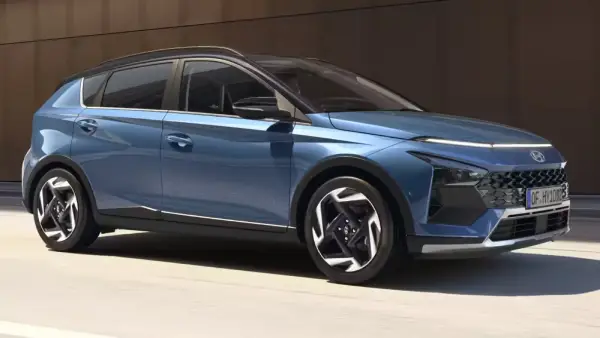
Inside, the Bayon Brings Modern Technology to a Small SUV
The Bayon’s exterior is bold, but the interior takes a more familiar approach.
With two digital screens arranged on a broad panel, the dashboard adheres to the contemporary Hyundai design esthetic. Depending on the setup, each screen might be as large as 12.3 inches.
For a tiny SUV targeted at consumers on a tight budget, that is a remarkable setup.
While the central touchscreen offers access to infotainment option a large digital instrument display can make driving information easier to comprehend. Additionally the general layout makes the cabin look more modern.
Hyundai has kept the center stack relatively narrow with vertically arranged air vents and physical climate controls inspired by a traditional telephone keypad layout.
That last detail is worth highlighting. Physical buttons and straightforward controls can make everyday driving less frustrating than systems that require drivers to navigate touchscreen menus for basic functions.
A Bose sound system, heated and ventilated front seats, heated back seats, and a panoramic sunroof are additional options that may be added to the Bayon.
Although their availability and cost would vary depending on the market and trim level, these features would give the small SUV a much more upscale vibe.
The Bayon might become a desirable option for consumers who want contemporary features without upgrading to a larger SUV if Hyundai could introduce a similarly equipped version to America at a competitive price.
Hyundai Bayon Powertrains: Small Engines With a Hybrid Option
The Bayon’s engine lineup is another reason the SUV deserves attention.
The standard powertrain options carry over from the previous generation, including two versions of a turbocharged 1.0-liter three-cylinder engine.
The lower-output version produces 89 horsepower and 127 lb-ft of torque. The more powerful version increases output to 113 horsepower while retaining the same torque figure.
Sports-car performance is not intended for either engine. Rather they emphasize efficiency and everyday usability.
Six-speed manual and seven-speed dual clutch automatic transmission are available. For drivers who still prefer greater control over their driving experience, the manual option is very intriguing.
The hybrid drivetrain, however, is the most intriguing addition.
The Hybrid Could Be the Bayon’s Biggest Advantage
The hybrid generate 136 horsepower and 195 lb-ft of torque by combining an electric motor with a naturally aspirated four-cylinder engine.
It has a powertrain configuration that is similar to that of the Kia Niro hybrid and is combined with a six-speed dual-clutch transmission.
According to the supplied report, the hybrid reaches 62 mph in 10.8 seconds. The least powerful petrol version can take as long as 14.1 seconds, making the hybrid the quicker option in the lineup.
That extra performance is useful, but fuel efficiency could be the bigger attraction.
The potential of this kind of technology is demonstrated by the Kia Niro hybrid, which in some configurations achieves up to almost 50 mpg combined. That number, however, shouldn’t be regarded as the Bayon’s official fuel economy rating.
Hyundai might have a strong option for drivers who wish to reduce their fuel costs without making the conversion to an entirely electric car if the Bayon’s hybrid system could be introduced to the US.
That combination might be especially enticing to commuters, students, and small families.

Why the Hyundai Bayon Makes Sense as a Venue Replacement
Since the 2020 model year, the Hyundai Venue has been available for purchase in the US. For consumers who value small size and a reasonably priced beginning price, it is still a desirable choice.
But since the Venue’s first release, the market for small SUVs has undergone significant upheaval.
Modern entertainment systems, sophisticated driver-assistance features, effective powertrains, and style that doesn’t make an inexpensive car appear simple are all things that buyers are increasingly demanding.
The Bayon appears well-positioned to meet many of those expectations.
Its more rugged exterior would give it a stronger identity while the available hybrid powertrain could help it stand out in a crowded segment. The larger digital displays and comfort features would also help it feel more contemporary.
There is another advantage: the Bayon would not need to replace the Kona directly.
Instead, Hyundai could position it below the Kona as a slightly roomier and more modern alternative to the Venue. That would give customers a clearer progression through the brand’s small SUV lineup.
The biggest challenge would be pricing.
A new design additional technology and hybrid hardware all cost money. If Hyundai price the Bayon too close to the Kona buyer might simply choose the larger SUV.
To succeed as a Venue replacement it would need to retain the affordability that makes entry level SUVs attractive in the first place.
Why the Bayon Probably Won’t Come to America
Unfortunately, there is a significant difference between a vehicle that would make sense in the United States and one that an automaker is prepared to sell there.
The Bayon is designed primarily for European markets. Bringing it to America could require changes to satisfy U.S. safety and regulatory requirements, along with other market-specific adjustments.
Those changes would add development costs.
Hyundai would also have to think about whether the cost could be justified by American sales. Since the firm currently sells the Venue and Kona, adding another small SUV to its lineup might result in overlap.
The report provided does not confirm the Bayon’s U.S. launch, therefore it should not be considered an imminent American-market model.
That is unfortunate because the Bayon appears to take advantage of a real opportunity: a small SUV with more advanced technology and style than the Venue without forcing consumers to upgrade to the Kona.
For now, American shoppers will have to look elsewhere in Hyundai’s lineup.
The Hyundai Kona Is America’s Closest Alternative
The Kona is the more natural choice for shoppers who like the Bayon’s general concept but need a vehicle sold in the United States.
For the 2027 model year, the Kona lineup described in the source report includes four trims:
- SE: Starting at $25,500
- SEL: Starting at $26,825
- SEL Premium: Starting at $28,425
- Limited: Starting at $32,535
These prices are before destination charges and options.
A 2.0-liter four-cylinder engine with 147 horsepower and 132 lb-ft of torque powers the lesser two models. A 1.6-liter four-cylinder turbocharged engine with 190 horsepower and 195 lb-ft of torque powers the SEL Premium and Limited.
According to the provided research, the Kona can get up to 28 mpg in the city, 35 mpg on the highway, and 31 mpg overall when equipped with front-wheel drive and a 2.0-liter engine.
That gives American buyers a practical small SUV with more power than the Bayon’s base petrol engines.
However, the Kona is not a direct substitute in every respect. It is larger than the Bayon, and its starting price is higher than what many entry-level SUV shoppers might hope to pay.
The Venue remains the smaller option for buyers who want to keep costs down.
The Bayon would occupy an appealing middle ground, but until Hyundai announces a U.S. version, it remains a vehicle American shoppers can only admire from a distance.
Could Hyundai Build an American-Friendly Bayon Hybrid?
The idea is worth considering, particularly because the Bayon’s hybrid system is not an entirely unfamiliar concept within the wider Hyundai Motor Group.
The related Kia Niro already demonstrates how a hybrid setup can work in a compact, efficiency-focused vehicle. That indicates that the underlying technology has a place in the company’s product line, but it does not ensure a simple U.S. debut for the Bayon.
A Bayon with U.S. specifications would still have to adhere to relevant laws and be economically viable for Hyundai.
Additionally, the business would have to choose which features and powertrain to provide. A hybrid-only vehicle may have superior fuel efficiency, but it may also be more expensive to purchase. A more affordable gasoline vehicle might attract budget buyers, but a hybrid model would be more appealing to commuters who go longer.
If the economics were right, a two-pronged approach might be the most sensible.
The price would be important. When purchasing an entry level SUV, buyers are frequently particularly concerned about monthly payments, insurance premium and fuel expenditure.
A stylish compact SUV with sensible running cost could be a strong proposition. But if it became too expensive, its advantages over the Kona would be much harder to justify.
For now, this remains a hypothetical opportunity rather than a confirmed Hyundai product plan.
Final Verdict: The Bayon Is the Small Hyundai SUV America Is Missing
The new Hyundai Bayon has the ingredient of an appealing entry level SUV. It combine Tucson inspired styling, a modern cabin, useful comfort feature, manual transmission availability and an optional hybrid powertrain.
Its size also makes sense. Sitting between the Venue and Kona in the American market’s equivalent lineup, it could give buyers a fresh alternative without forcing them into a bigger vehicle.
But there is no confirmed plan to bring it to the United States.
That leaves the Kona as the closest alternative for shoppers who want a small Hyundai SUV with more space and power than the Venue. Buyers focused primarily on affordability will still find the Venue worth considering.
The Bayon might never become America’s next entry-level Hyundai SUV, but it highlights an interesting possibility for the brand: a compact, efficient, technology rich vehicle that does not have to be large to feel desirable.
Would you buy a Hyundai Bayon if it came to America at a price below the Kona? Its styling and hybrid option certainly give Hyundai a compelling idea to consider.
FAQs
Q1. Is the Hyundai Bayon coming to the United States?
A: There is no confirmed U.S. launch in the supplied report. The Bayon is not currently present as an upcoming American-market model, so buyers should not assume it will arrive.
Q2. Could the Hyundai Bayon replace the Venue?
A: The Bayon could make a logical successor to the Venue because it is approximate eight inches longer and offer updated styling, technology, and a hybrid option. However Hyundai has not confirmed such a replacement plan.
Q3. How big is the Bayon compared with the Kona?
A: The new Bayon is approximately four inches shorter than the Kona and eight inches longer than the Venue. It is also roughly as wide as the Kona, placing it between the two models in overall length.
Also Read: 12 American Sports Bikes That Outpower Japan’s Suzuki GSX-R750