
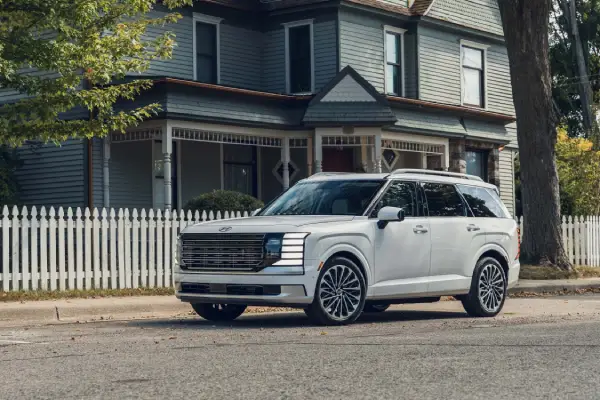
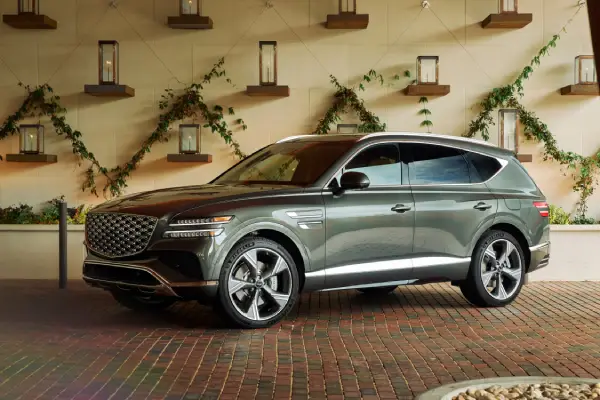
Most Powerful Family SUVs: A family SUV with enough room for seven people used to mean accepting modest performance. Those days are clearly over.
The idea of a practical family vehicle producing four digit horsepower would have sounded ridiculous not long ago. A Bugatti for example became legendary partly because its 8.0 liter quad turbo W16 produce 1001 horsepower. That was hypercar territory.
While You Care for Your Car, Care for Your Child’s Future Too 💖
A fun and educational book every parent should gift their kid.
 Get Kiddy Store Fortune Now
Now, two electric SUVs are pushing beyond that number while carrying luggage, passengers, and all the other stuff that comes with family life.
Under ideal circumstances, the Porsche Cayenne Turbo Electric can generate up to 1,139 horsepower, which is even more than the Lucid Gravity GT-S’s 1,070 horsepower.
Indeed, these are big, high end SUVs.
Indeed, they are more powerful than a Bugatti Veyron.
The ironic thing is that neither one has to have a conventional supercar appearance in order to perform at that level.
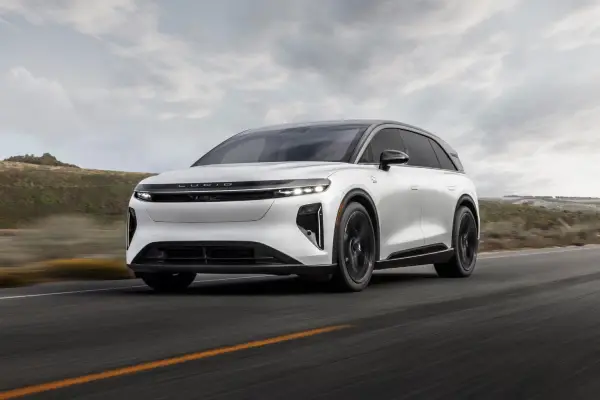
The Lucid Gravity GT-S Is a 1,070-HP Family Hauler
The Lucid Gravity has always been an unusual proposition. It was designed to be a practical electric SUV, but Lucid gave the higher-performance versions enough power to embarrass cars that were built specifically for speed.
The range starts with the Gravity Touring, which produces 560 hp. That’s already plenty for everyday driving.
Move up to the Grand Touring and output rises to 828 hp.
Then comes the ridiculous one: the Gravity GT-S.
With up to 1,070 hp the GT-S has more power than the 1,001-hp Bugatti.
And unlike the Veyron the Gravity can be configure to carry up to seven people.
That contrast is what make the SUV so interesting.
You’re not climbing into a tiny two-seat exotic with almost no room for luggage. You’re getting a vehicle designed around family practicality that happens to have enough power to enter four-digit territory.
Lucid Gravity Power Figures
| Trim | Horsepower | 0-60 mph |
| Gravity Touring | 560 hp | 4.0 sec |
| Gravity Grand Touring | 828 hp | 3.4 sec |
| Gravity GT-S | 1,070 hp | 3.1 sec |
The GT S can reported reach 60 mph in around 3.1 second.
That’s an astonishing number for something that can function as a genuine family vehicle.
And the best part isn’t necessarily the headline horsepower.
It’s how Lucid has tried to make all that performance usable.
The GT-S gets features such as rear-wheel steering and adaptive air suspension helping the large SUV feel more controlled when you’re pushing it through corners.
That’s important because simply adding horsepower to a large vehicle isn’t enough.
You need the suspension, steering, brakes, tires and chassis to deal with it.
Lucid clearly understands that.
The Porsche Cayenne Turbo Electric Takes Things Even Further
If 1,070 horsepower seems like a lot Porsche didn’t seem to want to stop there.
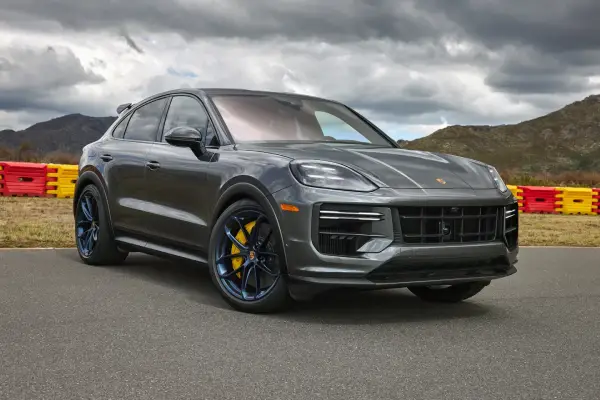
Up to 1,139 horsepower can be produce by the Porsche Cayenne Turbo Electric.
This adds 138 horsepower to the 1,001 horsepower of the original Bugatti Veyron.
And it does this while remaining recognizable as a Cayenne.
There’s no enormous rear wing or screaming combustion engine. Instead the Cayenne uses an electric powertrain capable of delivering a huge amount of torque almost instantly.
Porsche Cayenne Electric Power Figures
| Model | Horsepower | 0-60 mph |
| Cayenne Electric | 435 hp | 4.5 sec |
| Cayenne Electric S | 657 hp | 3.6 sec |
| Cayenne Turbo Electric | 1,139 hp | 2.4 sec |
The Turbo Electric’s headline acceleration figure is particularly wild.
Around 2.4 second to 60 mph puts it firmly into supercar territory.
But there’s an important detail behind that four-digit number.
The maximum output is associated with launch conditions. Under normal driving the vehicle doesn’t continuously operate at its absolute peak output.
Honestly that is hardly a criticism.
How often are you going to need more than 800 hp just to merge onto the highway?
The real story is that Porsche has built a family friendly SUV capable of producing performance that would have been unimaginable for a vehicle of this type a generation ago.
Electric Power Has Completely Changed the Horsepower Game
The comparison with the Bugatti Veyron becomes particularly intriguing at this point.
To generate its renowned 1,001 horsepower the Veyron required a massive 8.0-liter W16 engine with four turbocharger.
The Porsche Cayenne Electric and Lucid Gravity take somewhat different approaches to the issue.
Massive torque may be produced almost instantly by electric motors. Waiting for a big combustion engine to develop boost or ascend through a wide rpm range is not necessary.
That’s one reason modern electric performance vehicles can deliver such brutal acceleration.
And it isn’t only about acceleration.
Automakers may now more easily create incredibly powerful automobiles without turning them into conventional sports cars thanks to electric powertrains.
Because of this, we now see the term “family SUV” next to figures like 1,070 and 1,139 horsepower.
Those numbers were nearly solely associated with exotic gear ten years ago.
They are now being discussed in relation to luxury EVs.
But Which SUV Is Actually Better for a Family?
This is where things get more interesting.
Horsepower is easy to advertise.
Family usability is harder.
A vehicle can be unbelievably quick and still be annoying to live with every day.
Fortunately, both the Gravity and Cayenne Electric bring plenty of practicality to the table.
Lucid Gravity: The Space Champion
The Lucid Gravity has a major advantage for larger families: it can offer three rows and seating for up to seven.
That makes it fundamentally different from many performance SUVs.
You can have the ridiculous acceleration, but you don’t necessarily have to sacrifice passenger capacity.
The Gravity also offer a huge amount of cargo room especially with the rear seat folded.
That’s an important advantage for families that regularly travel with stroller, sports equipment, luggage or simply a mountain of groceries.
In other words Lucid hasn’t treated practicality as an afterthought.
The Gravity was conceived as a family-oriented electric SUV first.
The crazy horsepower came afterward.
Porsche Cayenne: Smaller, More Driver Focused
The Porsche takes a slightly different approach.
Delivering the kind of driving manners you’d expect from Porsche is the Cayenne Electric’s primary goal.
It’s not attempting to be a family shuttle with seven seats.
Rather, it seeks to blend the driving sensation associated with the Porsche name with the utility of SUVs.
Customers who don’t require three rows will find that combination appealing.
Another benefit for the Cayenne is familiarity.
For many years Porsche has produced high-performance SUVs.
The business is aware that an SUV’s huge body doesn’t have to make it feel like a tall, heavy truck.
The electric powertrain simply gives Porsche another way to extract even more performance.
The Technology Is Impressive—But Not Everyone Will Love It
Both SUVs are packed with technology although their approaches aren’t identical.
The Porsche keeps more of the traditional driver-focused philosophy alive. The cabin combines digital displays with physical controls for important functions.
That’s something many drivers will appreciate.
The Lucid Gravity takes a much more technology-heavy approach.
Its cabin features a large display setup and a minimalist interior that feels distinctly modern.
For tech lovers, that’s part of the appeal.
For everyone else, there can be a learning curve.
There’s a simple rule with modern luxury EVs: the more functions you move onto screens, the more important it becomes to make the interface intuitive.
Nobody wants to hunt through menus simply to operate a basic function while driving.
That’s especially true in a family SUV where the driver already has enough distractions.
Do You Really Need 1,000 Horsepower in a Family SUV?
Of course not.
You don’t need 1000 hp to take your children to school.
You don’t need 800 hp to go grocery shopping.
You don’t even need 500 hp for most everyday driving.
But that’s not really the point.
The appeal of these SUVs isn’t based on necessity.
It’s about what happens when automakers stop treating practicality and performance as mutually exclusive.
A family can have plenty of passenger space, useful cargo capacity, advanced safety technology and a comfortable ride—and still have a vehicle capable of accelerating like a supercar.
That’s the magic of the current electric performance race.
The question has changed from:
“How much power do we need?”
to:
“How much power can we realistically put into an SUV?”
And manufacturer seem increasingly interested in finding the answer.
The Bugatti Veyron Comparison Still Sounds Crazy
There’s something almost absurd about putting a Lucid Gravity or Porsche Cayenne next to a Bugatti Veyron.
The Veyron was one of the defining performance car of its era.
It represented the extreme end of automotive engineering, combining massive power, incredible speed and an astronomical price.
Yet these modern electric SUVs can now beat its horsepower figure.
That doesn’t mean they’re better performance cars.
A horsepower comparison only tells part of the story.
The Veyron engineering, top speed, aerodynamics, weight, engine character and place in automotive history are complete different from those of a family SUV.
Still the comparison illustrate how dramatically the performance landscape has changed.
Four-digit horsepower is no longer reserved for exotic hypercar.
Which One Should You Choose?
For a larger family the Lucid Gravity GT-S makes the stronger practical argument.
Its available third row, generous cargo capacity and family focused layout give it an advantage for road trip and everyday family duties.
The Porsche Cayenne Turbo Electric makes more sense for someone who value driving feel and Porsche’s performance philosophy while not needing seven seats.
Then there’s the price.
Neither is remotely cheap.
The Gravity GT-S sits deep in luxury-performance territory while the Cayenne Turbo Electric pushes even further into six-figure territory.
At that point, you’re buying more than transportation.
You’re buying an experience.
And that’s why the four-digit horsepower numbers matter. They’re part of the reason these vehicle exist in the first place.
The Real Future of Performance SUVs May Be Electric
The most interesting thing about these two SUVs isn’t actually their horsepower.
It’s what they represent.
Electric power has given automakers an entirely new way to approach performance.
Instead of building a lightweight two-seat sports car and extracting every last bit of power from a combustion engine, manufacturer can now take a large, practical vehicle and give it extraordinary acceleration through powerful electric motors.
That doesn’t mean every family SUV will become a 1,000-hp monster.
Thankfully they won’t.
But the technology makes it possible.
And once customers know they can have a comfortable family vehicle that accelerates like a supercar, it becomes difficult for automakers to ignore that demand.
The Lucid Gravity GT-S and Porsche Cayenne Turbo Electric are two of the clearest examples yet.
Final Verdict
Fifteen years ago it would have seem absurd for a family SUV to have more horsepower than a Bugatti Veyron.
It’s a specification sheet now.
When operating at maximum output the Porsche Cayenne Turbo Electric can produce 1,139 horsepower, while the Lucid Gravity GT-S can produce up to 1,070 horsepower.
Both have the comfort, technology, and functionality one would expect from high-end SUVs, but they are fast enough to frighten most sports cars.
Is that much power really necessary?
Not at all.
Would having it be enjoyable?
That’s a much easier question.
The bigger takeaway is that electric vehicles are changing what we expect from family transportation. The next generation of performance SUVs may not ask you to choose between practicality and speed.
They may simply give you both.
FAQs
Q: How much horsepower does the Porsche Turbo Electric have?
A: The Porsche Turbo Electric can produce up to 1,139 horsepower under its maximum performance condition. Its peak output is available during specific performance scenarios rather than continuously.
Q: Is the Lucid Gravity a good family SUV?
A: The Lucid Gravity is design with family practicality in mind. Depend on configuration, it can seat up to seven passenger and offer substantial cargo capacity make it much more practical than a traditional high-performance sports car.
Q: Which is more practical the Lucid Gravity or Porsche Electric?
A: The Lucid Gravity has the edge for large families because it offer an available third row and seat for up to seven. The Porsche Electric is better suited to buyer who prioritize Porsche driving character and don’t need three-row seating.
Also Read: Honda’s 2026 Hybrid Lineup Is Smaller Than You Think—Here’s What You Can Actually Buy
1 thought on “2 Family SUVs Now Have More Power Than a Bugatti Veyron”
Comments are closed.