
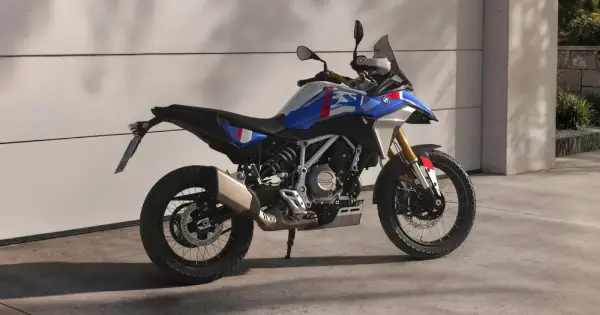
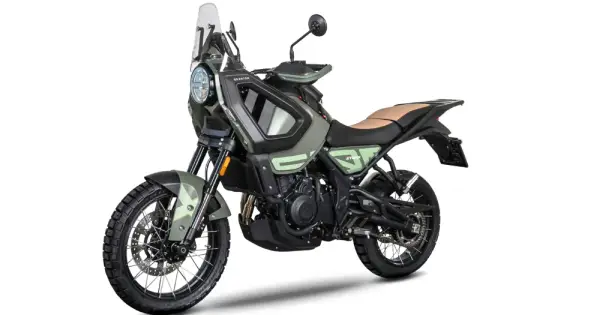
2026 Adventure Bike: There’s a funny thing happening in the middleweight adventure-bike market right now: the bike with the lowest price can also bring the biggest engine punch.
That sounds like a typo.
While You Care for Your Car, Care for Your Child’s Future Too 💖
A fun and educational book every parent should gift their kid.
 Get Kiddy Store Fortune Now
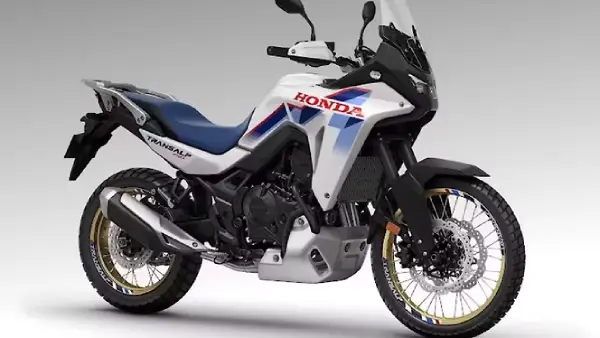
Usually spending more gets you more power, more equipment, or at least a more serious-looking specification sheet. But the 2026 Honda Transalp E-Clutch flips that idea on its head. With a U.S. starting MSRP of $10,199, it undercuts the Yamaha Ténéré 700 and Suzuki V-Strom 800DE while bringing a 755cc parallel-twin and Honda’s new E-Clutch technology to the table.
This comparison is intriguing because of that.
For some people, the Honda isn’t the ideal adventure motorcycle. The Suzuki is built to travel long distances with lots of equipment and fuel capacity, whilst the Yamaha has a radically different off-road personality.
Why, therefore, is the least expensive bike perhaps the most alluring?
Because the 2026 Honda Transalp E-Clutch might have found the ideal balance between everyday usage, road performance, and true adventure capabilities.
The 2026 Honda Transalp Is Playing a Different Game
Honda’s Transalp has never been about building the most extreme motorcycle in the showroom.
Instead, the idea is simple: make an adventure bike that works well when you’re commuting on Monday, touring on Saturday and suddenly deciding to explore a gravel road on Sunday.
With the advent of Honda’s E-Clutch, the 2026 model advances that formula.
The motorcycle has a six-speed transmission and a 755cc parallel-twin liquid cooled engine. A 43mm Showa fork with 7.9 inches of travel, a Pro-Link rear suspension with 7.5 inches of travel and 21-inch front and 18-inch rear wheels are also list in Honda official specs.
This is significant because the Transalp is more than just an inexpensive street motorbike with adventure-bike appearance.
It has the hardware to leave the pavement.
And when you return to the highway, that relatively large engine gives the Honda a serious advantage.
The Price Is What Makes the Transalp So Interesting
Before destination, taxes, registration, and other expenses the starting price of the 2026 Honda Transalp E-Clutch in the United States is $10,199. The total MSRP is $10,799 before the $600 destination fee that Honda lists.
Take a look at the competition now.
Before their respective destination charges the 2026 Yamaha Ténơ 700 and Suzuki V-Strom 800DE start at $10,999 and $11,799, respectively.
That means the Honda begins:
- $800 below the Yamaha
- $1,600 below the Suzuki
On paper, that already makes the Transalp interesting.
But price alone doesn’t explain why it has attracted so much attention.
The real surprise is what’s sitting underneath the fuel tank.
Honda Gives the Cheapest Bike a 755cc Twin
One of the Transalp’s greatest advantages is its 755cc engine.
Honda’s liquid-cooled Unicam parallel-twin engine provides the Transalp a distinct personality from the adventure vehicles with smaller displacements that surround it.
This motorcycle isn’t made just for walking-speed crawling through rocks.
For riders who don’t live close to an off-road playground, its engine power is sufficient to make highway riding feel normal.
Imagine a normal weekend excursion.
You might spend an hour getting out of town, another hour cruising along a highway, hit some winding back roads, and eventually reach a dirt trail.
A motorcycle that’s brilliant only once the pavement ends isn’t necessarily the best choice for that type of ride.
The Transalp makes a convincing argument for being good at all of it.
The E-Clutch Could Be the Transalp’s Secret Weapon
There’s another reason the 2026 model stands out.
Honda added its E-Clutch system.
The basic idea is surprisingly clever. The motorcycle can manage clutch operation during starts, stops and gear change while the rider can still use the clutch lever when desired.
That means you don’t have to choose between a conventional manual motorcycle and an automatic style riding experience.
You can have both.
For long-distance riding, that could be particularly useful. Stop-and-go traffic becomes less tiring while technical sections still allow the rider to take control when needed.
Honda itself describes the 2026 update as adding E-Clutch to an already versatile Transalp.
It’s the kind of feature that may not sound revolutionary after reading a specification sheet, but could become one of those things riders appreciate every time they ride the motorcycle.
Then There’s the Yamaha Ténéré 700
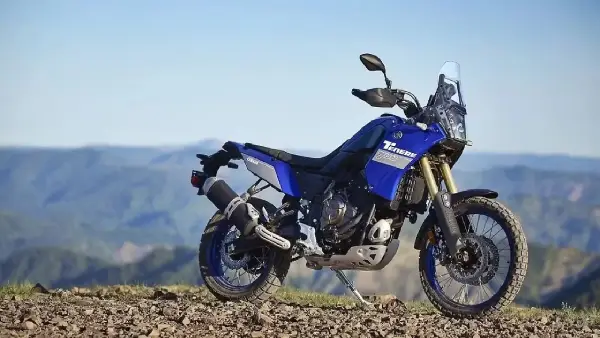
The Yamaha Ténên 700 is the bike that starts to make more sense when your idea of adventure grows dirtier even if the Honda is the all-arounder.
With a 689cc engine, a 4.2-gallon fuel tank and 8.3/7.9 inches of front/rear suspension travel Yamaha lists the 2026 Ténüge 700 at $10,999. It also gets three-mode selectable ABS.
The numbers don’t make it look like the obvious winner against the Honda.
But numbers can be misleading with adventure motorcycles.
The Ténéré 700 has earned its reputation around a simple philosophy: keep things relatively light, narrow and focused on off-road control.
That’s exactly why somebody might willingly spend more money on it despite getting a smaller engine.
The Yamaha isn’t trying to beat Honda at being a comfortable road-going adventure bike.
It’s trying to make you forget that you’re riding a fairly large motorcycle when the trail gets rough.
And that’s a very different goal.
The Ténéré Makes More Sense the Rougher the Trail Gets
Imagine two riders.
The first spend 80 percent of the time on pavement and uses dirt roads mainly to reach scenic locations.
The second rider actively searches for rocky climbs, loose surfaces, deep ruts and challenging trails.
Those two people probably shouldn’t buy the same motorcycle.
The first rider has a very strong reason to consider the Transalp.
The second may happily accept the Yamaha’s higher price.
Yamaha itself describe the Ténéré 700 as a lightweight bike and its suspension specification underline how seriously the bike approach off road riding.
That’s the key distinction.
The Honda gives you more road-friendly performance. The Yamaha gives you a more focused dirt-bike-inspired adventure package.
Neither approach is wrong.
Suzuki’s V-Strom 800DE Takes Yet Another Route
The Suzuki 800DE is another.
In this comparison of three motorcycles, it is the most costly at $11,799.
Once more, Suzuki’s recipe is unique.
A 776cc DOHC parallel-twin with a 270 degree crankshaft and Suzuki Cross Balancer power the V-Strom 800DE. Although the DE is marketed by Suzuki as its more dirt capable V-Strom the motorcycle still has a significant touring focus.
For riders who wish to travel far instead of just ride hard, this makes it very intriguing.
The Suzuki feels like the motorcycle you would pick when the journey is just as important as the trail because of its larger fuel tank, extensive equipment, and larger overall footprint.
It isn’t trying to be the lightest.
It isn’t trying to be the cheapest.
And it isn’t trying to produce the most peak power.
It’s trying to be the motorcycle that can do a little bit of everything without make a big fuss about it.
So Which 2026 Adventure Bike Offers the Best Value?
This is where things get complicated.
If you judge these motorcycles entirely by price and engine output, Honda wins the argument very quickly.
It’s the least expensive of the three and brings a 755cc engine to the party.
But adventure motorcycles aren’t sports cars.
Horsepower doesn’t tell you how easily a motorcycle handles a rocky trail. It doesn’t tell you how confident you’ll feel standing on the peg. It doesn’t tell you how much suspension travel you need or whether the bike’s weight will become a problem after several hour in deep sand.
That’s why the best value depends heavily on where you ride.
Choose the Honda Transalp if…
You want one motorcycle that can handle almost everything.
The Transalp is especially attractive if your riding includes:
- Daily commuting
- Highway touring
- Back-road exploration
- Gravel roads
- Occasional off-road riding
- Long-distance travel
- Two-up or luggage-heavy trips
The E-Clutch also makes it more appealing to riders who spend a lot of time in traffic.
And with Honda’s $10,199 starting MSRP, you’re not paying extra simply to get the adventure-bike badge.
Choose the Yamaha Ténéré 700 if…
Your idea of adventure involves significantly more dirt.
The Yamaha becomes particularly compelling for riders who prioritize:
- Technical trails
- Standing riding positions
- Lower overall weight
- Long suspension travel
- Simple off-road-focused ergonomics
- Serious gravel and trail riding
The fact that the Ténéré costs more than the Honda doesn’t necessarily make it worse value.
You’re paying for a different kind of motorcycle.
Choose the Suzuki V-Strom 800DE if…
Your adventures are measured in hundreds or thousands of miles.
The Suzuki makes sense for riders who want:
- Long-distance capability
- Plenty of fuel capacity
- Strong midrange torque
- Touring comfort
- Dirt-road ability
- More electronic riding aids
Its $11,799 MSRP makes it the most expensive option here but its broader touring personality helps explain where that money goes.
The Cheapest One Might Actually Be the Smartest Choice
Here’s the part that’s easy to miss.
Honda doesn’t have to outperform Suzuki and Yamaha in every aspect.
It only needs to be adept at enough tasks.
And that’s why the Transalp is so captivating.
A 755cc engine, appropriate adventure-bike suspension, 21/18-inch wheels, a six-speed transmission, and Honda’s E-Clutch technology are all included. The official Honda specification verifies that the motorcycle is not just styled like an adventure bike but is actually equipped with authentic adventure bike hardware.
However, the bike does not require the Suzuki’s $11,799 price tag.
For regular riders that balance might be more crucial than having the most aggressive off-road setup or the most specialized suspension.
But Don’t Buy the Transalp Just Because It’s Cheap
There is one important catch.
Ownership cost are not always reduced by a lower MSRP.
Once you start adding baggage, protection, skid plate, crash bars, better seats, auxiliary lighting and other accessories, an adventure motorcycle may rapidly become pricey.
This is especially true if you intend to travel extensively.
The same applies to the Yamaha and Suzuki.
The motorcycle you buy for $10,000-plus can easily become a considerably more expensive machine once you build it into the adventure rig you actually want.
So don’t compare only showroom prices.
Compare the bike after you’ve equipped it for the kind of riding you actually do.
The Bigger Story Is the Middleweight Adventure Boom
Perhaps the most interesting part of this comparison isn’t the Honda at all.
It’s how competitive this category has become.
A few years ago, rider looking for serious adventure capability often had to choose between a lightweight dual-sport and a large, expensive ADV.
A middle ground is now expanding.
The starting price of the 2026 Ténơ 700 is $10,999. At $10199 the Transalp is less expensive than it. The price of the V Strom 800DE is $11799.
This provides consumer with three distinct response to the same query
What is the actual amount of motorcycle you require?
And rather than just asking which one produces the most horsepower, that is a far better question.
Final Verdict: The Transalp Is the Value Play, Not the Universal Winner
Because it doesn’t have to win every category the 2026 Honda Transalp E-Clutch is an intriguing motorcycle.
It doesn’t.
For rider who value serious off-road riding the Yamaha Ténơ 700 continues to be the more obvious option. The Suzuki V-Strom 800DE presents a compelling argument for touring and long-distance adaptability.
However, the Honda is quite difficult to overlook if you’re searching for an adventure motorcycle that can easily manage highways, commuting, twisting roads, gravel and even trails—and you don’t want to pay more than required.
With a starting MSRP of $10,199, it is the least expensive of all three, and its 755cc engine has plenty of performance potential. Honda’s addition of E-Clutch only makes the package more interesting.
So, yes, the cheapest bike really is the one that can bring the biggest engine punch.
But that’s not why I’d call the Transalp the most interesting motorcycle here.
It’s interesting because Honda may have found the middle ground that most adventure riders actually need.
FAQs
Q: Is the Honda the cheapest midweight adventure bike?
A: Among the three motorcycle compare here yes. The Honda start at $10,199 in the U.S. compare with $10999 for the Yamaha and $11799 for the V Strom 800DE.
Q: Does the Honda have an E-Clutch?
A: Yes. The Transalp E-Clutch uses Honda E-Clutch system with its six-speed manual transmission. The system can manage clutch operation during start stop and gear change while retain the conventional clutch lever.
Q: Is the Yamaha better than the Honda Transalp?
A: Not necessarily. The Yamaha is more specialized toward off road riding while the Transalp places more emphasis on all round versatility and road performance. The better choice depend on how and where you ride.
Also Read: 10 Best Value New Cars of 2026: These Are the Ones Worth Your Money
1 thought on “The Cheapest 2026 Adventure Bike Might Be the One You Actually Want”
Comments are closed.