
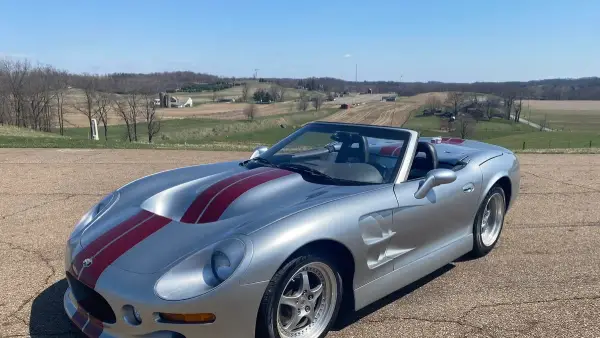
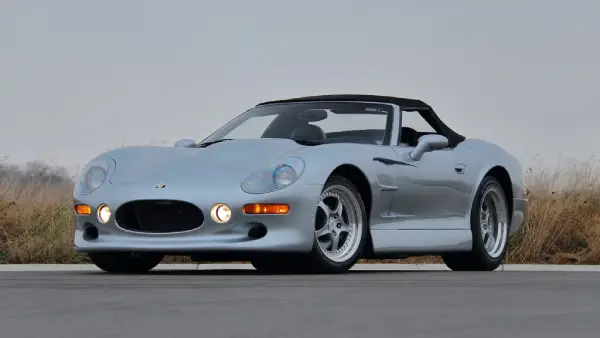
Shelby Series 1: What happen when you take the spirit of the legendary Shelby Cobra ditch the traditional Ford V8 formula and build an entirely new sports car around an Oldsmobile engine? You get one of Carroll Shelby’s most unusual creations.
Carroll Shelby built his reputation on a simple idea take a car with potential give it more power, and make it fast enough to embarrass machines that cost a whole lot more. The original Cobra followed that recipe to perfection. But decades later Shelby decided to try something far more ambitious.
While You Care for Your Car, Care for Your Child’s Future Too 💖
A fun and educational book every parent should gift their kid.
 Get Kiddy Store Fortune Now
Instead of dropping a big V8 into an existing chassis he wanted to build a modern sports car from the ground up. It needed lightweight construction, serious handling, exotic car performance and enough Cobra DNA to make enthusiast pay attention.
There was just one catch. The engine under the hood wouldn’t come from Ford.
Meet the Shelby Series 1 a rare American roadster that combine an aluminum chassis, composite bodywork, sophisticate suspension and a 4.0-liter Oldsmobile Aurora V8. It looked like a worthy successor to the Cobra but its engineering story was considerably more complicate than its gorgeous exterior suggested.
And that’s what makes this car so interesting. The Series 1 wasn’t simply an old Cobra with a modern makeover. It was Shelby’s attempt to rethink what an American supercar could be.
The Shelby Cobra Formula Needed A Modern Upgrade
To understand why the Series 1 matter it helps to go back to the beginning.
In the early 1960s Shelby team up with British manufacture AC Car to transform the lightweight AC Ace into a serious performance machine. The original car was relatively simple but its chassis could accommodate something considerably more powerful than its existing engine.
Shelby’s solution was to install a Ford V8.
The result was the Shelby Cobra a compact roadster with an enormous personality. Early version used Ford 260-cubic inch V8 before moving to the more powerful 289. Eventually the legendary Cobra 427 arrive with a 7.0 liter Ford V8 that turn the little roadster into a genuine performance monster.
That formula became part of Shelby’s identity. Lightweight construction, American V8 power and a chassis design to make the most of both.
By the 1990s however the automotive world had change dramatically. Sports car were becoming more sophisticated, safety regulation were tougher and buyer expected more refinement alongside outright speed.
Shelby wanted to bring the Cobra philosophy into this new era.
The answer was not another modified Ford-powered roadster. It was an entirely new machine.
Meet The Shelby Series 1: A Clean-Sheet Sports Car
Development of the Shelby Series 1 began in the mid 1990s with the car making its public debut at the 1997 Los Angele Auto Show.
Unlike the original Cobra which started life as an existing British sports car the Series 1 was design and engineered as a standalone vehicle.
That distinction matter. Shelby wasn’t simply borrowing somebody else’s platform and adding horsepower. The project called for a dedicate chassis, a purpose built suspension layout a modern drivetrain and bodywork shaped around the car performance goal.
Visual the connection to the Cobra was obvious without being a direct copy. The Series 1 featured rounded headlights, a low nose, a broad oval grille and flowing bodywork that gave it a distinctly American roadster appearance.
It didn’t use big style tricks to give it a muscular appearance.
However everything were far more contemporary underneath. The vehicle had independent suspension at each of its four corners, a rear-mounted transaxle that was connected to the engine by a torque tube, and an aluminum body with honeycomb construction in important parts.
Put otherwise, this was not a vintage Cobra dressed in a brand-new outfit. It was a serious technical effort with goals that went far beyond sentimentality.
Carbon Fiber, Aluminum, And A Chassis Built To Save Weight
A key component of the Series 1’s initial goal was its lightweight design.
The concept was simple: keep the vehicle light enough to provide remarkable handling and acceleration without needing a ridiculous amount of horsepower.
The chassis was made of aluminum and aluminum honeycomb panels added stiffness without adding extra weight. The external light was also maintained via composite body panels.
Although the final production vehicle did not simply emerge as an all-carbon-fiber supercar, carbon fiber was part of the initial concept for the vehicle. The ultimate weight was impacted by development concessions and a combination of lightweight materials used in its actual production.
The original target was around 2,650 pound. Meeting real-world safety and regulatory requirement proved more difficult than anticipated, and the car’s weight increased during development.
Still the Series 1 retained the basic ingredients of an effective performance machine.
Its independent double wishbone suspension was powered by rocker mechanism with inboard spring and damper. This configuration gave engineer significant control over how the vehicle react to bumps, turn and abrupt direction change while also making it easier to package the suspension cleanly.
The end product was a roadster that could do more than just accelerate in a straight line.
Shelby objective was to create a well balance sports car that could compete with well known European performance vehicles while maintaining the unadulterated personality that made the Cobra renowned.
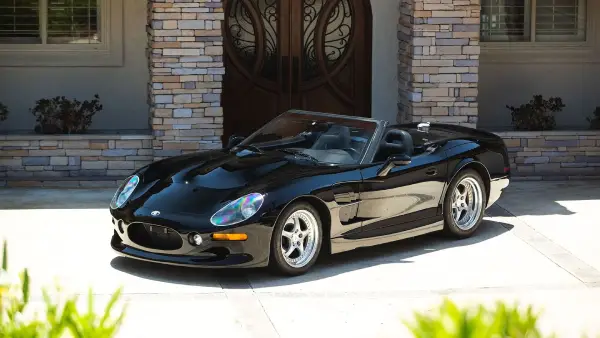
Why On Earth Did Shelby Choose An Oldsmobile V8?
Here’s where the Series 1 gets really interesting.
Most enthusiasts would probably expect a Shelby roadster to use a Ford V8. After all, the relationship between Shelby and Ford produced some of the most recognizable performance cars in American history.
But the Series 1 took a different route.
Its engine was the 4.0-liter Oldsmobile Aurora V8, a sophisticated, double-overhead-camshaft powerplant related in broad architectural terms to General Motors’ Cadillac Northstar engine family.
The Aurora V8 wasn’t a traditional pushrod small-block. It used four valves per cylinder and electronic fuel injection, giving it a more modern character than the big-displacement V8s commonly associated with classic American muscle cars.
It also had racing credentials. Aurora-derived engines competed in demanding motorsports applications, including open-wheel racing, helping establish the engine family as a serious performance platform.
It was an interesting option for a clean-sheet sports vehicle because of this.
A small, powerful engine that could fit the Series 1’s chassis and packaging specifications was required. Power, technology, and a solid technical base were all attractive features of the Aurora.
Another crucial feature was that, although the initial plans had intended for a more specialized racing-derived engine, it proved difficult to make that concept fit for road use and regulatory approval. The production-based Aurora V8 became the practical alternative.
It wasn’t the obvious choice for a Shelby, and that was precisely what made the car different.
How Much Power Did The Shelby Series 1 Make?
The baseline Series 1’s naturally aspirated 4.0-liter Aurora V8 engine generated about 320 horsepower.
Nowadays, family SUVs can generate comparable number so that might not seem remarkable, but horsepower numbers don’t fully capture the essence of a lightweight roadster with rear-wheel drive and a six-speed manual gearbox.
The entire package, not just the engine output, was the focus of the Series 1’s engineering.
Buyers could also choose more powerful configurations. An X50 performance package increased output to approximately 390 horsepower, while a supercharged version pushed the figure to around 450 horsepower.
That additional power made the Series 1 a much more serious proposition.
Depending on the version and the source of the published figures, the supercharged car was capable of reaching 60 mph in roughly the low-three-second range and achieving a claimed top speed of approximately 170 mph.
Those number put it firmly in exotic-car territory for its time.
The important point is that Shelby didn’t need a massive 7.0-liter engine to create a fast roadster. The Aurora V8 delivered respectable power in naturally aspirated form, while forced induction offered a way to extract considerably more performance from the same basic engine architecture.
Shelby Series 1 specifications at a glance
| Specification | Shelby Series 1 |
| Engine | 4.0-liter Oldsmobile Aurora V8 |
| Engine configuration | DOHC V8, 32 valves |
| Standard output | Approximately 320 hp |
| X50 package | Approximately 390 hp |
| Supercharged version | Approximately 450 hp |
| Transmission | Six-speed manual |
| Drivetrain | Rear-wheel drive |
| Original target weight | Approximately 2,650 pounds |
| Claimed supercharged top speed | Approximately 170 mph |
The Drivetrain Was More Sophisticated Than A Typical Muscle Car
The engine was only one part of the Series 1’s mechanical package.
Rather than using a conventional transmission layout with the gearbox immediately behind the engine the car employed a rear-mounted transaxle. A carbon-fiber torque tube connected the front mounted engine to the transmission assembly at the rear.
Why go to all that trouble?
Weight distribution.
The car was more balanced and less likely to have too much weight sitting over the front axle when the transmission was moved to the back. Engineers now had a solid platform for reliable handling and powerful traction thanks to the final layout.
The car’s personality was also complemented by the Series 1’s six-speed manual transmission. This was not intended to be a luxury cruiser with a potent engine but rather a captivating driver’s vehicle.
When that drivetrain was paired with independent suspension, four-wheel disk brakes, and a comparatively lightweight body the automobile was create with the whole driving experience in mind.
It’s a reminder that building a supercar involves much more than choosing an engine with an impressive horsepower rating.
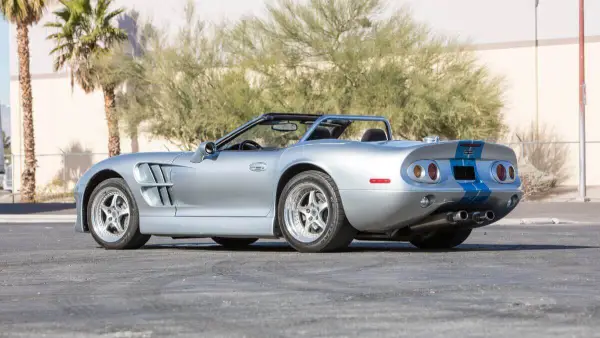
The Series 1 Had A Big Problem: Building It Was Harder Than Expected
On paper, the Shelby Series 1 looked like a winner.
In reality, getting it into production was a major challenge.
The car’s development involved extensive work to satisfy US safety and emission requirement. Those demand added cost and complexity, while engineering changes affected the original weight and performance targets.
The production schedule also slipped. Some early customers experienced delays, and the convertible-top arrangement wasn’t ready for the first batch of cars, requiring subsequent installation work.
Then there was the price.
The Series 1 was initially envisioned as a more accessible alternative to some exotic sports cars, but development costs and production difficulties pushed the price considerably higher than originally anticipated.
That created an awkward situation. Shelby had designed an ambitious, low-volume sports car, but the expense of building it made the business case increasingly difficult.
The car’s appeal wasn’t the problem. Turning the concept into a commercially successful production vehicle was.
Ultimate production came to an end in the mid 2000s with the original Series 1 remain a rare sight on today road.
Why The Shelby Series 1 Still Matters
The Series 1 deserves more attention than it sometimes receive.
For starters, it demonstrated that Carroll Shelby’s approach to performance wasn’t limited to Ford engines or modifications to existing vehicles. He was willing to explore a different powertrain, rethink the chassis, and build something new from the ground up.
The Oldsmobile engine is a big part of that story. In an era when the Shelby name was closely associated with Ford, choosing a GM-developed V8 was an unexpected decision.
But the engine made sense within the wider engineering brief. It offer modern technology, competitive output and a foundation that could support additional performance.
The car also show how difficult it can be to turn an ambitious concept into a viable production vehicle. Lightweight material, advanced suspension, modern safety requirement and low volume manufacturing all sound great until the bills arrive.
That combination of ambition and compromise is part of what makes the Series 1 fascinating today.
It’s not simply an alternative Cobra. It’s a snapshot of a moment when an American performance legend tried to build his own modern supercar.
What Happened To The Shelby Series 2?
The Series 1’s story didn’t end with the original production run.
Plans for a Series 2 emerged as a way to continue the concept, with proposed changes to the styling and mechanical package. However, the early program struggled to gain traction.
More recently, Wingard Motorsports and Custom Coaches has revived the idea through a limited continuation-style program using existing Series 1 chassis and components.
The updated cars offer a more individualized approach to construction, with options that have included different body materials and alternative V8 powertrains.
That means the Series 1’s original formula can now be explored in several different directions. A buyer interested in the concept isn’t necessarily restricted to the original Oldsmobile-powered specification.
However, the newer Series 2 program should not be confused with the original factory-built Series 1. They’re related project with different specification and production histories.
For enthusiast that distinction matters when researching authenticity rarity and collector value.
The Verdict: A Cobra In Spirit, But A Supercar In Its Own Right
The Shelby Series 1 never became the mainstream success its creator might have hoped for but it remains one of the most unusual cars to emerge from Carroll Shelby long career.
It borrowed the Cobra’s basic philosophy of combining low weight with serious power then took that idea in a distinctly modern direction. Aluminum construction, composite bodywork, sophisticated suspension, a rear-mounted transaxle, and an Oldsmobile Aurora V8 made it a very different machine from the cars that establish Shelby’s reputation.
And that’s the point.
The Series 1 didn’t need a Ford badge on its engine to carry the Shelby spirit. It need a compelling design thoughtful engineering and enough performance to make every drive memorable.
For a brief period, Shelby had all three.
Sometimes, the most interesting chapter in an automotive legend is the one that breaks its own rules.
FAQs
Q1. How much horsepower did the Shelby Series 1 produce?
A: The standard car produce around 320 hp. The X50 package increase output to approximately 390 hp while the supercharged version delivered roughly 450 hp.
Q2. Was the Shelby Series 1 made from carbon fiber?
A: Carbon fiber and other lightweight composite were part of the Series 1 development vision. However the finish car use a combination of material including an aluminum chassis and composite body panel rather than an entire carbon fiber structure.
Q3. How fast was the Shelby Series 1?
A: The naturally aspirate version could reach 60 mph in approximate 4.4 second according to commonly published specification. Supercharged versions were considerably quicker with some published figure putting the sprint in the low-three-second range and the top speed around 170 mph.
Actual performance depends on the particular car and specification.
Also Read: The 2026 Harley-Davidson Heritage Classic Could Be More Comfortable Than Some Touring Bikes