
First Production Car To Break 400 Horsepower: There was a time when 400 horsepower seemed less like a number from a showroom brochure and more like something you would expect from a race car.
Today a family SUV can comfortably create that amount of power and new supercars can make twice as much without breaking a sweat. But back in the 1960s, crossing the 400-horsepower mark was a quite different matter. Engine were bigger, fuel consumption was brutal, technology was comparatively primitive and serious horsepower often came with serious compromises.
While You Care for Your Car, Care for Your Child’s Future Too 💖
A fun and educational book every parent should gift their kid.
 Get Kiddy Store Fortune Now
The 426 Hemi was then dropped into Chrysler’s street vehicle.
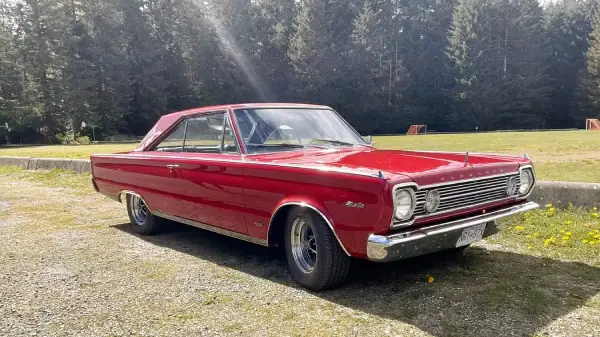
The fabled engine official rating for the 1966 model year were 425 horsepower and 490 lb-ft of torque. It was made accessible in vehicle like the Plymouth Satellite and Dodge Coronet, providing regular consumer access to a factory rated power level that was previously only found in racing and extremely specialized vehicle.
The plot becomes intriguing at that point.
The 1966 Hemi vehicles weren’t technically the first vehicles with more over 400 horsepower on the road. There were earlier lightweight racers and homologation specials that complicated that claim. But Chrysler’s Street Hemi represented something important: race-bred horsepower was becoming a legitimate factory option for a production street car.
Here’s how Chrysler helped push American horsepower into a completely different era.
The 426 Hemi was not Designed for Daily Commuting, But Rather for Racing
Initially, the 426 Hemi was not intended to be a pleasant street engine.
Chrysler developed the engine for competition, and its hemispherical combustion chambers were designed around one simple goal: helping the engine breathe at high rpm.
The architecture allowed Chrysler engineers to use large valves and relatively direct intake and exhaust paths. The result was an engine with enormous potential for airflow and high-rpm performance.
The competition version was a serious piece of hardware. But putting a race engine into a street car required some changes.
The street going version used lower compression a milder camshaft and other alterations intended to make the engine more manageable outside a racetrack. Even after those change the result was still spectacular for 1966: 425 horsepower at 5,000 rpm and 490 lb-ft at 4,000 rpm.
Those number were measured using the SAE gross horsepower standard of the era so they shouldn’t be compared directly with today’s SAE net rating. Still the figure was extraordinary within its historical context.
And Chrysler wasn’t putting it into some exotic, unobtainable supercar.
It was going into Mopar B-body cars.
One of the major Hemi breakthroughs was the Plymouth satellite from 1966
It may not seem at first that the Plymouth Satellite is the kind of vehicle that should be remembered as a pioneer in horsepower.
That’s one of the reasons it’s so awesome.
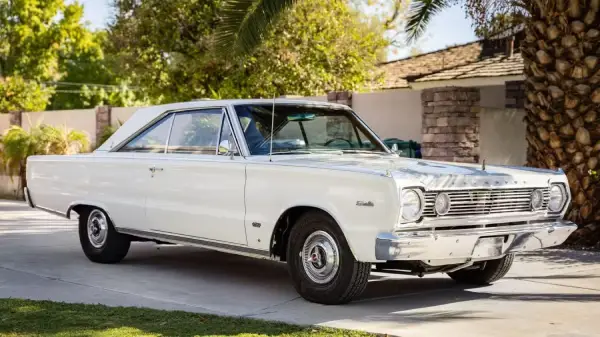
The Satellite was based on Chrysler midsize B body platform. It wasn’t design exclusively as a race car. It was a production car that could be ordered with standard equipment but if you checked the box for the 426 Hemi it became something far more menacing.
The Street Hemi equipped 1966 Plymouth Satellite had 425 horsepower and 490 lb ft of torque. According to modern performance estimate it could complete a quarter mile at 104 mph in around 13.8 second which was very competitive in the middle of the 1960s.
The Hemi Satellite also came with hardware intended to cope with the engine’s output, including heavy-duty suspension and upgraded brakes. Buyers could choose between a four-speed manual and Chrysler’s TorqueFlite automatic.
Production was tiny by modern standards. HowStuffWorks lists 817 Hemi-equipped Satellites for 1966, including the hardtop body style, while historical production sources vary depending on body style and model classification.
So no, this wasn’t a car you saw on every street corner.
But that wasn’t the point.
The point was that you could walk into a Chrysler dealership and order one.
The Dodge Coronet Joined The 400-HP Club
The Plymouth wasn’t alone.
Dodge also offer the Street Hemi in the 1966 Coronet lineup. In fact the engine could be ordered across multiple Coronet model and trim making the story even more unusual.
The 1966 Dodge Coronet 500 for example combine a relative upscale interior with the enormous Hemi V8.
Think about that for a second.
You could have a car with bucket seat a center console and plenty of chrome yet underneath the hood sat a 426-cubic-inch engine producing 425 horsepower.
The Coronet 500 Hemi option was not cheap either. Historical source put the option price at roughly $900, depending on configuration. Hemming list 339 Coronet 500 two-door hardtops built with the 426 Hemi.
That combination of comfort and brute force became a defining ingredient of the muscle car formula.
You didn’t necessarily need a stripped-out race special.
You could have a relatively civilized street car that happened to possess enough power to embarrass far more exotic machinery.
So Was It Really The First 400-HP Production Car?
Here, some context is needed for the headline.
Although referring to the 1966 Hemi vehicles as the “first production cars to break 400 horsepower” is a helpful acronym automotive history is rarely that straightforward.
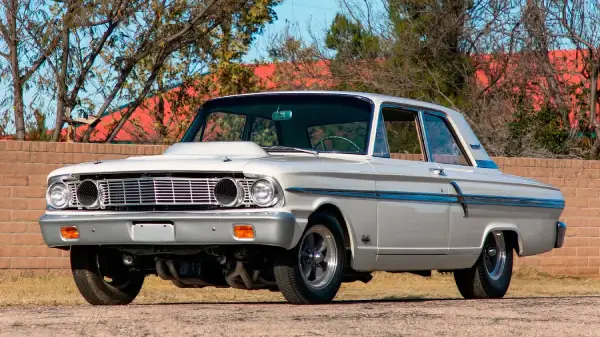
Some car had factory horsepower rate of 400 horsepower or high before 1966. For example the 1964 Ford Fairlane Thunderbolt had a horsepower rate of 425 and was special made for drag race. But it was a very limit competitive vehicle rather than a standard mass-market performance car.
That’s an important distinction.
It is not just
Before 1966 did any car have more than 400 horsepower?
Indeed it is the solution.
The most intriguing query is:
“When did a real factory-built street car with more than 400 horsepower become accessible thru standard production channels?
This is why Chrysler’s 426 Street Hemi is such a significant turning point.
The engine was available to customers as a production option, and Chrysler adapted the competition-derived architecture for normal road use. The company even issue dealer documentation for the 1966 Coronet identifying the Street Hemi at 425 horsepower and 490 lb-ft.
So the Hemi’s historical importance isn’t just about the number 425.
It’s about what that number represented.
Why The 400-HP Barrier Was Such A Big Deal
Today 400 horsepower doesn’t sound particularly shocking.
A modern performance sedan can make it while carrying four adult a trunk full of luggage and enough technology to practically drive itself.
In 1966?
Things were different.
Getting serious power out of an engine meant dealing with mechanical limitations that modern engineers can largely take for granted.
Airflow mattered enormously. Cooling mattered. Internal strength mattered. Fuel delivery mattered. Tires and brakes were nowhere near today’s standards.
And then there was the simple problem of getting all that power onto the road.
The 426 Hemi attacked these challenges with an engine architecture built around performance.
Its hemispherical combustion chambers allowed Chrysler to use large valves and favorable airflow characteristics. The street version used two four-barrel carburetors, while compression was reduced from the more aggressive competition setup.
The engine wasn’t just large.
It was engineer to breathe.
That’s one reason the Hemi became such an enduring name in American performance history.
The Number Were Impressive But The Driving Experience Was Even Wilder
A 425 hp rating doesn’t fully explain what a 1966 Hemi car felt like.
These engines were big, loud and mechanical.
There was no turbocharger quietly building boost in the background. No sophisticated traction control system. No computer constantly adjusting the engine’s behavior.
Rather you had a solid lifter valvetrain, two four-barrel carburetor a big naturally aspirated V8 and a driver who was in charge of maximizing its potential.
The 1966 Street Hemi reached its maximum rated horsepower at 5,000 rpm with a 10.25:1 compression ratio.
Even tho the engine’s factory horsepower was 425, comments from that era and subsequently have frequently shown that it might generate much more with tune or under alternative testing conditions.
This does not indicate that a higher number should be used in place of the official rating.
It means the published figure existed within a very different horsepower-rating era.
The important number for the history books remains 425.
Chrysler Didn’t Just Build A Powerful Engine. It Changed The Muscle Car Race
Once Chrysler put the Street Hemi into production cars, the horsepower war became even harder to ignore.
Ford, Chevrolet, Pontiac, Oldsmobile, Buick and other were already chasing performance buyers. But the Hemi raised the stakes.
The response from competitors would eventually produce some of the most memorable American engines ever built.
Chevrolet’s big-block program became increasingly aggressive. Before releasing engine like the 427 and Boss 429 Ford kept refining the FE series. Large-displacement performance is how Pontiac established its own reputation.
Eventually Chevrolet responded with monster like the 1970 Chevelle SS’s LS6 454 which had 450 horsepower.
The 400 horsepower barrier was now just another obstacle that needed to be overcome.
But somebody had to cross it first in a meaningful production context.
Chrysler was one of the manufacturer that made it happen.
The Hemi’s Racing DNA Was Impossible To Hide
There’s another reason the 426 Hemi became so famous its racing reputation.
Chrysler’s competition Hemi had already established itself as a formidable force before the Street Hemi arrived.
That racing connection gave the engine instant credibility among enthusiasts.
This wasn’t simply a large V8 that happened to make a lot of horsepower.
It was an engine that had been designed with competition in mind and then adapted for the street.
That distinction mattered to buyers.
Having a race-derived engine in your street car was a huge selling factor during a time when manufacturers were fighting for bragging rights at drag strips and NASCAR courses.
The mythos included the Hemi name itself.
Chrysler was fully aware of the potency of that legend.
Part of the Appeal of the 1966 Hemi Car was their Rarity
When talking about horsepower it’s easy to forget how rare these vehicle were.
You couldn’t simply assume that every 1966 Satellite or Coronet had a Hemi.
Far from it.
Compared to more traditional V8 alternatives, the engine was costly, specialized, and quite challenging to live with.
The total number of 1966 Hemi-equipped Mopars was a very small portion of Chrysler’s total production, but output numbers varied by model and source. According to a frequently reported breakdown, the total number of 1966 426 Hemi vehicles produced throughout the Dodge and Plymouth models that offered it was approximately 2,730.
Today, surviving samples are especially sought for due to their scarcity.
A standard 1966 B-body is a timeless vehicle.
An example of a documented 426 Hemi is quite different.
It Was Imperfect And That’s What Makes It Intriguing
Looking back on the 426 Hemi thru rose colored glass is tempting.
But these cars had weaknesses.
The Hemi was expensive.
It was heavy.
The cars weren’t particularly economical.
And stopping and handling all that power could be a bigger challenge than producing it.
The 1966 Hemi Satellite for example weighed roughly 3,800 pound and period testing showed that its straight line acceleration was much more impressive than its handling.
That makes perfect sense when you consider the era.
The engineering priority was simple:
Go very fast in a straight line.
And it did that extremely well.
The quarter mile performance tell the story. A low 14 second or high 13 second street car was genuine intimidate in the 1960.
Why The 426 Hemi Still Matter In 2026
Old horsepower milestones are often disregarded since contemporary cars have made them appear diminutive.
Given that modern performance car may generate 600, 700 or even more than 1,000 horsepower a 425-hp engine doesn’t sound that impressive.
However merely comparing the figures misses the mark.
The 426 Hemi helped establish a new expectation.
It showed that a factory production car could combine everyday street equipment with an engine developed from serious competition technology.
That idea became one of the foundations of the American muscle car.
And the effects are still visible today.
The word “Hemi” remains one of the most recognizable names in the performance-engine world. Modern Chrysler, Dodge and Ram products have carried the Hemi name for decade although the engines themselves evolved dramatically from the original 426.
The original Street Hemi, meanwhile, has become one of the most celebrated American V8s ever built.
The Significance of the 426 Hemi in 2026
Old horsepower milestone are easily disregarded since they appear insignificant in comparison to modern autos.
Given that modern performance car may generate 600, 700 or even more than 1,000 horsepower a 425-hp engine doesn’t sound that impressive.
However, merely comparing the figures misses the mark.
A new standard was set in part by the 426 Hemi.
It showed that a factory production car could combine everyday street equipment with an engine developed from serious competition technology.
That idea became one of the foundations of the American muscle car.
And the consequences are still apparent today.
In the world of performance engines, “Hemi” is still one of the most well-known names. Although the engines themselves have changed significantly from the original 426, modern Chrysler, Dodge and Ram vehicle have kept the Hemi name for decades.
In contrast one of the most renow V8s ever produce is the original Street Hemi.
What Was So Unique About The 1966 426 Hemi?
When the mythology is remove the solution is quite simple.
It blended real street-car availability with race-bred engineering.
The engine had two four barrel carburetor, 426 cubic inches of displacement, hemispherical combustion chamber and a factory rating of 425 horsepower and 490 lb ft of torque.
It could be ordered in production Dodge and Plymouth vehicles.
It wasn’t a unique prototype.
It was more than just an aftermarket conversion.
Furthermore, it wasn’t a race car with license plates.
It was a performance option manufactured at a factory.
The 1966 Hemi automobiles have such a significant position in American automotive history because of this.
The Final Score
There isn’t really a single magic number in the tale of the first production vehicle to surpass 400 horsepower.
It tells the story of American automakers’ realization that showroom experiences might incorporate high performance.
That concept became unavoidable with Chrysler’s 426 Street Hemi.
Customer may purchase a 425-hp, 426-cubic-inch V8 Dodge Coronet, Plymouth Satellite and other qualified Mopar cars in 1966. The engine brought racing technology into a manufacturing environment and contribute to the rise in horsepower that defined the muscle car era.
Was it the first vehicle to be permit on the road with more than 400 horsepower? Not precisely.
But did the 1966 Street Hemi play a significant role in making 400+ horsepower a feasible production vehicle?
Of course.
And for that reason anyone who enjoys classic American muscle will still be drawn to the sound of a 426 Hemi revving up more than 50 years later.
FAQs
Q: Which automobile had the highest horsepower till now?
A: The Model 1966 Dodge and Plymouth with Chrysler 426 Hemi was introduce as the first car to exceed the factory rate horsepower of 400. The output of Hemi is known to be 425 horsepower.
Q: Was the 426 Hemi created specifically for street cars?
A: The answer is no. 426 Hemi was originally developed as a racing machine in Chrysler’s racing division. The engine was developed for street purposes by making a lot of modifications such as reducing the compression ratio and camshaft changes, etc.
Q: What was the Plymouth Hemi speed?
A: According to HowStuffWork the Plymouth 426 Hemi can go from 0 to 60 mile per hour in rough 5.3 second and a quarter mile at 104 mile per hour in 13.8 second.
Also Read: 2026 Subaru Outback or Honda Passport? Here’s the Smarter Buy