
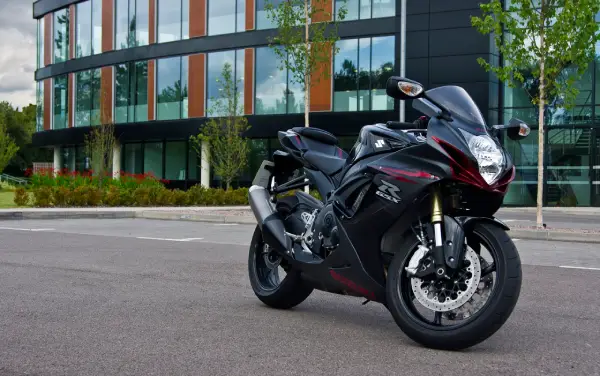
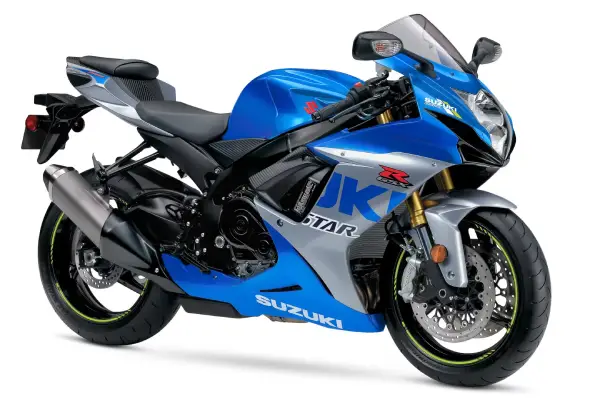
Suzuki GSX-R750: The motorcycle world has change dramatically over the past decade. Manufacturer are moving toward lighter middleweight twin, smarter electronic, stricter emission compliance and motorcycle that are easier to live with every day. But one legendary sportbike continues to follow a different path.
Introducing the Suzuki a motorbike that sit in a special place between potent 1,000cc superbike and conventional 600cc supersport. Suzuki has kept the GSX-R750 available in the US preserving a classic formula for rider who still value a high revving four cylinder engine and a concentrate sportbike chassis even though many of its former competitor have vanished from dealership.
While You Care for Your Car, Care for Your Child’s Future Too 💖
A fun and educational book every parent should gift their kid.
 Get Kiddy Store Fortune Now
This motorcycle is especially intriguing because Suzuki hasn’t totally redesigned it to follow every new trend in the industry.
Rather, riders who appreciate the GSX-R750’s proven engineering, small size, and uncomplicated performance style continue to find it appealing.
That choice begs the intriguing question: may an older-style superbike still be precisely what some rider desire in a time when motorcycles are getting more advanced?
Why the Suzuki GSX-R750 Occupies a Class of Its Own
The GSX R750 position between two well like sportbike categories has always been its greatest advantage.
While a liter class superbike gives significantly more power but may require more skill and caution, a 600cc supersport usually prioritize agility and fast engine speed. By combining a 750cc inline four engine with a comparative small sportbike package the GSX-R750 adopt a middle ground.
It has a unique personality because of that combination. Without going all the way into the power and performance realm of a 1,000cc motorcycle, riders receive more displacement than a conventional 600cc supersport.
The final product is a motorcycle built with the simple objective of delivering true sporting performance without making the vehicle excessively large or heavy.
Additionally its attraction extend beyond straight line acceleration. A sportbike may be fun on a twist road or a close circuit if it has a well balance chassis snappy steer and an engine that reward rider who explore its rev range.
The GSX-R750 is still a specialized performance motorbike, of course. Its high-revving engine and aggressive riding stance make it unsuitable for all riders, particularly those who commute in heavy traffic most of the time.
However, the formula is still appealing to fans who desire a typical Japanese supersport with a bit more power than a 600.
The GSX-R750: A Sportbike From a Different Era
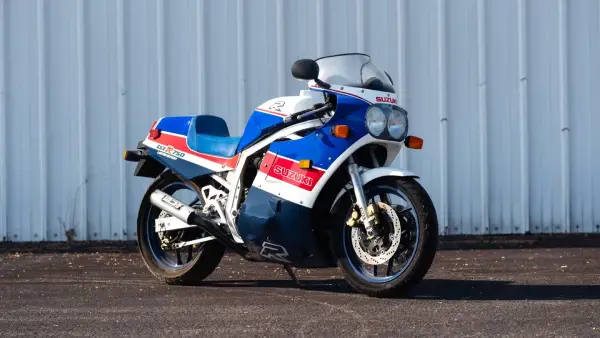
There are decades of history behind the GSX-R name. In 1985 Suzuki debuted the first GSX-R750 which contributed to the development of the contemporary concept of a production sportbike that is race-inspired and relatively light.
Because it placed more emphasis on performance and weight reduction than just expanding engine capacity the original machine left a lasting impression. The GSX-R750 saw several round of development over the ensuing decades, acquiring advancement in engine technology, suspension, braking and chassis design.
Even while the general concept of the modern bike is still the same it is far more advance than those early models.
That continuity contribute to its lasting appeal. To provide a unique riding experience, the GSX-R750 doesn’t have to be the newest or most technologically sophisticated motorbike. It already has an identity that many more recent motorcycles don’t try to match thanks to its four-cylinder engine, small size, and sports orientation.
But calling it a time capsule doesn’t imply that all of its elements are stuck in the past. Over the course of its existence the motorbike has undergone changes, and different model years may have different features, equipment and finish options.
The most significant thing is that, despite a large portion of the market shifting elsewhere, Suzuki has maintained the core 750cc supersport philosophy.
Why So Many Middleweight Supersports Have Disappeared
It is easier to comprehend the GSX-R750 prolonged existence when you consider the larger motorcycle market.
The 600cc supersport class was one of the most thrilling motorcycle classes for many year. Rider seeking track inspire vehicle with high revving engine and agile handling were drawn to model like the Honda CBR600RR, Yamaha YZF-R6 and Kawasaki Ninja ZX-6R.
However, the market shifted.
The cost and complexity of maintaining older engine platforms’ compliance in various locations rose due to stricter emissions regulations. At the same time, some regular riders lost interest in the high-revving supersport formula in favor of more comfortable ergonomics, powerful low- and mid-range torque, and useful electronics.
Another difficulty faced by manufacturers was creating costly, specialized motorcycles for a comparatively small market.
Consequently, a number of classic supersports were either repositioned within their manufacturers’ lines, limited to track use, or abandoned in specific areas. Others either returned after market and regulatory reforms, or they continued in some countries.
The middleweight supersport category hasn’t disappeared everyplace, therefore this distinction is important. Rather availability is now more reliant on the manufacturer model year and local laws.
Because of its unique engine size the GSX-R750 occupies a niche that neither a standard 600 nor a liter class superbike can complete match.
What Makes the 750cc Inline-Four So Appealing?
One of the main characteristics of the GSX-R750 is its engine.
The GSX-R750 has an inline-four setup that is intended to give power across a wide rev range, with the most sports character appearing as engine speed increases, in contrast to many contemporary middleweight sportbikes that use parallel-twin engines.
That arrangement alters the riding experience. The engine appeals to those who grew up adoring Japanese supersport motorcycles because of its smoothness, unique exhaust note, and eagerness to rev.
A different balance of performance is also offered by the additional displacement when compared to a 600cc machine. Depending on the situation a 1,000cc superbike can accelerate more forcefully without using all of its power.
Because publish specification differ by model year and market, buyer should confirm the specifications of the exact motorbike they are considering rather than assuming that every GSX-R750 has the same output or equipment.
Additionally it’s critical to remember that horsepower figure only paint a partial picture. Gearing, throttle responsiveness, suspension configuration, tire rider experience and road conditions all affect how a motorcycle feel.
For many enthusiast winning a specification sheet competition is not as appeal as the interaction between the engine, chassis and rider.
Does the GSX-R750 Still Make Sense Against Modern Sportbikes?
Electronics, engine control, rider comfort and safety technologies have all advance significantly in modern motorcycles. Riding modes, traction control, cornering ABS, and sophisticated displays that were once exclusive to pricey flagship models are now available on several modern sportbike.
The appeal of the GSX-R750 is distinct.
Riders who like a well-known mechanical character over a wide range of electrical settings could find its well-established platform appealing. However consumers shouldn’t confuse a conventional strategy for a universal benefit.
A feature absence is not always advantageous. ABS can be especially helpful when conditions suddenly change and rider aids can help control braking and traction. A prospective buyer should confirm the specification of the actual motorcycle because equipment availability varies by model year and market.
There’s another consideration age.
Experience owner and independent workshops may find it easier to comprehend a platform that has been essential unchange for year but this does not ensure that every used example will be dependable or affordable to maintain. Condition, past changes, service history and replacement part availability are all very important.
In some circumstance the GSX-R750 also demands more of its rider than contemporary middleweight twins. Compare to a more upright machine, daily riding may be less comfortable due to its dedicate ergonomic and performance focused engine.
A contemporary naked bike or middleweight twin would be a better option for riders who are primarily looking for accessible low-speed performance, comfortable commuting or touring.
However the Suzuki still provides a unique option for someone who especially desire a small, high-revving four-cylinder sportbike.
Why the GSX-R750 Continues to Attract Used-Bike Buyers
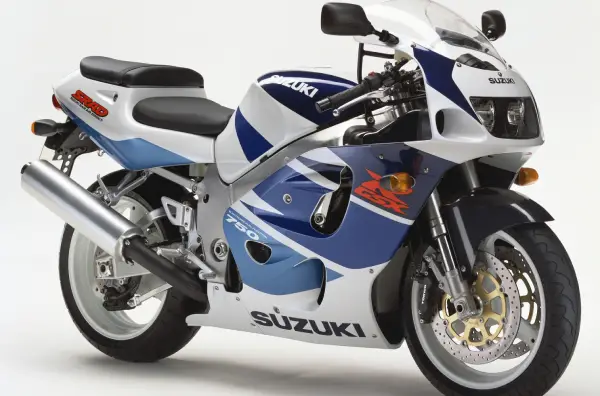
Due to the GSX-R750’s lengthy production history, purchaser can choose from a variety of motorcycles, ranging from more recent models to older, enthusiast-owned models.
Although such variety might be helpful it also necessitates cautious shopping.
A newer model that has been improperly maintained, crashed, or altered might not be as appealing as a clean, well-kept GSX-R750 with documented servicing. Although track use isn’t always a deal-breaker, it does make a comprehensive inspection and service-history study very crucial.
Buyers should consider the condition of the suspension, brakes, chain and sprockets, tires, cooling system, and charging system. If there are signs of accident damage, poorly patched fairings, odd engine noise or questionable electrical alterations, more investigation is necessary.
Additional rather than assume that every GSX R750 inevitable fetch a premium it is a good idea to compare local asking price. Mileage, model year, condition, location and demand all affect use value. While some examples might keep their value well, other might need substantial post purchase expenditure.
Although the bike’s unique position in the market may help maintain fan interest, appreciation or outstanding resale performance are not guaranteed.
The best-maintained motorcycle that meets the buyer’s budget—rather than just the newest or rarest one—is typically the greatest investment.
Could Suzuki’s Old-School Supersport Formula Survive?
Future prospect for the GSX-R750 depend on variables other than enthusiast desire.
Manufacturers’ ability to sell motorcycles in various markets is still influenced by emissions rules. It can be expensive to update an existing engine to comply with new regulation especially if the target market is less than that of popular commuter or adventure motorcycle.
Additionally manufacturer have to choose where to allocate their engineering resources. The same funding is used to develop new platforms, add electronics, comply with changing regulation and maintain competitive costs.
Suzuki must so strike a balance between responding to the realities of contemporary motorcycle development and maintaining a unique model that nevertheless appeals to a devoted following.
The GSX-R750’s continued availability in North America demonstrates that there is still a market for the traditional 750cc supersport formula. It doesn’t, however, guarantee that the bike will remain unchanged indefinitely or that it will be sold in every region.
For now, its significance goes beyond the numbers on a specification sheet. It represents a category of motorcycles that once occupied a central place in the sportbike world but now has far fewer direct equivalents.
The Verdict: A Different Kind of Sportbike in a Changing Market
For the proper rider, the Suzuki GSX-R750 doesn’t have to be the newest bike available.
Its unique blend of a 750cc inline-four engine, a concentrated sportbike chassis, and a riding experience based on the traditional Japanese supersport mentality is what makes it appealing.
Not everyone will find it to be the greatest option. There may be better options elsewhere for riders looking for sophisticated technology, comfortable ergonomics, or a more useful everyday motorbike. Additionally, rather than depending just on the GSX-R badge’s reputation, anyone purchasing a used example should assess its condition.
For individual looking for anything between a 600cc supersport and a liter-class superbike, the GSX-R750 still makes a compelling case.
Suzuki’s enduring 750cc sportbike serves as a reminder that not every fascinating motorbike needs to follow the newest trend as the motorcycle industry adopts new engine layout electronic and market goal.
Sometimes a tried and true recipe still has a lot to offer.
FAQs
Q1. Is the Suzuki GSX-R750 still available in the United States?
A: Yes the Suzuki GSX-R750 has continue to be offer in the US market despite disappearing from several other market over the years. Buyer should check Suzuki current official lineup for the latest model year availability.
Q2. Is the Suzuki a good motorcycle for beginner?
A: Generally it isn’t the best first motorcycle. Its aggressive riding position, high revving engine and substantial performance are better suit to rider with experience. New rider may benefit from starting with a more manageable motorcycle.
Q3. Why did the GSX-R750 disappear from some European market?
A: Changing emission regulations, development cost and declining demand for traditional supersport motorcycles contributed to the withdrawal of various model from certain market. The exact reasons and timing depend on the country and model year.
Also Read: The Aprilia Tuareg Rally Proves Adventure Bikes Don’t Need More Horsepower
1 thought on “The Suzuki Is a Dying Breed of Superbike That Refuses to Disappear”
Comments are closed.